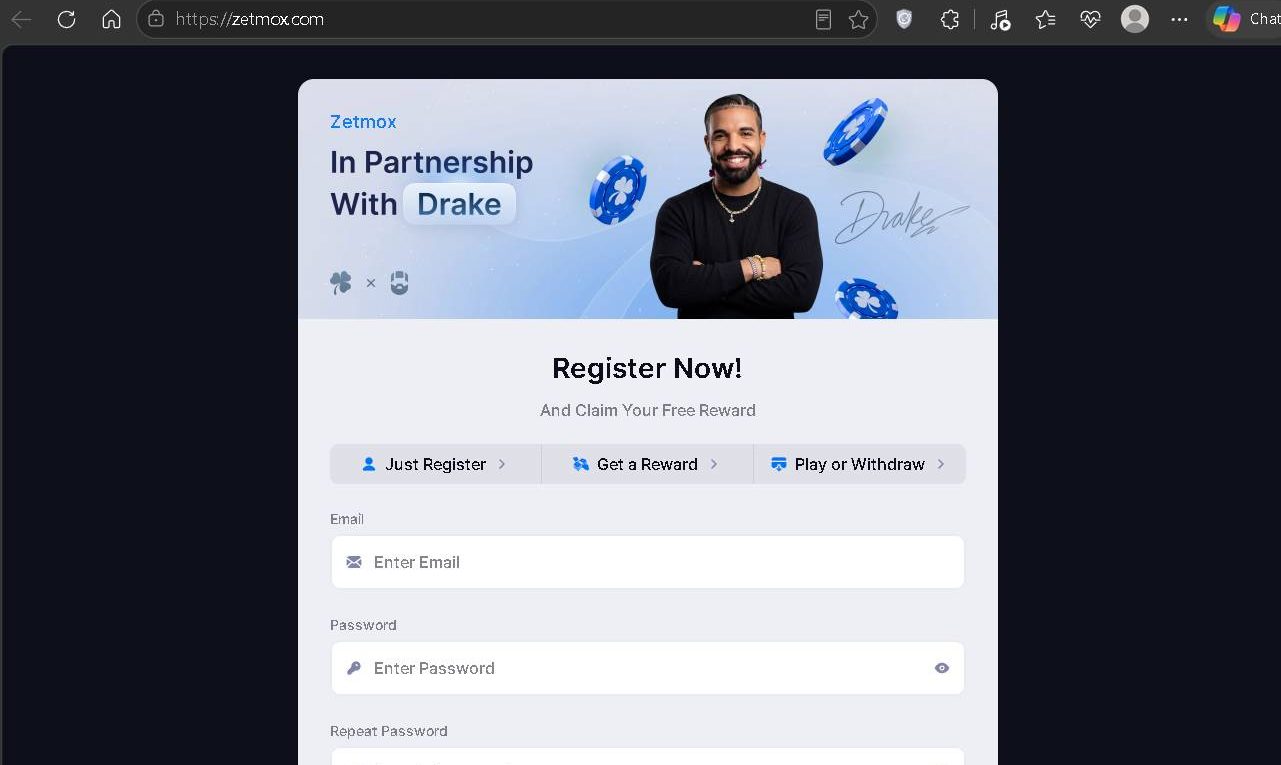
Navigating Decentralized Web3 Gambling: A Comprehensive Case Study and Security Review of Zetmox
The rapid convergence of blockchain architecture and online entertainment has catalyzed the emergence of a disruptive digital sector: decentralized Web3 gambling and betting platforms. Traditional online casinos and wagering sites have long operated as opaque, centralized entities where users must completely trust a private corporation with fund custody, odds generation, and payout execution. In contrast, emerging platforms like Zetmox attempt to restructure this dynamic by utilizing distributed ledgers, non-custodial wallet connections, and self-executing smart contracts.
This review and case study examines the technical architecture, cryptographic verification frameworks, and inherent risk considerations associated with platforms operating in this specialized crypto-gaming space.
Architectural Foundations of Decentralized Gambling
Decentralized gambling ecosystems fundamentally differentiate themselves from traditional web-based casinos by eliminating the traditional intermediary layer. Instead of depositing fiat currency into a corporate bank account controlled by a single operator, participants interact directly with blockchain protocols.
- Smart Contracts as House Logic: The underlying code governing wagers, odds calculations, and payout distribution resides directly on-chain. This aims to ensure that rules cannot be arbitrarily altered behind closed doors once a game loop is initiated.
- Non-Custodial Asset Management: Users maintain total custody of their digital assets within their private Web3 wallets. Funds are only transferred when a user explicitly signs a transaction or wager request via their private keys.
- Public Ledger Transparency: Transaction histories, smart contract balances, and global protocol states are recorded transparently on a distributed ledger, theoretically allowing anyone to inspect the flow of funds within the ecosystem.
The Core Trust Mechanism: Provably Fair Verification
One of the most significant technological advancements introduced by Web3 gaming sites like Zetmox is the implementation of Provably Fair algorithms. In traditional online gambling, players have no way to prove whether a slot spin, card deal, or crash multiplier was manipulated by the operator. Provably fair systems solve this trust deficit by employing cryptographic hash functions to create a mathematically verifiable audit trail.
The Cryptographic Workflow
The verification process typically unfolds across three distinct phases:
- The Pre-Commitment Phase: Before a game round begins, the platform’s server generates a random string of data known as the server seed. To prevent the platform from changing the outcome mid-game, it generates a cryptographic hash (such as SHA-256) of this seed and displays that hash to the player. Because cryptographic hashes are one-way functions, the outcome is locked in, yet the underlying seed remains hidden from the player.
- The Client Input Phase: The player contributes their own random input, referred to as the client seed, often generated automatically via their browser or wallet interface. An incremental nonce is also integrated to maintain the correct sequence of bets.
- Execution and Post-Game Verification: The core formula combines these elements:
HASH(server_seed + client_seed + nonce). This resulting output is mathematically converted into the definitive game outcome. Once the round concludes, the platform reveals the unhashed server seed. The player can then independently copy the seed, run it through a standard hash checker, and verify that it matches the pre-committed hash provided prior to the game, proving that the house did not tamper with the result.
3. Risk Assessment and Critical Due Diligence
Despite the mathematical elegance of provably fair algorithms and the transparency of blockchain ledgers, interacting with decentralized gambling protocols exposes users to unique, high-severity risks. Conducting rigorous due diligence is essential before committing capital to any platform.
| Evaluation Area | Potential Risk Factor & Key Considerations |
| Smart Contract Security Audits | Unaudited or poorly written code can harbor hidden logic flaws, reentrancy vulnerabilities, or malicious drain functions. Users must look for comprehensive, publicly accessible audit reports issued by reputable blockchain security firms. |
| Regulatory and Legal Standing | Many decentralized gaming portals operate in complex or ambiguous regulatory environments without formal licensing. This lack of centralized oversight means users typically have no legal recourse or regulatory body to turn to if a dispute over a major payout occurs. |
| Protocol Solvency and Liquidity Pools | The house liquidity pool must possess sufficient depth to absorb extreme tail-risk events or massive consecutive wins. A lack of transparent treasury management can lead to insolvency risks. |
| Front-End and Phishing Threats | Web-based Web3 platforms are frequent targets for DNS hijacking, malicious front-end injections, and fraudulent clone domains designed to mimic legitimate interfaces and steal private keys. |
Case Study: What is Zetmox?
Platform Overview and Offerings
Zetmox positions itself as a decentralized Web3 gambling and betting platform utilizing blockchain infrastructure and cryptographic verification. Rather than depending on traditional corporate bank accounts or centralized operators, the platform aims to handle user interactions and wagers through distributed smart contracts. Its core value proposition centers around non-custodial wallet connectivity, automated on-chain settlements, and the integration of provably fair mechanics designed to ensure game outcomes are mathematically randomized.
Red Flags and Risk Analysis
Despite its decentralized presentation, platforms operating in this sector carry severe operational vulnerabilities and structural risks:
- Lack of Formal Regulation: The platform generally operates without recognized e-gaming licensing, leaving users without consumer protection or legal recourse.
- Smart Contract Vulnerabilities: Unaudited or opaque codebases introduce significant exposure to logic flaws and potential fund drainage.
- Counterparty and Insolvency Risk: Treasury management structures may lack the liquidity depth required to cover extreme market or payout events.
- Phishing Exposure: Web3 betting sites are frequent targets for malicious front-end clones and domain spoofing designed to compromise user private keys.
Verdict
Platforms operating within the decentralized Web3 gambling sector present a fascinating dichotomy. On one hand, they introduce genuine structural improvements over legacy online casinos by leveraging open-source logic, cryptographic proof systems, and self-executing smart contracts that minimize the need to blindly trust a central operator. On the other hand, they shift the burden of security entirely onto the user while introducing complex smart contract and counterparty risks.
Risk Warning: Decentralized web-based gambling protocols involve extreme financial volatility, structural smart contract risks, and regulatory uncertainties. Participants should exercise extreme caution, verify all underlying audit credentials, and limit exposure strictly to discretionary capital that they are fully prepared to lose.
FAQ Section
Q: Is Zetmox legit or a scam?
A: Evaluating whether a decentralized gaming platform like Zetmox is safe requires analyzing public smart contract security audits, independent liquidity verification, and transparent team credentials. Because many crypto-gaming sites operate without traditional regulatory licensing or possess hidden ownership details, users should exercise extreme caution, look out for common web-clone red flags, and perform thorough due diligence before connecting Web3 wallets or depositing funds.
Q: How do provably fair algorithms work in Web3 gambling?
A: Provably fair algorithms use cryptographic hashing functions (such as SHA-256) to combine a pre-committed server seed and a user-submitted client seed. This mathematical process ensures that game outcomes are completely randomized and prevents the platform from altering or manipulating results mid-game. Players can take the revealed unhashed server seed post-game to independently verify the integrity of the round.
Q: What are the primary risks of decentralized Web3 casinos?
A: Key risks include unaudited smart contracts susceptible to code exploits or backdoors, a complete lack of formal consumer protection regulations, platform insolvency during extreme payout events, and phishing clone sites designed to mimic legitimate interfaces and compromise private keys.
Q: Do I need to connect my main crypto wallet to use platforms like Zetmox?
A: It is a best practice in Web3 security to never connect your primary crypto wallet holding long-term investments or significant assets to untried or decentralized gaming platforms. Instead, users should create and utilize a dedicated, isolated burner wallet containing only the exact amount of discretionary capital intended for gameplay, thereby minimizing exposure to potential smart contract drainers or front-end exploits.
Q: How can I verify if payouts on a decentralized gambling site are genuine?
A: On a true decentralized or on-chain platform, all financial interactions—including player wagers, house payouts, and smart contract balances—are publicly recorded on the blockchain’s distributed ledger. You can independently check the platform’s smart contract address using a block explorer (such as Etherscan or Polygonscan) to verify that the contract holds sufficient liquidity and that automated payout functions execute transparently without manual intervention from the operators.
Every safe click counts. If this post helped, a coffee gesture fuels more scam‑busting investigations.

Call to Action
Please share this article to spread awareness. Follow us on Facebook, Twitter, and Instagram for more scam alerts. If you doubt the legitimacy of any website or investment plan, DM us on social media — we’ll help you verify.
“Scammers evolve daily. Subscribe to our scam‑alert list and stay one step ahead.”