Chapter 2: The Hidden Gifts of Boredom
The Silent Pandemic of Distraction
Life today is saturated with digital distractions. Whenever boredom creeps in, we instinctively reach for our phones, open reels, and suddenly two hours vanish. This has become the silent pandemic of our times — the constant attempt to avoid boredom, to chase stimulation, to feel good for a fleeting moment. In doing so, we have forgotten how to listen to silence or watch the dark night sky.
Childhood memories remind us of a different rhythm. In India, when electricity failed for long hours, we would go outside, play under the stars, and collapse into sleep with joy. In villages, people once stayed awake during full moon nights, using the natural floodlight to play games like kabaddi and kho‑kho. These simple moments carried more meaning than endless scrolling ever could.
Technology was invented to save time, to give humans space for meaningful work. Yet instead of freeing us, it has trapped us in doom‑scrolling cycles, making phones smart but people dumb. The sheer amount of content consumed in the last decade is unparalleled, and because everyone does it, it feels normal. Yet deep inside, many of us crave something different — to sit quietly, to watch the moon, to feel the air on the terrace.
One night, while walking under the night sky, I realized that what we truly seek is not meaning but dopamine shots. They come in many forms: alcohol, drugs, binge‑watching, doom‑scrolling, sex, overeating, or compulsive entertainment. All of these are diversions from reality, which we fear is unbearable. The demons I once imagined never came; they were ghosts of my own mind, blocking vision and growth.
Boredom as Prison and Doorway
The real challenge is sitting still, doing nothing. Everyone is in a hurry to reach somewhere, only to rush again to another place. The mind itself is unique — it can be our greatest friend or our worst enemy. Society adds to this burden by setting rigid standards for success: rare achievements like IIT engineers, AIIMS doctors, or IAS officers are glorified, while ordinary lives are dismissed. Parents push children into this race, seeking insurance against failure and a badge of pride in society.
But when expectations are not met, people feel defeated. Even those who achieve success discover an inner void, because nobody taught us how to manage the inner world. Success brings only momentary happiness — enough to make a reel or post online — but inside, nothing changes. This unfulfilled void grows into boredom, and in wealthy societies, it often mutates into depression.
True boredom, the kind that corrodes from within, arises when material needs are met but the soul remains untrained to handle emptiness. Boredom is no longer a faint hum but a heavy atmosphere pressing against the mind and body. It stretches hours into endless corridors where meaning dissolves. The ticking clock becomes a reminder of wasted potential, the restless body searches for stimulation, and the wandering mind invents escapes.
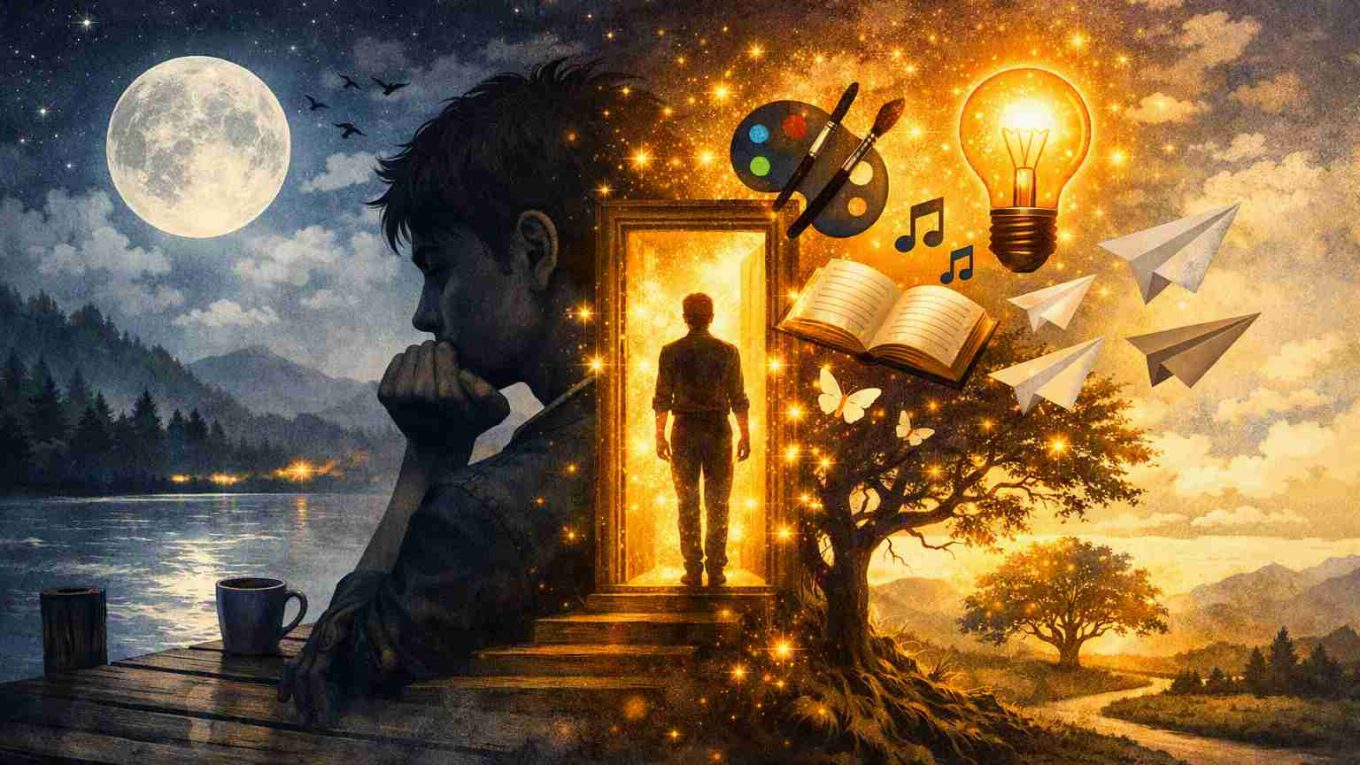
Yet within this heaviness lies a hidden gift. Boredom is destructive when it drives impatience or reckless choices, but it can also be creative, forcing us to imagine, to build meaning where none exists. It strips away illusions, showing us our dependence on distraction and our fear of stillness. It teaches us that silence is not empty but full of questions we often avoid — questions about purpose, identity, and the fragile scaffolding of our daily lives.
When boredom deepens, it can feel like a fog that blurs the edges of reality, but it also sharpens awareness of how much we rely on external stimulation to define our existence. The restless energy of boredom can lead to destructive impulses, but it can also be harnessed into transformation if one learns to sit with it long enough to hear what it is saying.
In this way, boredom becomes not just a void but a force, a pressure that can either consume us or propel us forward. It is the weight of empty hours, yes, but also the seed of new beginnings, waiting for us to decide whether to drown in its silence or to discover the hidden gifts it carries.
Closing Reflection
Boredom may feel heavy, but it is also a messenger. It tells us when our work has lost meaning or when our mind needs renewal. Yet hidden inside boredom is a surprising gift — the spark of creativity.
Boredom touches all of us in different ways. Sometimes it feels heavy, sometimes it sparks creativity. I’d love to hear your perspective — how do you experience boredom, and what do you do when it strikes? Share your thoughts in the comments below.
Read Next Chapter: The Escape from Boredom We’ll explore how the very silence we try to avoid can become a path to freedom, how rituals and imagination can transform monotony into breakthroughs, and how learning to sit with boredom can change the way we live.
Chapter1: The Signal of the Soul
Chapter 4: Bill Gates and Think Week
Chapter 5: Steve Jobs and the Power of Pauses
Chapter 6: Simon Sinek and the Boredom Walks