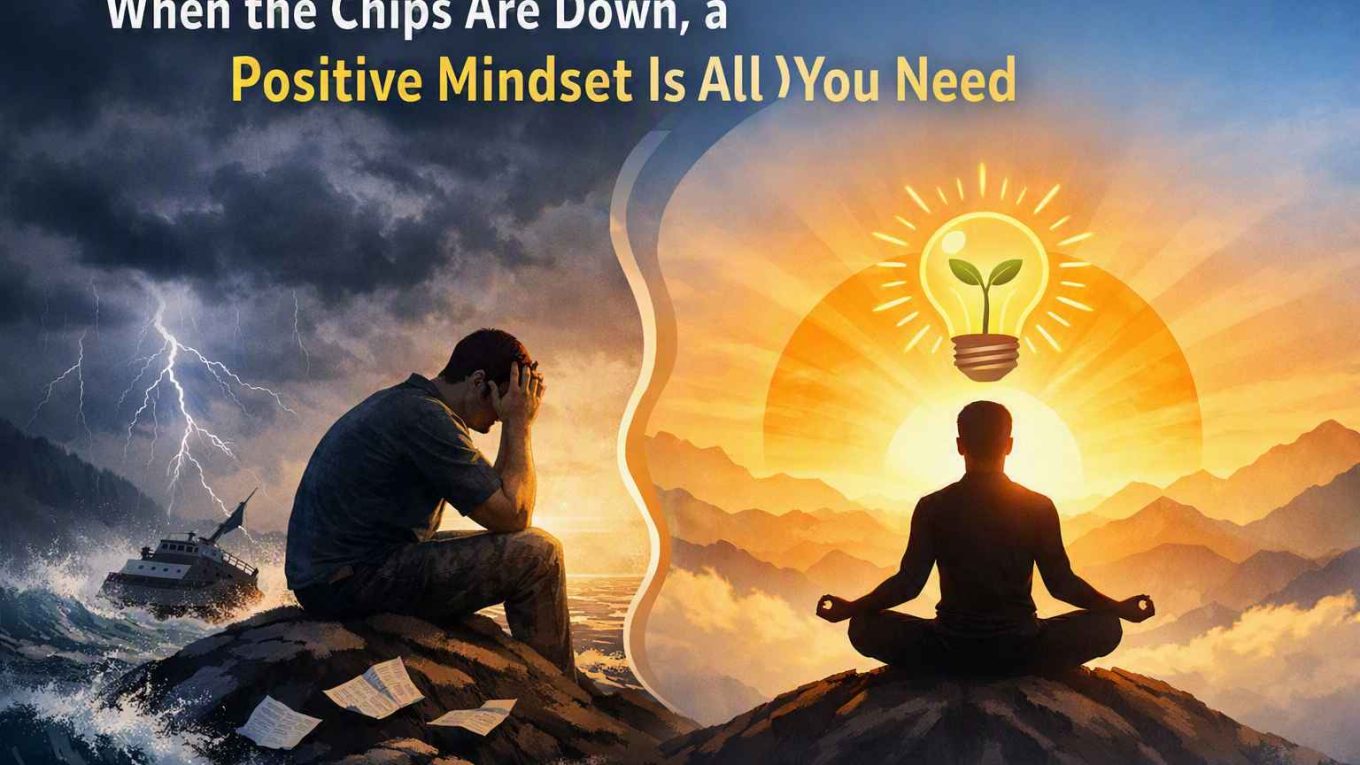
When the Chips Are Down, a Positive Mindset Is All You Need
Life is not linear; it has its ups and downs. Like a surfer balancing on waves, we too must balance ourselves in life. Our mindset develops when we face hardship—like muscle memory, our ability to take life’s punches increases, and soon we learn not only to endure but also to dodge and use challenges to our advantage.
All human beings—whether rich or poor, healthy or unhealthy—face problems in life. They may differ in form and intensity, but the quality of pain, suffering, and stress generated inside the human body is the same. Therefore, a healthy mind is essential for everyone. Mindset is not genetic; it can be developed. It begins to work in our favor as soon as we understand that we are responsible for our actions and must adjust ourselves according to life, not expect life to adjust to us.
“When the chips are down” refers to those moments when circumstances turn against us—failing an important exam, losing a job, facing financial setbacks, struggling in an endeavor, or simply feeling stuck in the daily grind.
In India, these situations are familiar to millions: students preparing for UPSC or IIT‑JEE, professionals navigating layoffs in IT hubs like Noida or Bangalore, or families struggling with rising expenses. These are the times when resources seem scarce, options feel limited, and hope appears distant.
Yet history and experience remind us that what truly matters in such moments is not external strength or luck, but the mindset we carry. A positive outlook becomes the anchor that steadies us in the storm.
One can have everything and still fall into depression over an issue—something that may seem trivial to others but feels overwhelming to that person. We cannot judge people’s problems; all we can do is strengthen our own minds. As I have said earlier and repeat again: the problem of an individual is the highest pain in the world. Therefore, a positive mindset is required to tackle life’s challenges.
Positivity fuels resilience, helping us rise after failure. Optimism sparks creativity, allowing us to see opportunities where others see dead ends. And hope gives us courage to keep moving forward, even when the path is unclear.
Positivity as the Anchor in Tough Times
Consider the stories around us. Ratan Tata (Tata Nano Car Case), despite setbacks in business, always emphasized optimism and long‑term vision. Students who stumble in their first attempt at competitive exams often succeed later because they choose to learn, adapt, and try again. We all know the movie 12th Fail, where a person against all odds clears the UPSC.
Entrepreneurs across Delhi and NCR have rebuilt ventures after losses, guided not by despair but by determination. A famous example is the Paytm founder, who once had to stay at a friend’s home because he didn’t have one of his own.
These examples prove that positivity is not just an attitude—it is a survival tool.
On the other hand, a negative mindset magnifies problems. Self‑doubt convinces us we are not capable. Fear paralyzes us from taking the next step. Procrastination delays solutions until opportunities slip away.
In India, many aspirants give up after one failed exam attempt—not because they lack ability, but because they let negativity dictate their choices. The difference between success and failure often lies in whether we choose to see setbacks as endings or as beginnings.
Turning Setbacks into Comebacks
When things are not working for you, it is the best time to develop patience. Will it change the situation? No, it will not. Life will go its own way; only your response will change. There are more than 8 billion people in this world, all working toward something that can cross paths with others. Therefore, the outcome of any action is never fully in our hands. We can do hard work, smart work, or no work at all—the result is never entirely under our control.
What is needed then? Our response to life’s difficulties. Nothing is truly against us; it is simply not meeting our expectations. The root cause is human expectation, which we assume to be ideal but often is not. Having no expectations of the result is the secret here.
It is not easy to grasp this point. I myself still struggle with it, but I keep reminding myself to be content with the results of my work. Believe me, it is not easy—but at the end of the day, you feel peace.
Understand this: cultivating positivity is not about ignoring reality—it is about facing it with strength. Many people are not capable of observing life as it is. They seek escapes—alcohol, cigarettes, overeating, chanting—activities often done unconsciously. But when we become conscious of life, these escapes can transform into tools of meditation.
Daily affirmations, gratitude journaling, and surrounding ourselves with supportive people are practical ways to nurture optimism. Indian traditions offer powerful tools too: yoga, meditation, and pranayama calm the mind and restore balance.
Spiritual retreats in the Himalayas or even simple chai breaks with friends remind us that renewal is always possible. Positivity is not a luxury; it is a discipline that can be practiced every day.
When the chips are down, positivity transforms setbacks into comebacks. A failed exam becomes a lesson for the next attempt. A lost job becomes the push to upskill or start something new. A financial setback becomes the spark for budgeting and creative earning. The same situation that breaks one person can build another—all depending on mindset.
So the next time life tests you, remember this: resources may run out, circumstances may change, but positivity is the one resource that never depletes. It is the light that guides us through darkness, the strength that carries us when everything else fails.
“Tough times don’t last, but tough—and positive—minds do.”
Frequently Asked Questions (FAQs)
Q1. What does the phrase “when the chips are down” mean?
It means facing a critical or difficult situation where true character and mindset are tested. In India, this often relates to exams, job struggles, or financial stress.
Q2. Why is a positive mindset important during tough times?
Because positivity fuels resilience, creativity, and courage. It helps you see opportunities even in setbacks, whether it’s retrying an exam or rebuilding after a job loss.
Q3. Can positivity really change outcomes?
Yes. A negative mindset magnifies problems, while a positive one transforms failures into comebacks. Many Indian students, professionals, and entrepreneurs have succeeded by staying optimistic after setbacks.
Q4. How can I build a positive mindset in daily life?
Simple practices like gratitude journaling, yoga, meditation, and surrounding yourself with supportive people can strengthen positivity. Indian traditions like pranayama and spiritual retreats are powerful tools too.
Q5. Is positivity enough on its own?
Positivity doesn’t replace hard work or planning, but it makes them possible. It keeps you motivated to act, adapt, and persevere when circumstances are against you.