Niponis Review: Is It a Scam or Legit Shopping Site?
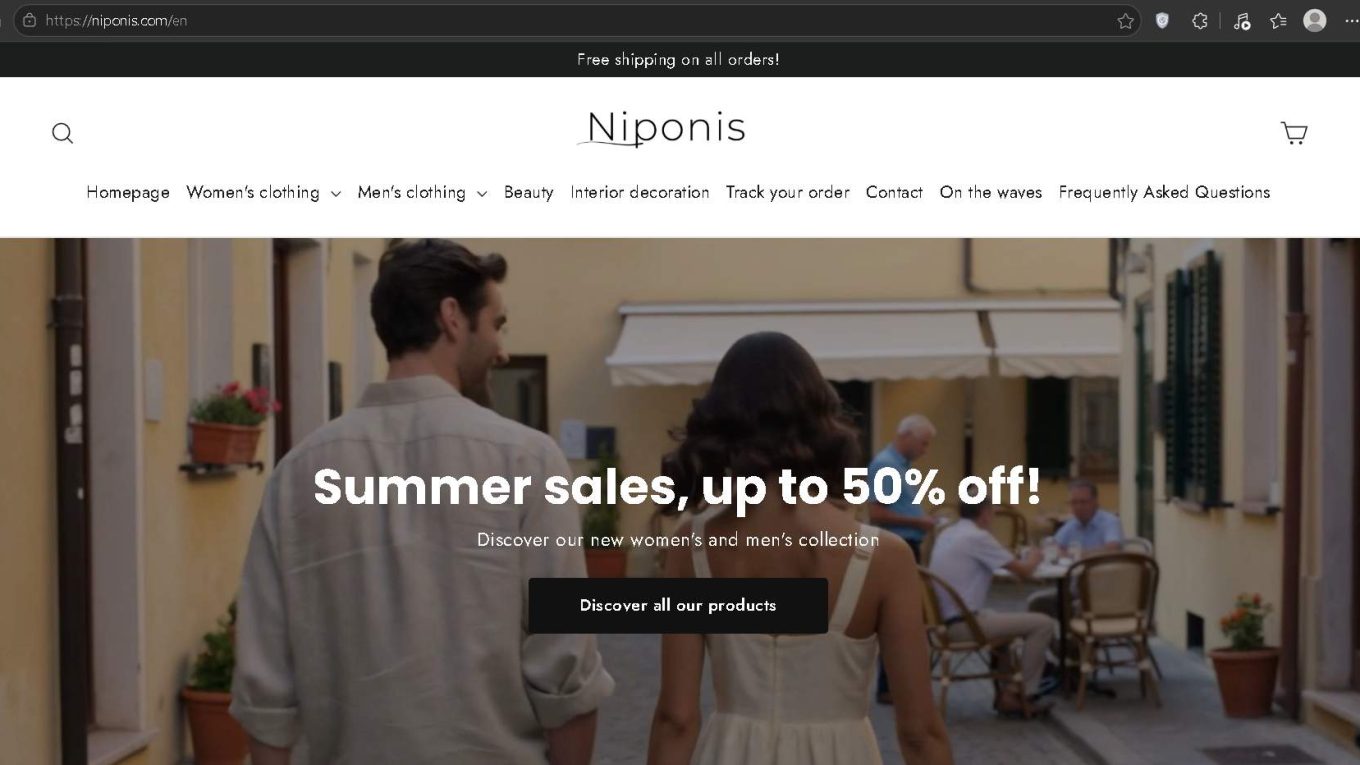
Niponis presents itself as a sleek, modern fashion and lifestyle store offering “summer sales up to 50% off.” The site’s minimalist design and polished visuals create the illusion of a legitimate European boutique. It promises free shipping on all orders and a broad catalog spanning women’s clothing, men’s apparel, beauty, and interior décor.
But behind the glossy storefront lies a troubling pattern of technical and operational inconsistencies. Based on forensic checks, Niponis is not safe to transact with.
This audit investigates Niponis as a potential synthetic storefront—a term used for cloned e-commerce sites that mimic legitimate brands while concealing ownership and diverting payments through unverified processors. The objective is to determine whether Niponis operates as a genuine merchant or a deceptive shell exploiting Tier‑1 consumers in the US, UK, Canada, and Australia.
What Is Niponis Doing?
Niponis functions like a drop‑shipping shell designed to harvest payments and personal data under the guise of a fashion retailer. It uses algorithm‑optimized ads and keyword‑stuffed product listings to appear in search feeds and social media timelines. The site’s architecture is built on a lightweight template—likely Shopify or WooCommerce—configured for rapid deployment and anonymity.
Traffic is funneled through social media ad campaigns promising steep discounts and free global shipping. Once visitors land on the site, behavioral tracking scripts capture session data, device fingerprints, and cart abandonment metrics. These analytics are typical of conversion‑optimized scam networks that recycle storefronts every few months. The checkout flow imitates legitimate merchant gateways but lacks verified encryption and PCI‑compliant payment handling.
What Is Niponis Selling?
Niponis catalog spans fashion, beauty, and home décor—an eclectic mix that rarely coexists in authentic retail operations. The product images appear professionally shot, but reverse image searches reveal that many are lifted from established brands and stock photo repositories. This pattern indicates copyrighted asset theft, a common tactic among fraudulent stores.
The pricing model is equally suspicious. Offering 50% discounts across all categories defies retail economics. Genuine boutiques cannot sustain such margins without liquidation or manufacturer authorization. The “free shipping on all orders” banner further amplifies the illusion of legitimacy while masking the absence of any verifiable logistics partner. In short, Niponis inventory strategy is synthetic, not commercial—it’s designed to simulate abundance, not deliver goods.
How the Scam Works
- Ad Click to Cart Checkout: Victims encounter Niponis through sponsored posts or search ads. The site’s clean interface and discount banners encourage impulse purchases.
- Payment Diversion: Although the site displays Visa, Mastercard, and PayPal logos, transactions are routed through unverified processors or obscure gateways. These intermediaries often lack chargeback protection, exposing buyers to credential theft.
- Post‑Purchase Blackout: After payment, customers receive generic confirmation emails and fake tracking numbers. The “Track Your Order” page either loops endlessly or displays fabricated logistics data.
- Financial Fallout: Victims report non‑delivery, unauthorized recurring charges, or cloned card credentials used elsewhere. The absence of a physical address or responsive support ensures no refund pathway.
This lifecycle mirrors the operational blueprint of merchant account abuse—a fraud model where scammers exploit payment gateways under temporary shell entities before abandoning the domain.
Critical Red Flags
| Signal / Feature | Niponis.com Status | Legitimate Retail Standard |
|---|---|---|
| WHOIS Ownership | Privacy‑masked via Withheld for Privacy ehf | Transparent business registration |
| Domain Age | Around 1 year old | Multi‑year continuity with verifiable renewal history |
| SSL Certificate | Free automated certificate | Extended Validation (EV) or Organization‑verified SSL |
| Product Imagery | Reverse‑searched duplicates from stock libraries | Original brand photography |
| Contact Details | No physical address; generic contact form | Registered business address and verified phone |
| Payment Gateway | Unverified processor; PayPal badge without integration | PCI‑compliant merchant account |
| Customer Reviews | None on Trustpilot or Scamadviser | Consistent third‑party feedback |
| Legal Pages | Copied boilerplate Terms & Privacy Policy | Custom legal documentation tied to jurisdiction |
Additional Warning Signs
- ICANN registry anonymity prevents tracing ownership.
- Duplicated HTML structure matches other known scam templates.
- No corporate registration in any Tier‑1 jurisdiction.
- Zero backlinks from credible domains—indicating isolation from legitimate commerce ecosystems.
Risk Parameters & Technical Profile
- Domain Registration Age & Registrar: Niponis was registered via Namecheap Inc., a registrar frequently used by transient storefronts. The privacy shield “Withheld for Privacy ehf” conceals the registrant’s identity, blocking accountability.
- SSL Certificate Details: The site uses a free Let’s Encrypt certificate, which secures traffic but does not validate business legitimacy. This is typical of disposable scam domains.
- Server Location & Hosting Infrastructure: Hosting traces point to a shared US‑based server with low‑tier bandwidth allocation—consistent with mass‑produced scam clusters.
- Payment Gateway Security & Surcharge Traps: The checkout page lacks PCI DSS compliance indicators. Hidden scripts may capture card data before redirecting to third‑party processors. Victims risk credential harvesting and unauthorized billing.
- Consumer Legal Recourse Level:
- US: Victims can file chargebacks under Regulation E (for debit) or Fair Credit Billing Act (for credit).
- UK: Section 75 of the Consumer Credit Act 1974 covers credit card purchases over £100.
- Canada: Chargeback rights under Code of Conduct for the Credit and Debit Card Industry.
- Australia: Refunds via Australian Consumer Law and bank‑initiated dispute resolution.
Each jurisdiction offers protection, but recovery depends on prompt reporting—usually within 60 days of the transaction. Delay reduces refund probability and increases exposure to identity theft.
Conclusion
Niponis exhibits every hallmark of a synthetic e‑commerce storefront—hidden ownership, cloned imagery, unrealistic discounts, and unverifiable payment processing. The site’s technical footprint aligns with merchant account abuse networks that cycle domains to evade detection. Transacting on Niponis exposes consumers to financial loss and data compromise. Its anonymity and lack of verifiable business credentials make it unsuitable for any legitimate purchase.
For those who already placed orders, immediate action is essential. Contact your card issuer to initiate a chargeback, freeze compromised cards, and monitor your credit report for unauthorized activity. Report the incident to national fraud agencies such as the FTC, Action Fraud UK, Canadian Anti‑Fraud Centre, or ACCC Scamwatch. Early intervention can prevent cascading financial damage.
“If a website hides its owner, offers impossible discounts, and demands instant payment—your best deal is walking away before checkout.”
Author Bio: Suyesh Gusain is a Senior Fraud Investigator and Cybersecurity Analyst with over eight years auditing e‑commerce architecture and advising consumer protection groups across Tier‑1 markets. He specializes in uncovering synthetic storefronts and educating buyers on safe digital commerce practices.
Every safe click counts. If this post helped, a coffee gesture fuels more scam‑busting investigations.

Call to Action
Please share this article to spread awareness. Follow us on Facebook, Twitter, and Instagram for more scam alerts. If you doubt the legitimacy of any website or investment plan, DM us on social media — we’ll help you verify.
“Scammers evolve daily. Subscribe to our scam‑alert list and stay one step ahead.”
FAQs
Is Niponis a legitimate online store?
Niponis hides its ownership via ICANN privacy masking and operates on a one‑year‑old domain registered through Namecheap. Legitimate retailers disclose business registration and maintain multi‑year continuity. The lack of transparency strongly suggests Niponis is a synthetic storefront, not a verified merchant.
Can I safely use my credit card on Niponis?
The site displays Visa/Mastercard/PayPal logos but routes payments through unverified processors. This exposes buyers to credential theft and unauthorized billing. In the US, Regulation E and the Fair Credit Billing Act allow chargebacks; UK buyers can rely on Section 75 protections; Canada and Australia also provide dispute resolution. Safety depends on avoiding the transaction altogether.
Does Niponis deliver products to the US, UK, Canada, and Australia?
Niponis claims free worldwide shipping but provides no logistics partner details. Reverse checks show fake tracking numbers are common in similar scam sites. Buyers in Tier‑1 countries risk non‑delivery or receiving low‑value junk items instead of advertised goods.
Why are Niponis discounts unrealistic?
Offering 50% off across all categories is economically impossible for genuine retailers. Authentic boutiques discount selectively during clearance or seasonal sales. Niponis blanket discounting is a bait tactic to lure impulse buyers into unsafe transactions.
What red flags show Niponis is a scam?
Key red flags include WHOIS anonymity, free SSL certificate, cloned product images, no physical address, generic contact form, and absence of third‑party reviews. These signals align with synthetic storefront patterns designed for short‑term fraud.
What happens after I place an order on Niponis?
Victims typically receive automated confirmation emails and fake tracking updates. Orders remain unfulfilled, and customer support is unresponsive. Some buyers report recurring unauthorized charges, indicating merchant account abuse and credential harvesting.
How can I get a refund if I bought from Niponis?
Immediate action is required. US buyers should file chargebacks under Regulation E or the Fair Credit Billing Act. UK consumers can invoke Section 75. Canadians should contact their bank under the Code of Conduct for Credit and Debit Card Industry. Australians can seek remedies under the Australian Consumer Law. Prompt reporting within 60 days increases recovery chances.
What consumer protection agencies handle Niponis fraud?
Victims should report to the FTC (US), Action Fraud (UK), Canadian Anti‑Fraud Centre, and ACCC Scamwatch (Australia). These agencies track synthetic storefronts and assist with fraud documentation, which strengthens chargeback claims.