Untangling Luvdolly: An Investigative Look at Deceptive Craft & Crochet Pattern Storefronts
Few pastimes offer the comforting, meditative satisfaction of yarn crafts. For crocheters and knitters, picking up a hook, feeling the texture of soft fiber, and bringing a handmade piece to life is a source of genuine joy. The global fiber arts community is built on mutual support, creativity, and deep respect for the independent pattern designers who spend months grading sizes, filming stitch tutorials, and testing instructions.
Unfortunately, bad actors in the e-commerce space have noticed just how passionate and generous the craft community is.
If your social feeds feature DIY projects, you have almost certainly encountered eye-catching video ads showing intricate crochet sun hats, textured blankets, or charming amigurumi figures paired with promises of “beginner-friendly kits” and instant PDF downloads. One storefront surfacing in digital consumer safety queues is Luvdolly.
The site wraps itself in cozy, cottage-core visuals and warm declarations of handmade love. But when you examine the fine print and trace its operational infrastructure, a very different picture emerges.
In this investigative breakdown, we will demystify the mechanics of deceptive craft and pattern storefronts, conduct an in-depth case study on Luvdolly, expose the structural red flags lurking behind its charming facade, and provide clear guidance to protect your craft budget and personal data.
Fundamentals of Deceptive Craft and Pattern Storefronts
To understand how sites like Luvdolly operate, we first need to look at how rogue operators target creative hobbyists.
Fiber arts require time, specialized materials, and precise instructional steps. Deceptive craft storefronts exploit this dynamic through a targeted approach:
- Strap-and-Scrape Content Harvesting: Rogue operators do not employ fiber artists. Instead, automated scrapers harvest photography, video reels, and aesthetic layouts from independent designers on platforms like Etsy, Instagram, TikTok, and Ravelry. They strip the original creator’s watermarks and present the work as their own proprietary creation.
- The “All-in-One Kit” Illusion: Designing a quality crochet kit requires sourcing suitable yarn, providing ergonomic hooks, and writing clear instructions. Deceptive stores claim to sell a complete DIY bundle containing everything you need, offered at a fraction of standard retail prices.
- The Digital PDF Trap: In many cases, these storefronts sell pattern downloads that turn out to be corrupted files, unreadable machine-translated scans, or raw PDFs lifted directly from independent designers without their permission.
- Recycled Domain Farming: When chargeback disputes rise and reviews expose their lack of fulfillment, the operators simply swap the domain, update the logo, and redeploy the exact same site layout under a new name to continue harvesting sales.
📧 Need Legal Assistance?
Contact the author for legal consultations, case evaluations, and professional inquiries.
Case Study: Deconstructing Luvdolly
When we look closely at Luvdolly, we find a textbook example of a deceptive craft and drop-shipping storefront.
Storefront Operation and Layout
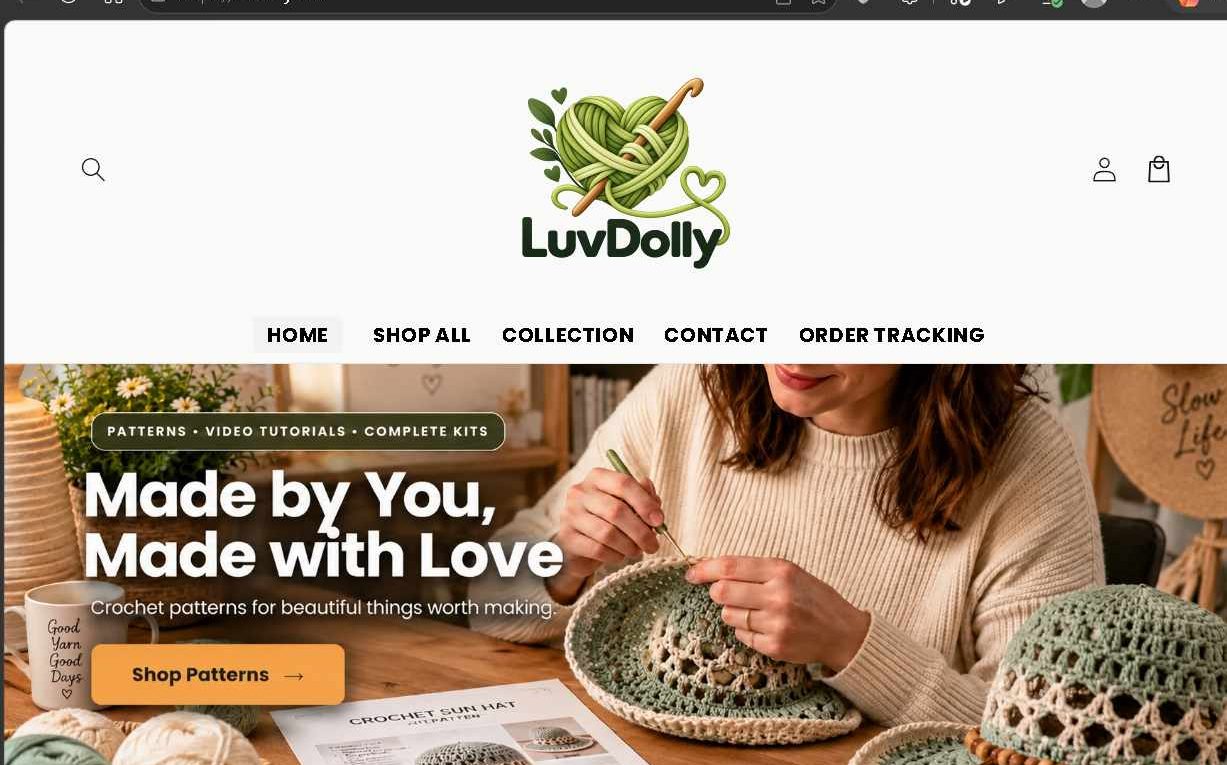
At first glance, the homepage looks like a dream boutique for fiber artists. The site displays a custom yarn-heart logo with a crochet hook, backed by clean navigation tabs like “HOME,” “SHOP ALL,” “COLLECTION,” “CONTACT,” and “ORDER TRACKING.”
A warm, rustic hero section shows an artisan crocheting a brimmed sun hat, framed by ceramic mugs, textured yarn skeins, and the prominent headline: “Made by You, Made with Love.” Below this, a tag promises “PATTERNS • VIDEO TUTORIALS • COMPLETE KITS,” inviting visitors to click “Shop Patterns.” The user experience is specifically tailored to feel like a cozy, community-driven studio rather than a mass-production dropship engine.
Products and Marketing Claims
The core marketing claim of Luvdolly centers on accessibility: “Crochet patterns for beautiful things worth making.”
The catalog focuses on trendy seasonal wearables—such as textured Crochet Sun Hats, delicate bags, and beginner-friendly home decor items. The site claims to provide comprehensive kits containing premium fibers, beginner-accessible video instructions, and instant digital pattern guides to help anyone finish a boutique-grade project.
Modus Operandi
Behind the heartwarming craft slogans, the operational model follows a familiar pattern:
- Targeted Social Advertising: Video ads showcase hands crafting intricate pieces, driving traffic directly to single-product checkout pages.
- Subpar or Missing Goods: If physical packages do arrive, buyers often receive cheap, scratchy synthetic yarn skeins, undersized plastic hooks, and unformatted pattern sheets that bear little resemblance to the professional photos shown on the site.
- Ghosting on Digital Products: Shoppers purchasing standalone digital patterns frequently encounter broken download links or receive fragmented, unedited drafts that are impossible to work from.
- Dispute Obstacles: The store uses restrictive fine-print policies to deny refund requests, buying time before shoppers realize their items are missing or unusable.
Critical Red Flags Found on Luvdolly
A forensic look at the site’s contact information and policy pages reveals several major warning signs:
The Recycled Scam Trail (The “Tundolly” Connection)
The clearest indicator of an untrustworthy storefront is sloppy backend management. On its official “Contact Us” page, the site mistakenly lists its customer support contact as support.tundolly@gmail.com.
Tundolly.com is a documented disposable drop-shipping domain associated with consumer complaints regarding unfulfilled orders, poor material quality, and rejected refund requests. Leaving behind the email address of a previously abandoned storefront demonstrates that the operators simply recycled an older, flagged e-commerce template for Luvdolly.
Disposable Free Webmail for Customer Care
Legitimate craft retailers communicate via authentic enterprise email domains (such as support@luvdolly.com). Relying entirely on an unmonitored Gmail address (support.tundolly@gmail.com) demonstrates that the business lacks verifiable corporate communication infrastructure.
Virtual Maildrop Address
The business lists its physical base of operations as:
1001 S MAIN ST, STE 600, KALISPELL, Montana 59901, United States.
This address is a well-known commercial registered-agent location and virtual maildrop shared by hundreds of anonymous shell companies and offshore e-commerce setups. The storefront has no physical design studio, yarn warehouse, or distribution hub operating from this Montana address.
Restrictive Return Windows
The site enforces stringent cancellation restrictions, including an aggressive “1-hour order cancellation window” alongside exclusions on kits and digital products. These rigid barriers are designed to capture customer payments immediately while preventing chargebacks once the reality of fulfillment sets in.
Final Verdict
Taking into account the recycled domain assets, virtual maildrop footprint, disposable webmail support, and scraped community imagery, the conclusion is clear.
Luvdolly is an unverified, high-risk craft storefront. It shows all the characteristics of a disposable drop-shipping site capitalizing on stolen design imagery. Shopping here exposes crafters to financial loss, unauthorized payment handling, and the receipt of inferior or non-existent supplies. Avoid buying kits, downloading patterns, or submitting your financial details to this platform.
If you have already placed an order on Luvdolly, check your statements closely, report unfulfilled orders to your credit card company, and file a payment dispute. To support authentic creativity, purchase patterns directly from independent designers on verified platforms like Ravelry or Etsy, where creator identities and customer reviews are clear and accountable.
Frequently Asked Questions (FAQ)
Is Luvdolly a Scam?
Yes. Based on its use of recycled operational details from previously flagged domains (Tundolly), an anonymous commercial maildrop address, disposable Gmail support, and scraped artisan imagery, Luvdolly exhibits the hallmarks of a deceptive e-commerce operation.
Is Luvdolly Legit?
No, Luvdolly is not a legitimate, independent craft business. It operates without verifiable corporate backing, authentic artisan design credentials, or transparent inventory fulfillment.
How do fake crochet pattern sites get their product images?
Fraudulent craft websites scrape professional photography and instructional videos directly from independent creators on Etsy, Instagram, TikTok, and Ravelry, re-uploading them without permission to masquerade as authentic studios.
What usually arrives when ordering a DIY kit from a ghost craft store?
Buyers often receive cheap synthetic yarn substitutes, incorrect hook sizes, and unreadable or missing instructions rather than the premium fibers and polished patterns depicted in the site’s marketing.
Why is the support email on Luvdolly linked to Tundolly?
Operators of disposable drop-shipping storefronts frequently duplicate their site code when launching new domains. The presence of support.tundolly@gmail.com reveals that Luvdolly was recycled from an older storefront named Tundolly.
What should I do if I purchased a pattern or kit from Luvdolly?
Contact your bank or payment provider immediately. Provide documentation showing unfulfilled items, misleading quality, or lack of customer response to open a formal chargeback dispute.
Where can I safely buy authentic crochet patterns and kits?
Purchase patterns directly through platforms like Ravelry and Etsy, or from reputable local yarn shops and established fiber arts brands that offer verifiable community reviews and direct designer contact.
For more shady sites exposed, check our Shopping Scam Directory — your quick guide to staying safe online.
Every safe click counts. If this post helped, a coffee gesture fuels more scam‑busting investigations.

Call to Action
Please share this article to spread awareness. Follow us on Facebook, Twitter, and Instagram for more scam alerts. If you doubt the legitimacy of any website or investment plan, DM us on social media — we’ll help you verify.