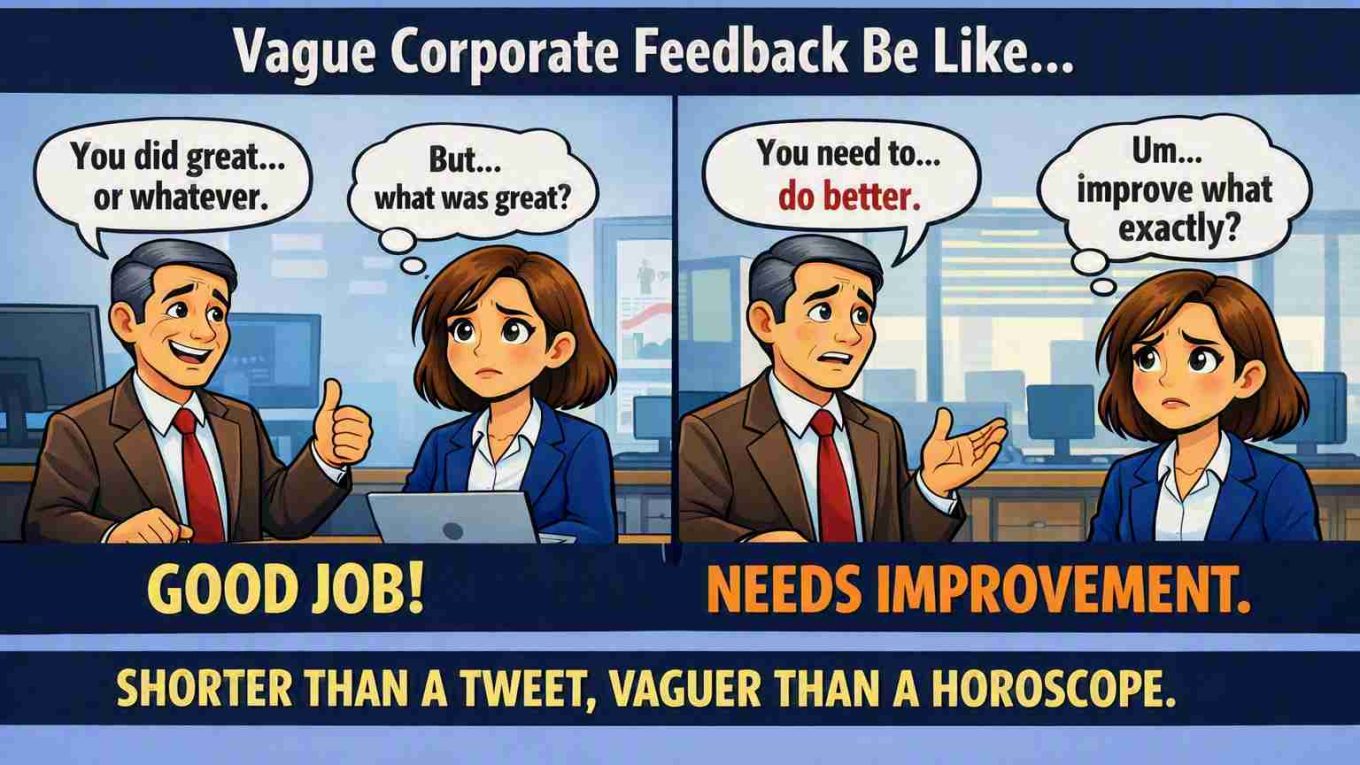
The Story: The Mystery of Vague Feedback
Priya submitted her report with charts, analysis, and a neat conclusion. She waited eagerly for her manager’s comments.
The email arrived: “Good job. Keep it up.”
Priya frowned. “But… what exactly was good? The charts? The analysis? The font size?”
Next week, she tried again. This time, the feedback was: “Needs improvement.” Priya sighed: “Improvement in what? My work… or my handwriting?”
By the third round, she realized feedback was like a fortune cookie — short, mysterious, and open to interpretation.
🎯 The Wisdom
Vague feedback is worse than no feedback. It leaves employees guessing instead of growing. The next time you hear “Good job” or “Needs improvement”, ask politely: “Could you clarify what exactly was good, and what needs improvement?”
Because clarity turns feedback into fuel for progress.
Frequently Asked Questions
Q1: Why is feedback always vague in corporate settings?
Managers may be rushed, uncomfortable with specifics, or unsure how to phrase constructive criticism.
Q2: How does vague feedback affect employees?
It creates confusion, stalls growth, and can lower motivation.
Q3: How can employees handle vague feedback?
By asking follow‑up questions: “Could you give me an example?” or “Which part should I focus on improving?”
Q4: Is vague feedback better than no feedback?
Not really. Without specifics, employees can’t act on it, making it nearly useless.
Q5: How can managers avoid giving vague feedback?
By being specific, actionable, and balanced — highlighting both strengths and areas for improvement.