
The Dopamine Trap: Why Your Brain Prefers Sugar Rushes Over True Happiness
Imagine a teenager named Leo. For months, Leo guarded his savings like a dragon sitting on a pile of gold, all to buy a brand-new video game console. When the box finally arrived, his heart raced like he’d just chugged three espressos. He spent the entire weekend glued to the screen, entirely convinced he had achieved peak human enlightenment.
Spoiler alert: he hadn’t.
By week two, the thrill was wearing off. By week three, the console was just another piece of furniture. And by month two? Leo was already deep-diving into tech forums, eyeing the next gadget like a raccoon sniffing out fresh garbage.
During that exact same year, Leo also decided to do something wild and completely un-glamorous: help clean up a neglected neighborhood park. There were no flashing lights, no achievement unlocks, and zero instant gratification.
It meant waking up early on a weekend—nature’s cruelest joke—getting his hands dirty, and sweating under the sun. Yet, months later, walking past that park and seeing kids actually playing on clean grass gave him a warm, quiet sense of satisfaction that didn’t magically evaporate after seven days.
Congratulations, Leo. You’ve just stumbled into the ancient philosophical cage match between temporary pleasure and true happiness.
🍩 The Sugar Rush: What is Temporary Pleasure?
Temporary pleasure is the emotional equivalent of eating a giant chocolate bar at midnight. It tastes incredible in the exact nano-second you do it, but the euphoria vanishes instantly, leaving you staring at the wrapper wondering where your life went wrong.
Scientists call this Hedonia. Your brain drives this process using dopamine—the chemical equivalent of a micro-transaction reward. Every time you win a video game match, close a quick options trade, devour junk food, or watch the “likes” roll in on a selfie, your brain hands you a tiny, fleeting dopamine treat.
Now, let’s be clear: temporary pleasure isn’t a villain. Eating pizza and watching Netflix make life worth living. The trap snaps shut when you mistake a quick adrenaline spike for actual fulfillment. If your entire life strategy is chasing the next fun thing, you end up like a frantic hamster on a smart-wheel—sweating profusely, going nowhere fast, and perpetually annoyed.
The Deep Roots: What is True Happiness?
True happiness (Eudaimonia) isn’t a permanent, creepy grin—it’s a sturdy sense of peace that survives even when the markets bleed and your coffee is cold. It’s not a quick sugar rush or a one-click purchase; it’s a garden that requires patience and effort to grow.
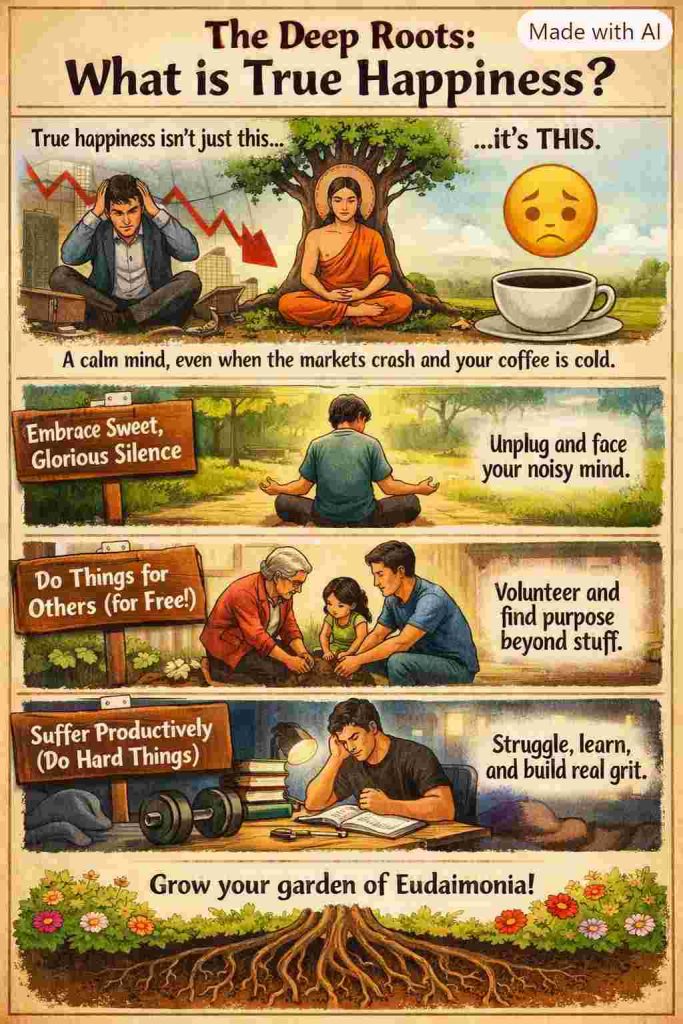
Here are three ways to build it:
Suffer Productively (Do Hard Things): Pleasure is lazy; happiness requires struggle. Grinding through tough challenges—like a rigorous Research Analyst certification or mastering complex market frameworks—builds rugged pride and confidence that stays with you forever.
Embrace Sweet, Glorious Silence: Unplugging to sit in total silence (like surviving a ten-day meditation course in Sohna) forces you to face your internal monologue and breaks your reliance on cheap dopamine.
Do Things for Others (For Free!): True happiness shifts your focus from acquiring things to being useful. Stepping away for volunteer service (like ten days in Jaipur) rewires your perspective and creates lasting purpose.
The Bottom Line
Think of temporary pleasure as the cheap holiday fairy lights stapled to a house, and true happiness as the concrete foundation holding the whole thing up.
By all means, enjoy the lights—eat the good food, enjoy your hobbies, and play the games. Just remember that a house collapses if it’s built out of holiday decorations alone. Balance out the quick thrills with a bit of quiet reflection, some actual community service, and hard work, and you’ll build a life foundation that doesn’t crash the second your Wi-Fi drops.