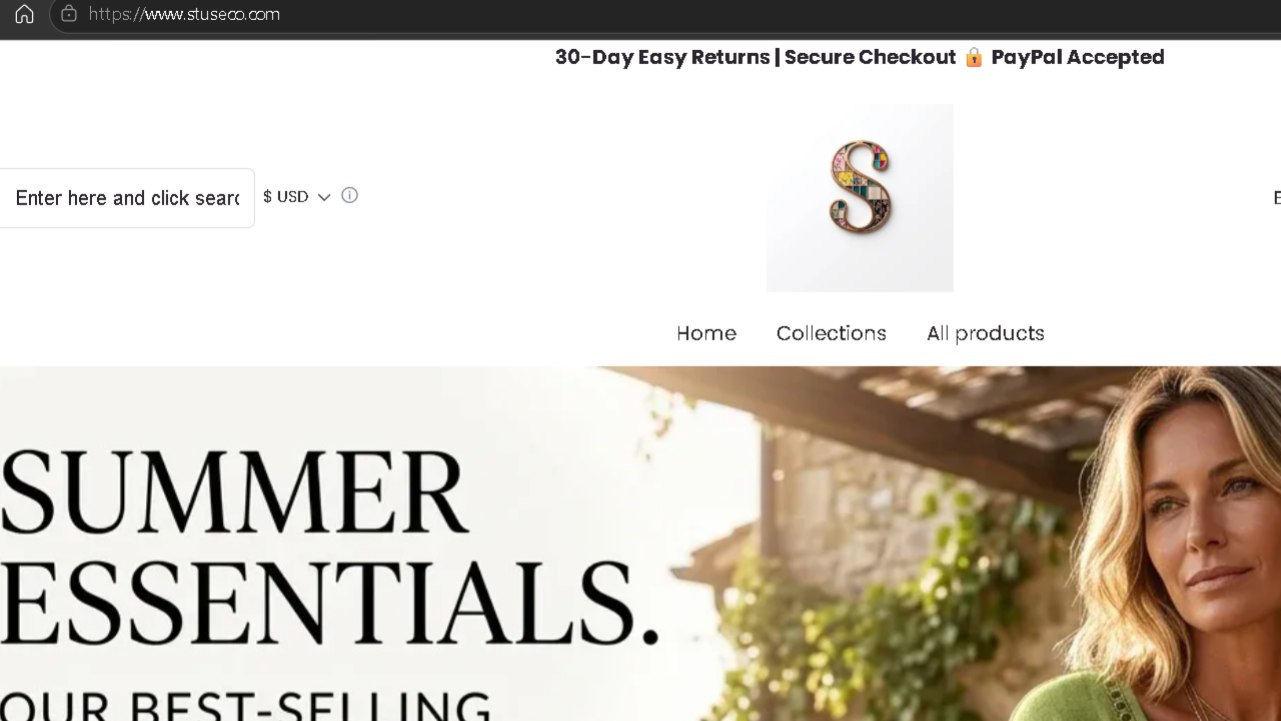
Stuseco Review – Scam Store Targeting U.S. Shoppers
Stuseco presents itself as an online shopping destination, but beneath the surface it carries all the hallmarks of a fraudulent store. With a domain registered only in June 2026 and a trust score hovering around 12/100, this site raises immediate red flags.
For unsuspecting American shoppers, this is a dangerous setup. Scam sites like Stuseco exploit the convenience of e‑commerce by hiding ownership, avoiding accountability, and luring buyers with fake deals. The result is often financial loss, counterfeit goods, or no delivery at all.
Red Flags of Stuseco
- Young domain Registered on June 4, 2026, Stuseco is barely a month old. Scam websites often appear suddenly, operate for a short period, and then vanish once victims start reporting fraud. The short lifespan of this domain strongly suggests it was created for quick exploitation rather than long‑term business.
- Low trust score Independent scam‑checkers rate Stuseco at 12/100 (Gridinsoft) and 15.6/100 (Scam Detector). These scores are not arbitrary — they reflect multiple risk factors such as hidden ownership, lack of transparency, and suspicious activity. A legitimate store would never fall this low on trust metrics, which makes this a serious warning sign.
- Hidden ownership The site is registered through Dynadot with privacy protection enabled. While privacy shields can be normal for individuals, legitimate businesses usually display their corporate details openly. Stuseco’s refusal to reveal who runs it means buyers have no accountability if something goes wrong, leaving them stranded without recourse.
- No customer reviews There are no independent reviews on trusted platforms like Trustpilot, SiteJabber, or Google Reviews. In today’s e‑commerce world, even new businesses quickly accumulate feedback. The complete absence of reviews suggests either no real customers or deliberate suppression of negative experiences.
- Suspicious outcomes Reports linked to similar scam shops include non‑delivery of items, receiving the wrong product, counterfeit substitutes, or damaged goods. With no customer service channels visible, victims are left stranded without refunds or replacements, making every transaction a gamble.
- Unclear niche The site is categorized under “Miscellaneous/Uncategorized.” Fraudulent stores often avoid defining a clear niche because they copy product listings from multiple sources. This vagueness makes it harder for shoppers to verify authenticity and easier for scammers to pivot quickly to new scams.
- Copied content Stuseco uses product descriptions and images lifted from other sites. Legitimate stores create original content, while scams recycle material to look convincing — a clear sign of fraud.
Risk Table
| Risk Factor | Details |
|---|---|
| Domain Age | 1 month (June 2026) |
| Trust Score | 12/100 (Gridinsoft), 15.6/100 (Scam Detector) |
| Ownership | Hidden via Dynadot Privacy |
| Customer Reviews | None |
| Common Outcomes | No delivery, wrong/counterfeit items |
| SSL Certificate | Active but meaningless |
Our Rating
Rating: 0.5 out of 5.
We give Stuseco a rating of 1 out of 5 stars. The only positive is that it has an SSL certificate, but that does not prove safety. With hidden ownership, fake discounts, and no reputation, it is unsafe for online shopping.
In the United States, online shopping is woven into everyday life, with millions of consumers relying on e‑commerce for convenience, discounts, and fast delivery. Scam sites like Stuseco exploit this trust by mimicking legitimate retailers while concealing their identity.
American shoppers are often targeted through fake discount ads on Facebook or Instagram, promising “limited‑time offers” that lead to fraudulent checkout pages. Others encounter scams through phishing emails disguised as shipping updates or coupon codes, tricking users into clicking unsafe links. Coupon and deal hunters are especially vulnerable, as fraudsters know that U.S. consumers love chasing bargains and will often act quickly when they see a “too‑good‑to‑be‑true” offer.
The danger isn’t just losing money — it’s also exposing personal data. Scam sites can harvest credit card details, addresses, and even login credentials, which may later be sold on dark web marketplaces. For American consumers, the best defense is vigilance: stick to established platforms like Amazon, Walmart, Target, or Best Buy, and always verify a store’s reputation before clicking “Buy Now.”
FAQs Section
Is Stuseco legit?
No. Scam‑checkers classify it as unsafe and high‑risk. Its domain is barely a month old, ownership is hidden, and there are no genuine customer reviews. These are classic hallmarks of fraudulent online shops.
Can I file a chargeback in the U.S.?
Yes. If you paid by credit card, you can contact your bank or card issuer to dispute the charge. Under U.S. consumer protection laws, banks often reverse payments when you can show proof of fraud, such as screenshots of the site, receipts, or email correspondence.
Does PayPal protect me?
Yes. PayPal offers buyer protection if you report non‑delivery or counterfeit goods. You must open a dispute within 180 days of purchase. If the seller cannot prove shipment or authenticity, PayPal usually refunds the buyer.
Can I check legitimacy with the BBB?
Yes. Search the Better Business Bureau database. Stuseco has no listing, which is a red flag. Legitimate U.S. businesses often have BBB profiles with ratings, complaint histories, and customer feedback.
How do I report scams in the U.S.?
File a complaint with the FTC or your state’s Attorney General. The FTC collects reports to track patterns of fraud, and state AG offices can investigate and take legal action against scam operators.
Does SSL mean safe?
No. SSL only encrypts data during transmission; it doesn’t prove legitimacy. Many scam sites use SSL certificates to appear trustworthy, but encryption alone doesn’t protect you from fraud.
Are there safer alternatives?
Yes. Stick to trusted retailers like Amazon, Walmart, Target, or Best Buy. These companies provide clear ownership details, customer service channels, and refund policies, ensuring accountability if something goes wrong.
Comparison with Legitimate Sites
- Ownership transparency Legitimate U.S. retailers like Amazon, Walmart, and Target clearly display their corporate information, addresses, and customer service contacts. Stuseco hides behind privacy shields, leaving buyers with no way to trace accountability.
- Customer reviews Trusted platforms are filled with thousands of verified reviews, ratings, and photos from real shoppers. This feedback helps buyers make informed decisions. Stuseco has no such presence, which means you’re shopping blind with no proof of reliability.
- Refund and return policies Established U.S. retailers provide clear return windows, refund guarantees, and customer support channels. Stuseco offers no visible policies, making it nearly impossible to recover your money if something goes wrong.
- Payment security Legitimate sites use secure gateways, fraud monitoring, and often allow multiple safe payment options. Scam sites like Stuseco may accept only risky methods or misuse SSL certificates to appear safe without offering real protection.
- Regulatory compliance U.S. businesses comply with consumer protection laws, display terms of service, and often have BBB listings. Stuseco has none of these safeguards, leaving American shoppers exposed to fraud without recourse.
The Appeal
If you found this review helpful, share it with friends and family. Raising awareness is the best defense against online scams.
Conclusion
Stuseco is a textbook scam store: young domain, hidden ownership, no reviews, and high risk of fraud. Protect yourself by avoiding this site and sticking to verified retailers.
“Transparency is the currency of trust — without it, every deal is a gamble.”
Read next: Shopping Scam Directory