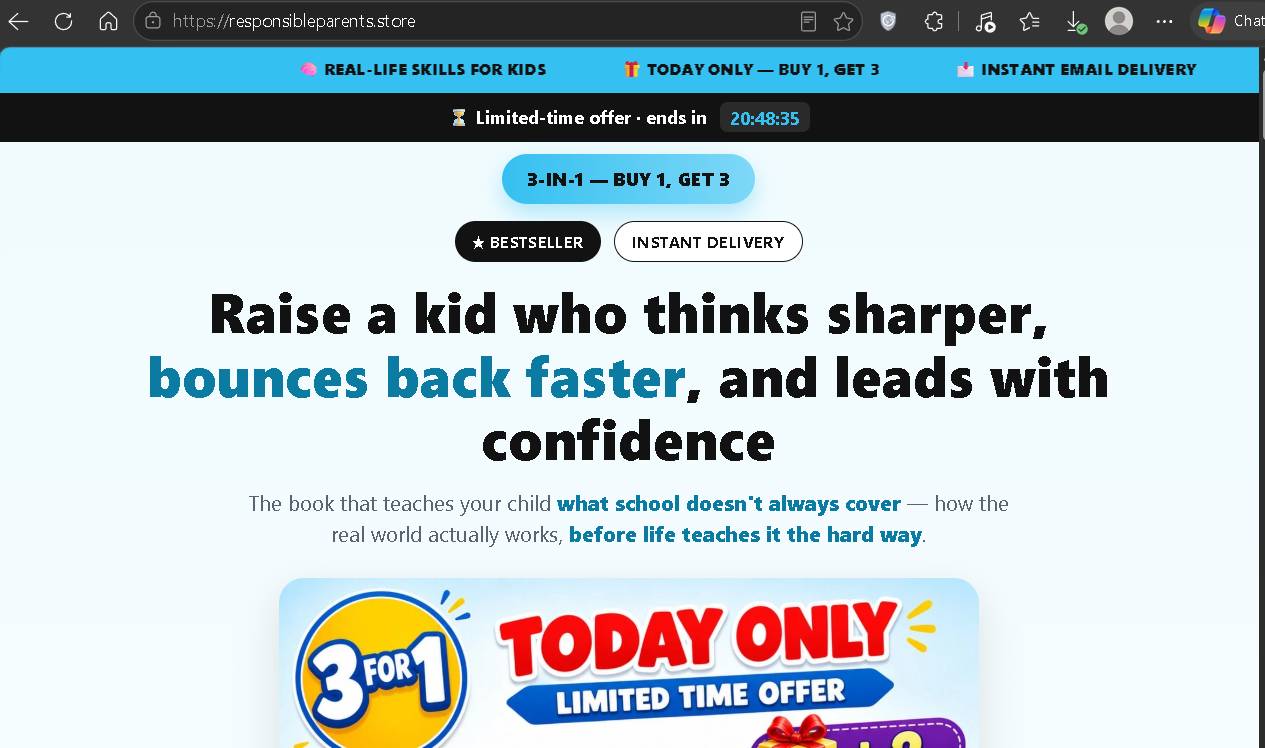
Responsibleparents.store Review: Parenting Kit Scam or Legit?
Parenting in the digital age comes with immense emotional weight. Between managing screen time, handling behavioral outbursts, and navigating neurodivergent conditions like ADHD or sensory overload, parents are frequently left feeling exhausted, insecure, and desperate for straightforward solutions. Unfortunately, this acute emotional burnout has created a lucrative market for predatory marketers.
Rather than building genuine educational platforms or physical tools, bad actors increasingly rely on the single-product digital funnel. A textbook case of this extractive model in action is Responsibleparents.store. By dissecting how Responsibleparents.store converts parental guilt and exhaustion into high-margin checkout runs, we can understand the deceptive architecture of digital bait-and-switch operations and learn how to identify them before payment details are submitted.
The Mechanics of Parental Anxiety Exploitation in Digital Funnels
Direct-response marketing funnels are engineered to convert traffic into sales with minimal friction. While direct-to-consumer businesses legitimately use single-product landing pages to showcase new inventions, deceptive operators repurpose this setup to extract cash through psychological manipulation.
When applied to parenting, these funnels operate on a specific framework:
- Vulnerability Arbitrage: The marketing targets common, high-stress parenting challenges—such as public tantrums, toddler defiance, emotional dysregulation, and bedtime battles. It validates parental exhaustion while simultaneously amplifying parental guilt, subtly implying that failing to fix these behaviors quickly will harm the child’s future.
- The “Tangible-Asset” Illusion: The funnel relies on visual deception. High-resolution 3D mockups display physical items—spiral-bound planners, laminated chore cards, wooden-style routine boards, and activity boxes. The consumer’s mind categorizes the offer as a physical product delivery.
- The Tripwire Front-End: To eliminate rational hesitation, the primary product is priced at an impulse-friendly $9 to $19. A burned-out parent will readily risk $12 if it promises a peaceful evening.
- The Multi-Step Upsell Gauntlet: The front-end price is merely bait. The real profit engine lives in pre-checked checkout add-ons and post-checkout one-click upsell pages that quietly turn a minor purchase into an expensive order.
- Digital Exemption Shielding: Once money is collected, the merchant fulfills the order via automated email links containing generic PDF printables. When confused parents ask when their package will ship, the seller cites statutory digital download exemptions to flatly deny refunds.
Case Study: Responsibleparents.store
Responsibleparents.store operates as a single-product sales funnel hosted on a disposable .store top-level domain. Rather than functioning like an authentic e-commerce bookstore, educational publisher, or family therapy portal, the entire site is a continuous conversion track built on direct-response landing page software.
The storefront presents itself as a dedicated organization offering an all-in-one behavioral management kit. Through emotionally charged copy, dynamic timers, and visual mockups of printed manuals, chore charts, and progress checklists, the site targets parents scrolling through social feeds looking for calm, practical ways to regain control of chaotic households.
Working of the Website: What Responsibleparents.store Claims
The sales pitch across responsibleparents.store promises dramatic behavioral transformation with little effort or time:
- Turnkey Behavioral Transformation: The promotional copy claims the toolkit can stop aggressive tantrums in days, end sibling rivalry, and foster deep emotional self-regulation in children without traditional discipline or yelling.
- Clinically Backed, Proprietary Blueprints: The landing page implies the materials were crafted by elite child psychologists, neuro-developmental specialists, and family behaviorists, packaging proprietary routines that traditional parenting books fail to teach.
- Substantial Physical Deliverables (Implied): The hero imagery displays binders, wipe-clean visual cards, pocket-sized emergency calming cards, and activity toolkits, leading visitors to believe they are buying physical educational materials for their home.
- High-Value Price Anchoring: The store claims the complete behavioral bundle is valued at $97 to $149, but heavily discounted to an “accessible” price of $9.99 to $14.99 to help families in need.
- Fake Deadlines & Scarcity: Evergreen countdown clocks, animated inventory bars showing “only 4 physical packages left,” and live popups declaring recent purchases pressure the buyer into checking out immediately.
Explaining the Modus Operandi of Responsibleparents.store
Behind its empathetic facade, Responsibleparents.store uses a calculated extraction strategy designed to extract maximum revenue before the buyer realizes no physical goods are coming:
1. Paid Social Media Infiltration
The funnel generates traffic through targeted Meta advertisements (Facebook and Instagram). The ads feature emotionally resonant video hooks: a mother breaking down in tears, a toddler screaming in a grocery store, or dramatic captions like “What yelling actually does to your child’s brain.” The ad promises an easy, step-by-step visual routine that fixes the problem instantly.
2. The Deceptive Impulse Landing Page
Once clicked, the parent lands directly on the sales page. The design keeps them focused exclusively on their frustration, highlighting common parenting pain points before presenting the toolkit as a painless solution. By pricing the core asset below $15, the site bypasses the careful research a parent would normally conduct before purchasing a high-ticket program.
3. The Hidden Add-On and Upsell Sequence
During the checkout phase, the funnel activates its primary extraction tools:
- Pre-Checked Order Bumps: Tiny, pre-checked checkboxes sit right above the payment button, offering items like “ADHD Calming Audio Tracks” or “The Screen-Addiction Detox Plan” for an extra $9.99 each. Unsuspecting buyers often miss these pre-selected options.
- Post-Purchase One-Click Upsells: After clicking “Complete Order,” the buyer is routed through multiple post-purchase upsell screens (e.g., “VIP Lifetime Parenting Coaching Portal” for $39 or $59). In poorly configured or aggressive gateways, clicking the button charges the card on file immediately without requesting secondary card confirmation.
4. Low-Value Digital Fulfillment
Instead of receiving a shipment confirmation with a tracking number, the buyer gets an automated email containing download links. The files are generic PDF documents: basic lists of daily chores, rudimentary calendar layouts, motivational quotes, and public-domain parenting advice readily found on basic parenting blogs or free printable platforms.
5. The Digital Download Refund Stonewall
When customers realize no physical kit is coming in the mail and request a cancellation or refund, the store’s support team stonewalls them. They point to terms-of-service clauses stating that because digital access links were issued instantly upon checkout, all sales are strictly non-refundable.
Red Flags Found on Responsibleparents.store
| Funnel Metric / Element | Website Sales Claim | Actual Operational Truth | Risk Level |
|---|---|---|---|
| Product Nature | Comprehensive physical behavioral and routine kit | Low-grade, downloadable PDF files; no physical delivery | Critical |
| Checkout Architecture | Upfront $9.99–$14.99 one-time payment | Sneaky pre-checked boxes and aggressive upsells that inflate charges | Critical |
| Creator Credentials | Developed by elite behavioral therapists | Completely anonymous operators with no verified child psychology credentials | High |
| Domain Infrastructure | Established parenting resource store | Disposable .store domain with hidden WHOIS ownership | High |
| Scarcity & Urgency | “Only 4 kits remaining at this price” | Automated JavaScript scripts that reset every time the page loads | High |
| Return & Refund Terms | “100% Risk-Free Satisfaction Guarantee” | Hidden “no refunds on digital products” exemption clauses | High |
Final Verdict
Responsibleparents.store is a deceptive single-product digital funnel that profits from parental stress using false physical product imagery and low-value digital deliverables.
While the site technically sends an automated email with downloadable PDFs—which keeps it outside the legal definition of an outright non-delivery fraud scheme—the deliberate physical-to-digital bait-and-switch, coupled with aggressive checkout upsells and unyielding refund barriers, makes it an exploitative storefront.
Parents looking for practical behavioral toolkits, ADHD schedules, chore charts, and emotional regulation strategies do not need to spend money on dubious single-product landing pages. High-quality, evidence-backed parenting resources, printable daily routine charts, and behavioral strategies are available completely free through reputable public health institutions (such as the CDC and NHS), pediatric medical organizations, and respected non-profit child development foundations.
Frequently Asked Questions (FAQ)
Is Responsibleparents.store Scam?
Responsibleparents.store does not run a classic phishing operation that steals credit card data without sending any files, but it operates as a deceptive digital bait-and-switch funnel.
It misleads shoppers by using 3D renders that simulate physical kits, binders, and routine boards, while fulfilling orders with basic, unvetted PDF downloads that offer very little real value. Combined with pre-checked cart upsells and strict no-refund policies, the site functions in a predatory manner toward exhausted parents.
Is Responsibleparents.store Legit?
No, Responsibleparents.store lacks the credentials and accountability of a legitimate educational publisher or child-development resource. The website operates through an anonymous, disposable domain without disclosing a corporate entity name, business registration number, physical headquarters address, or verifiable medical credentials for the creators of its materials.
What is a single-product digital funnel exploiting parental anxiety?
A single-product digital funnel exploiting parental anxiety is a direct-response website engineered around parents’ emotional exhaustion, guilt, and stress. The page highlights difficult child behavioral issues (such as emotional dysregulation, tantrums, or neurodivergent routines) and sells an inexpensive “quick fix.”
The site relies on low entry pricing to bypass normal consumer caution, while extracting profits through aggressive checkout add-ons and delivering low-effort digital PDFs.
Why do digital parenting funnels use 3D physical book mockups for PDF files?
Deceptive digital operators use 3D mockups—such as spiral-bound manuals, boxed game sets, and glossy cards—because consumers assign significantly higher perceived value to tangible items than electronic documents. A buyer who would never spend $15 on a 5-page PDF checklist will readily pay $15 for what appears to be a printed, laminated behavioral management set shipped to their home.
What steps should you take if Responsibleparents.store charged your card unexpectedly?
If you were misled by Responsibleparents.store or found unauthorized upsell charges on your bill, follow these steps immediately:
- Document the Evidence: Take screenshots of the product page showing the physical-looking mockups, alongside your checkout receipt and the actual PDF downloads received.
- Submit a Formal Cancellation Request: Send an email to the customer support address demanding an immediate full refund, explicitly stating that the product delivered was entirely different from the physical goods portrayed in the marketing copy.
- Contact Your Card Issuer: If support denies your refund or ignores your emails, call your bank or credit card fraud department. Request a chargeback on the grounds of “Merchandise Not as Described” or unauthorized billing for pre-checked upsells, and consider requesting a replacement card if you suspect recurring subscription enrollment.
Every safe click counts. If this post helped, a coffee gesture fuels more scam‑busting investigations.

Call to Action
Please share this article to spread awareness. Follow us on Facebook, Twitter, and Instagram for more scam alerts. If you doubt the legitimacy of any website or investment plan, DM us on social media — we’ll help you verify.