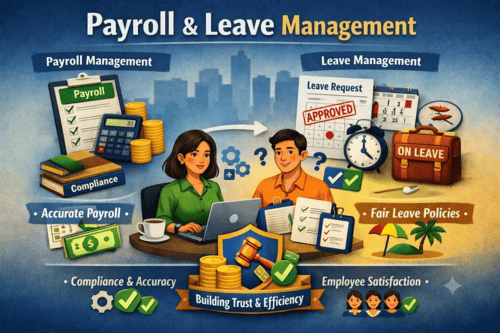
Payroll & Leave Management: The Unsung Backbone of HR
When people think of Human Resources, they often picture recruitment drives, employee engagement activities, or festive celebrations. Yet behind the scenes, HR professionals shoulder one of the most critical responsibilities that keeps organizations running smoothly — payroll & leave management.
These functions may appear routine, but they are deeply tied to employee satisfaction, compliance, and organizational credibility. A single error in payroll or a poorly handled leave request can erode trust faster than any engagement initiative can rebuild it.
Challenges in Payroll & Leave Management
1. Accuracy in Payroll Processing
Payroll is not just about salaries; it involves deductions, reimbursements, overtime, bonuses, and statutory contributions (PF, ESI, gratuity, taxes). Manual errors or miscalculations can lead to employee dissatisfaction and even legal complications.
2. Integration with Leave Records
Leave balances directly affect payroll. Mismanaged leave records — whether due to manual tracking or poor communication between managers and HR — often result in incorrect salary calculations.
3. Compliance with Labor Laws
Indian labor laws mandate specific entitlements such as earned leave, maternity leave, and sick leave. HR must ensure payroll reflects these accurately, while also keeping up with frequent regulatory changes.
4. Unplanned Leaves and Absenteeism
Festive seasons or sudden emergencies can lead to multiple employees taking leave simultaneously. HR must balance empathy with operational continuity, ensuring payroll deductions or adjustments are handled fairly.
5. Employee Expectations vs. Policy
Employees often expect flexibility in leave approvals or payroll adjustments. HR, however, must adhere to policy and compliance, leading to friction when expectations don’t align with rules.
6. Technology Gaps
Organizations that still rely on spreadsheets or manual systems face higher risks of errors, delays, and lack of transparency. Without automation, HR spends more time firefighting than strategizing.
Solutions for Effective Payroll & Leave Management
1. Adopt Robust HR Technology
Modern HRMS platforms (like GreytHR, Zoho People, or Keka) automate payroll and leave tracking. They integrate attendance, leave balances, and payroll processing, reducing errors and saving time.
Outcome: Transparency, accuracy, and real‑time visibility for both HR and employees.
2. Establish Clear Policies
A standardized leave and payroll policy ensures fairness. Define types of leaves, eligibility, approval hierarchy, and payroll deductions clearly. Communicate these policies during onboarding and through employee handbooks.
Outcome: Reduced confusion and disputes.
3. Regular Compliance Audits
HR should conduct periodic audits to ensure payroll and leave practices align with labor laws. Partnering with legal advisors or using compliance modules in HR software helps stay updated.
Outcome: Risk reduction and enhanced organizational credibility.
4. Data‑Driven Forecasting
Analyze leave trends to predict high‑leave periods. For example, if absenteeism spikes during Diwali, HR can plan flexible schedules or advance project deadlines.
Outcome: Better workforce planning and reduced disruption.
5. Train Managers on Leave Protocols
Managers play a key role in approving leaves. Training them on policy adherence and communication ensures smoother coordination between HR and departments.
Outcome: Fewer conflicts and accurate payroll records.
6. Promote Employee Responsibility
Encourage employees to plan leaves in advance and respect team schedules. Internal campaigns like “Plan Ahead, Work Smoothly” reinforce accountability.
Outcome: Balanced workloads and smoother payroll processing.
7. Integrate Payroll with Employee Well‑Being
Payroll and leave aren’t just administrative tasks — they directly affect morale. HR should view them as part of employee wellness. Offering flexibility, mental health days, or transparent communication builds trust.
Outcome: Higher engagement and retention.
Challenges vs. Solutions
| Challenge | Solution | Outcome |
|---|---|---|
| Payroll errors | HRMS automation | Accuracy & transparency |
| Mismanaged leave records | Clear policies + manager training | Fairness & smooth coordination |
| Compliance risks | Regular audits | Legal safety |
| Unplanned leaves | Data forecasting | Better workforce planning |
| Employee dissatisfaction | Wellness integration | Engagement & retention |
Conclusion
Payroll & leave management may not grab headlines like recruitment drives or cultural events, but they form the foundation of employee trust. When salaries are processed accurately and leaves are managed fairly, employees feel respected and valued.
For HR professionals, mastering payroll and leave management is not just about compliance — it’s about building credibility. By embracing technology, clear communication, and proactive planning, HR can transform these “routine” tasks into strategic pillars of organizational success.
In the end, payroll & leave management are more than numbers and approvals. They are about people — ensuring that every employee’s time, effort, and well‑being are recognized and rewarded fairly.
Frequently Asked Questions (FAQs)
Why is payroll management considered a critical HR function?
Payroll directly impacts employee trust and satisfaction. Accurate salary processing ensures compliance with laws and builds credibility for the organization.
How does leave management affect payroll?
Leave balances influence salary calculations. Mismanaged leave records can lead to incorrect deductions or payouts, causing disputes and dissatisfaction.
Can effective payroll & leave management improve employee retention?
Yes. When employees feel their time and compensation are managed fairly, they are more likely to stay engaged and loyal to the organization.
What role do managers play in leave management?
Managers are the first point of approval for leave requests. Training them on policy adherence and communication ensures smoother coordination with HR.
How often should payroll & leave policies be reviewed?
At least once a year, or whenever there are changes in labor laws, organizational structure, or employee needs.
Author Bio
Sweta Rawat is an HR professional with over 2.5 years of experience and an MBA in Human Resources. She writes on modern HR practices, employee engagement, and workplace culture, blending professional expertise with creative insight.