
Nepal Flood Relief Scams: Complete Consumer Protection & Verification Guide
During major monsoon flooding and landslides across Nepal—from the Koshi and Narayani river basins to the Kathmandu Valley—thousands of households require urgent humanitarian assistance. Unfortunately, catastrophic events create immediate opportunities for bad actors.
This guide serves as an operational verification manual to help domestic and international donors identify fraudulent relief campaigns, verify legitimate humanitarian organizations registered in Nepal, and report cyber fraud to the proper regulatory authorities.
Nepal Police Cyber Bureau Urgent Advisory:
Fraudulent entities regularly clone the identity of legitimate humanitarian agencies and deploy unauthorized personal digital wallets (eSewa, Khalti) and Fonepay QR codes on social media. Never transfer relief funds to individual accounts or scan unverified QR codes distributed via messaging apps.
Active Fraud Vectors: How Flood Relief Scams Operate
Disaster-related fraud moves quickly across borders and payment rails. Understanding the specific mechanics used by fraudsters prevents capital from being diverted away from ground relief operations.

1. Cloned & Lookalike Crowdfunding Campaigns
Scammers duplicate active campaigns from verified campaigns on platforms like GoFundMe, Milaap, or Ketto. They copy the campaign story, victim photographs, and progress updates word-for-word, replacing the beneficiary payout details with an offshore or unvetted intermediary account.
2. Digital Wallet & QR Code Hijacking
On platforms like TikTok, Facebook, and X (formerly Twitter), threat actors superimpose personal eSewa, Khalti, or Fonepay QR codes onto genuine rescue footage from Nepal’s security forces (Nepal Army, Armed Police Force, and Nepal Police). Donors believe they are giving to a rapid-response team, but the funds go directly into an unverified personal wallet that is cashed out instantly.
3. Spoofed Government & INGO Portals
Deceptive domains mimicking official entities—such as the Prime Minister’s Disaster Relief Fund (PMDRF) or the Nepal Red Cross Society (NRCS)—are registered using typosquatting tactics (e.g., swapping .org.np for .com or .net). These sites feature integrated, unsecure payment gateways designed to harvest credit card data while siphoning relief funds.
4. Illicit Cryptocurrency Solicitations
Under the Nepal Rastra Bank (NRB) Foreign Exchange Regulation Act, cryptocurrency is strictly illegal within Nepal. Any campaign claiming to collect Bitcoin, USDT, or Ethereum on behalf of an official local NGO or government body in Nepal is fraudulent.
Critical Red Flags: The Donor Verification Checklist
Before processing any domestic or international donation, check the campaign against these warning signs:
- Personal Account Routing: The recipient bank account or digital wallet is registered under an individual’s name rather than an institutional, legally incorporated non-profit name.
- Missing SWC Affiliation: Legitimate non-governmental organizations operating in Nepal are registered with the local District Administration Office (DAO) and affiliated with the Social Welfare Council (SWC).
- Emotional Coercion with High Urgency: Posts demanding immediate transfers within minutes, bypassing standard payment receipts or institutional acknowledgments.
- No Physical Base or Ground Verification: The fundraiser cannot provide specific local ward, municipality, or district coordinates where aid is being deployed.
- Absence of SWIFT/IBAN Audit Trails: For international wire transfers, the intermediary bank information does not match the official corporate entity registered in Nepal.
Master Directory: Verified Official Relief Channels
The following table lists verified institutional entities, statutory relief mechanisms, and accredited international relief funds operating in Nepal.
| Organization / Fund Name | Entity Type | Regulatory / SWC ID | Verified Payment Rails | Official Portal |
| Prime Minister’s Disaster Relief Fund (PMDRF) | Statutory Central Fund | Nepal Govt. Entity | Direct Bank Wire / Treasury Accounts (RBB, NBL) | pmdrf.gov.np |
| Nepal Red Cross Society (NRCS) | Statutory Humanitarian | Central Reg. #1 | Institutional Bank Accounts / Verified Corporate Portals | nrcs.org |
| UNICEF Nepal Emergency Response | UN Agency | Multilateral Body | Global Secure SSL Gateway / Official Country Office | unicef.org/nepal |
| World Food Programme (WFP) Nepal | UN Agency | Multilateral Body | UN WFP Secure International Donations | wfp.org |
| Registered Local NGOs / CBOs | Non-Profit / Civic Body | Active SWC Affiliation Required | Institutional Corporate Bank Accounts (Never Personal) | swc.org.np (Registry) |
Step-by-Step Protocol: How to Verify a Campaign
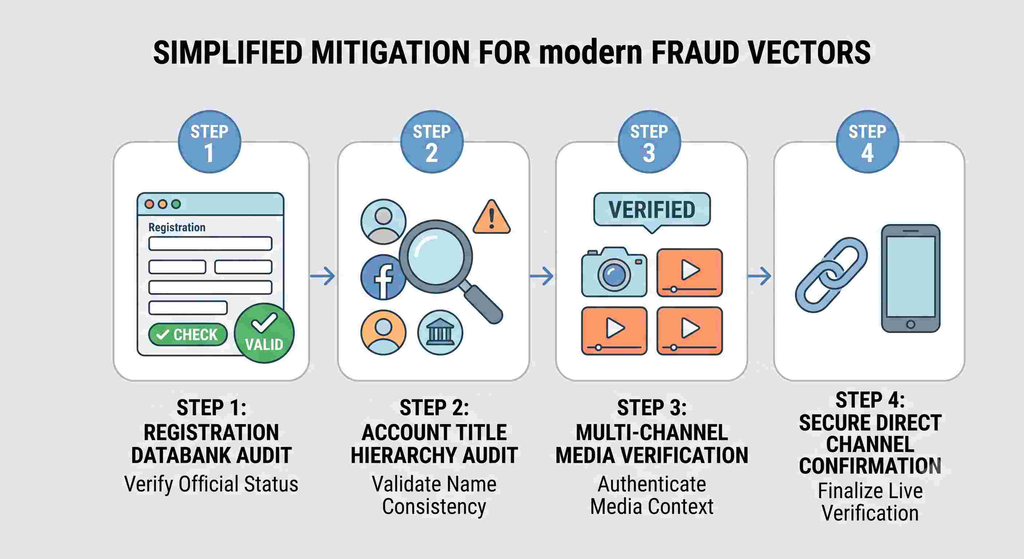
Follow this four-step verification process before transferring funds to non-governmental organizations or grassroots groups:
1. Verify Social Welfare Council (SWC) Registration
Every legitimate domestic NGO and INGO operating in Nepal has an active affiliation record. Request the organization’s SWC affiliation number and verify its status through the official portal of the Social Welfare Council, Nepal (swc.org.np) or through the relevant District Administration Office (DAO).
2. Confirm Bank Account Title Precision
- The account name on an electronic fund transfer (NEPS, IPS, ConnectIPS, or international SWIFT) must match the exact legal corporate name of the non-profit organization.
- Never send funds if the receiving name is a person (e.g., “Ram Bahadur – Flood Aid”). Legitimate relief accounts will read as corporate entities (e.g., “[Organization Name] Relief Fund”).
3. Run Reverse Image Searches
If a campaign uses distress imagery:
- Save the primary campaign image or screenshot the video.
- Run the image through Google Images, TinEye, or Google Lens.
- Confirm that the media was not lifted from previous disaster events (such as the 2015 Gorkha Earthquake or the 2019 Terai floods).
4. Cross-Check Contact Channels Directly
Avoid clicking links embedded in social media posts, private direct messages, or messaging apps (WhatsApp, Telegram). Manually navigate to the verified .org, .edu, or .gov.np root domain of the entity to locate their official bank routing and payment instructions.
Emergency Response: If You Have Sent Money to a Scam
If you realize you have transacted with a fraudulent campaign, take immediate operational steps to mitigate losses and establish an evidential trail.
Step 1: Request an Immediate Payment Freeze
- For Domestic Digital Wallets (eSewa / Khalti): Contact customer support immediately to report the recipient wallet ID for unauthorized fraudulent activity. Request an internal account freeze on the transaction reference number.
- For Domestic Bank Transfers (ConnectIPS / Mobile Banking): Contact your bank’s fraud unit immediately and request a recall of the interbank transaction.
- For International Card Transactions / PayPal: File an immediate unauthorized chargeback or dispute under the “Fraud / Misrepresentation” category with your card issuer.
Step 2: File a Formal Report with Nepal Police Cyber Bureau
To initiate a legal investigation in Nepal, provide all digital evidence to the cyber crime authorities:
- Location: Nepal Police Cyber Bureau, Bhotahity, Kathmandu, Nepal
- Official Website:
nepalpolice.gov.np/cyberbureau.nepalpolice.gov.np - Evidence Required:
- Complete transaction receipts and bank statements showing reference IDs.
- Screenshots of the fraudulent website, campaign, social profile, or messaging chat history.
- Phone numbers, digital wallet IDs, or recipient account details used by the scammer.
Step 3: International Reporting
If you are donating from abroad, file an additional report with your jurisdiction’s cyber fraud reporting portal:
- United States: FBI Internet Crime Complaint Center (
ic3.gov) - United Kingdom: Action Fraud UK (
actionfraud.police.uk) - Australia: Scamwatch (
scamwatch.gov.au) - India: National Cyber Crime Reporting Portal (
cybercrime.gov.in)
Frequently Asked Questions
Are cryptocurrency donations permitted for flood relief in Nepal?
No. Under current Nepal Rastra Bank regulations, cryptocurrency transactions and fundraising are not legally recognized or permitted for local organizations. Legitimate organizations accept fiat currency through established banking channels and licensed payment gateways.
How can I confirm my international wire transfer is safe?
Always ensure that the beneficiary name on the SWIFT transfer sheet exactly matches the legal non-profit organization, that the receiving bank is an A-Class commercial bank licensed by Nepal Rastra Bank, and that the instructions are published directly on the organization’s verified domain.
Can I donate goods or medical supplies directly?
Physical donations must clear customs and comply with Ministry of Home Affairs (MoHA) and Department of Customs guidelines. In-kind donations should only be routed through established international aid agencies or registered local NGOs with verified logistics networks in the affected districts.