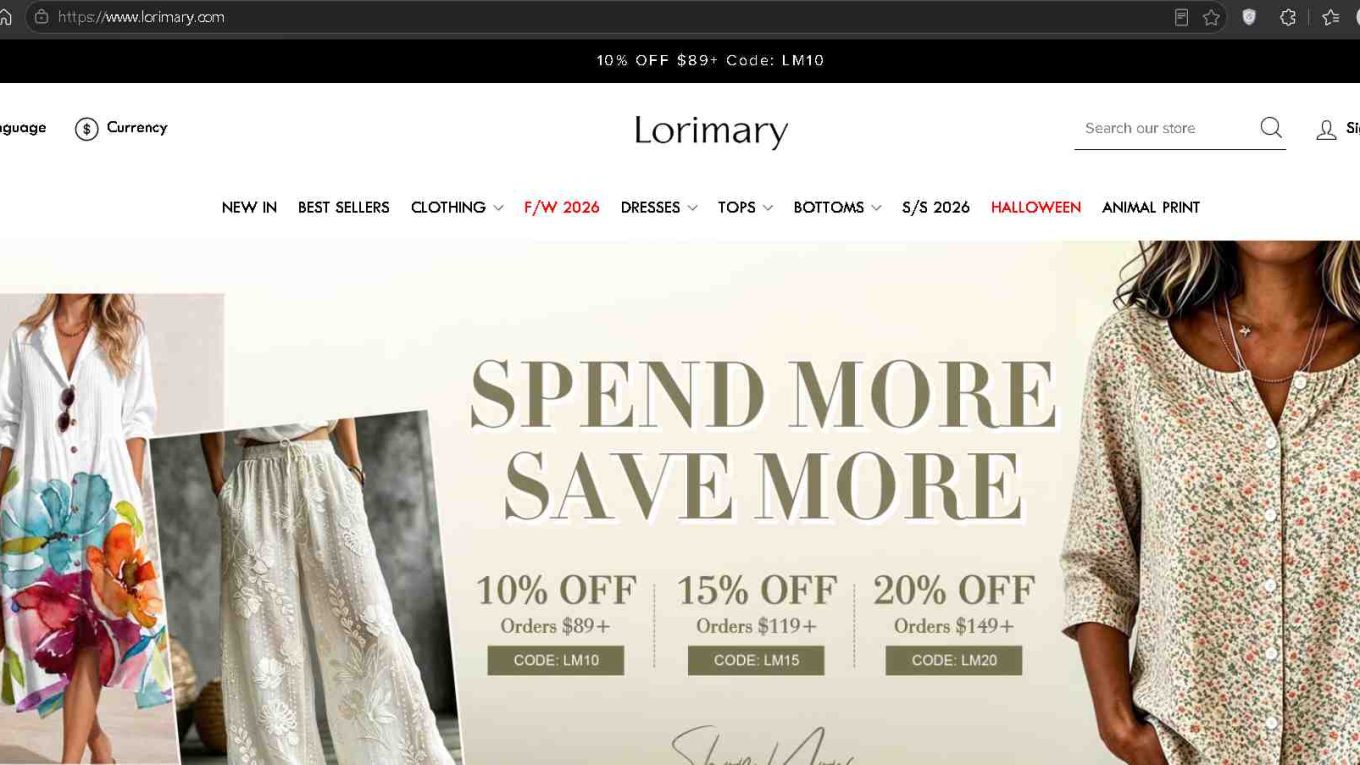
Lorimary Scam Review — Fake Fashion Store Alert
Quick Summary: Lorimary is a fake fashion website pretending to sell trendy dresses and tops. It hides ownership, copies product photos, and lures buyers with unrealistic discounts. Payments often lead to poor-quality items or nothing at all. This scam site risks money loss, data theft, and zero customer support.
Lorimary presents itself as a stylish online clothing store. It showcases floral dresses, trendy tops, and seasonal collections with polished visuals. At first glance, it looks like a legitimate fashion brand ready to serve global customers.
But beneath the glossy homepage lies a scam operation. Lorimary is part of a network of fraudulent fashion sites that recycle templates, hide ownership, and lure buyers with unrealistic discounts. The site’s main goal is not to sell fashion but to trick unsuspecting shoppers into sharing payment details.
What Lorimary Is Doing?
Lorimary claims to be a fashion retailer offering women’s clothing collections. It promotes “Spend More, Save More” deals with coupon codes like LM10, LM15, and LM20. The site highlights seasonal tags such as “F/W 2026” to appear current and trendy.
However, the business behind the site is hidden. There is no verified company name, no physical address, and no customer support number. The only contact option is a generic form that rarely gets answered. This lack of transparency is a major red flag.
What Lorimary Is Selling
The site lists casual dresses, floral tops, and summer pants. Product descriptions are generic and often copied from other scam sites. Prices are unusually low compared to the quality shown in photos.
The images used are stock visuals taken from wholesale catalogs. Many of these photos appear across dozens of other fraudulent sites with different brand names. Lorimary is not selling original fashion — it is selling an illusion.
How the Scam Works
Lorimary follows a predictable scam pattern:
- Attractive visuals — Professional-looking photos build trust.
- Discount bait — Tiered coupon codes push buyers to spend more.
- Fake security — SSL certificates and “Secure Payment” icons create false confidence.
- Payment trap — Buyers pay, but either receive poor-quality items or nothing at all.
- No refunds — Customer service is non-existent. Refund requests go unanswered.
- Domain recycling — Once exposed, scammers shut down the site and reopen under a new name.
This model has been used by hundreds of fake fashion sites that vanish after collecting enough payments.
Red Flags of Lorimary
| Red Flag | Description | Risk Level |
|---|---|---|
| Hidden Ownership | No company name or address listed | 🔴 High |
| New Domain | Recently registered, short lifespan | 🔴 High |
| Copied Design | Identical layout to other scam sites | 🔴 High |
| Fake Discounts | Unrealistic tiered offers to push spending | 🔴 High |
| No Social Media Presence | No verified Instagram or Facebook page | 🔴 High |
| Unverified Reviews | Generic 5-star reviews with no buyer details | 🔴 High |
| Limited Payment Options | Card-only or PayPal without buyer protection | 🔴 High |
| No Return Policy | Vague or missing refund terms | 🔴 High |
⚙️ Risk Parameters (Based on Site Specifications)
| Parameter | Observation | Impact |
|---|---|---|
| Domain Age | Newly registered, less than 6 months old | High risk of shutdown |
| Registrar | Privacy-protected WHOIS data | Hidden identity |
| SSL Certificate | Present but generic | False sense of security |
| Trust Score | Below 20/100 on scam-check platforms | Very low credibility |
| Hosting Provider | Shared hosting used by multiple scam sites | High fraud probability |
| Customer Support | Only contact form, no phone or email | No accountability |
| Delivery Claims | “Worldwide shipping” without logistics partner | Fake promise |
| Return Policy | Ambiguous, no clear refund timeline | Buyer loss guaranteed |
Conclusion
Lorimary is not a trustworthy fashion retailer. It is a clone scam site designed to look legitimate while hiding its true intent — collecting payments without delivering genuine products. The combination of hidden ownership, unrealistic discounts, and recycled visuals makes it a textbook example of a fraudulent fashion network.
If you have already placed an order, contact your bank immediately to block transactions and monitor for unauthorized charges. Avoid engaging with the site’s contact form or email links, as they may lead to phishing attempts.
For safe shopping, stick to verified platforms like Amazon, Zara, H&M, or Nordstrom, where business credentials and customer reviews are transparent.
“Scammers don’t sell clothes — they sell false hope stitched with lies.”
✍️ Author Bio
Suyesh Gusain is a scam-site analyst and consumer-safety content creator with a degree in Mass Communication. He specializes in exposing fraudulent e-commerce networks and writing SEO-optimized scam reviews for Tier 1 audiences. His work blends clarity, sarcasm, and awareness to help readers shop smarter and safer online.
Every safe click counts. If this post helped, a coffee gesture fuels more scam‑busting investigations.

Call to Action
Please share this article to spread awareness. Follow us on Facebook, Twitter, and Instagram for more scam alerts. If you doubt the legitimacy of any website or investment plan, DM us on social media — we’ll help you verify.
“Scammers evolve daily. Subscribe to our scam‑alert list and stay one step ahead.”