The Cast Iron Counterfeit: An Investigative Deep Dive into Lodegecastironca and Fake Clearance Scams
Few kitchen tools command the kind of lifelong devotion and heritage that cast iron cookware does. From slow-simmered weekend stews to searing steaks on a stovetop, heavy enameled Dutch ovens and pre-seasoned skillets are celebrated as generational heirlooms. For home cooks and culinary enthusiasts, building out a collection of vibrant, durable enamel braisers is a genuine source of pride.
Because authentic, high-grade cast iron requires meticulous metallurgy, heavy-gauge casting, and multi-coat enamel glazing, true quality carries a matching price tag. That natural price barrier makes cookware enthusiasts prime targets for digital opportunists.
Imagine scrolling through your weekend social feed or searching for a regional cookware outlet, only to stumble upon an immaculate digital storefront showcasing signature enameled Dutch ovens in every pastel shade imaginable—slashed down to unbelievable “overstock” prices. One domain actively circulating in web-threat monitoring queues is Lodegecastironca. At first glance, it appears to be an authorized regional liquidation outlet. But behind the familiar branding lies a carefully engineered trap.
In this investigative guide, we will unpack the mechanics behind fake liquidation and clearance scams, conduct a detailed forensic case study of Lodegecastironca, expose the critical red flags embedded in its architecture, and deliver an actionable verdict to keep your finances safe.
Fundamentals of Fake Liquidation and Clearance Store Scams
To recognize why operations like Lodegecastironca succeed, one must first understand how fake liquidation storefronts operate. Unlike standard retail fraud, which often invents fictitious brands out of thin air, liquidation scams hijack the goodwill, heritage, and trademarks of well-loved, century-old consumer brands.
Clearance and liquidation scams thrive on several psychological and technical pillars:
- The “Too Good to Be True” Fire Sale: Scammers manufacture plausible backstories to explain impossible markdowns. They use phrases like “Warehouse Relocation,” “Seasonal Liquidation,” “B-Grade Inventory Overstock,” or “Bankruptcy Auctions.” These fabricated scenarios bypass consumer skepticism, leading buyers to believe they are exploiting an inventory mishap rather than falling for an outright scam.
- Typosquatting & Combosquatting: To make the destination look trustworthy, threat actors register URLs that mimic genuine brand domains. They intentionally insert subtle misspellings (typosquatting) or attach geographic suffixes and retail modifiers like “ca,” “outlet,” “online,” or “sale” (combosquatting) to deceive casual viewers glancing at the address bar.
- Asset Scraping: Rogue operators do not design pages from scratch. Using automated scrapers, they duplicate the exact CSS formatting, official company logos, typeface hierarchies, and high-resolution catalog photography directly from the brand’s authentic servers.
- Ghost Fulfillment: Once a transaction is processed, the rogue merchant rarely ships the promised item. The victim either receives a microscopic, low-grade plastic trinket from an overseas consolidator (providing a tracking number to frustrate payment disputes) or is ghosted entirely while their card details circulate on secondary markets.
📧 Need Legal Assistance?
Contact the author for legal consultations, case evaluations, and professional inquiries.
Case Study: Anatomy of Lodegecastironca
The world-renowned American cast iron foundry Lodge Manufacturing Company was founded in 1896 in South Pittsburg, Tennessee, and operates its official global digital flagship at lodgecastiron.com. For over a century, the brand has been synonymous with rugged, affordable, and durable American-made iron and enameled cookware.
When analyzing Lodegecastironca, we see a classic execution of a deceptive brand impersonation campaign aimed at exploitative arbitrage.
Website Anatomy and Operation
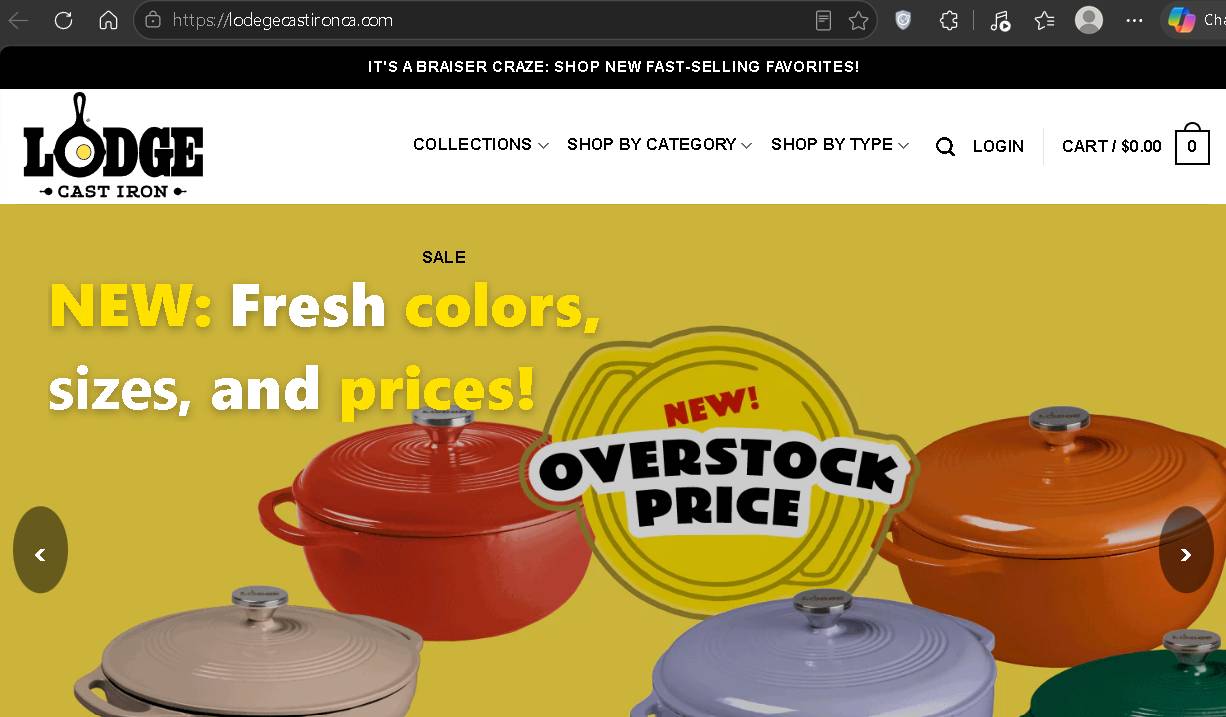
The landing page of Lodegecastironca copies the familiar visual identity of Lodge. The official logo—complete with the skillet icon forming the letter “O”—is prominently positioned in the header. The top navigation mirrors a traditional e-commerce catalog with dropdown menus for “Collections,” “Shop by Category,” and “Shop by Type,” alongside customer login and checkout cart counters.
Promotional banners flash header announcements such as “IT’S A BRAISER CRAZE: SHOP NEW FAST-SELLING FAVORITES!” above dynamic product sliders showcasing colorful enameled braisers and Dutch ovens. The operational objective is straightforward: establish instant brand trust so the shopper moves directly to the checkout funnel without scrutinizing the browser bar.
Marketing Claims and Lures
The primary psychological engine of Lodegecastironca is artificial urgency built around overstock inventory. The site displays bright yellow hero banners proclaiming: “SALE – NEW: Fresh colors, sizes, and prices!” overlaid with a distressed stamp graphic reading “NEW! OVERSTOCK PRICE.”
Real cast iron cookware is heavy, durable, and expensive to transport and enamel. Deep clearance markdowns of 70% to 80% on brand-new enamel collections defy retail economics. The “Overstock” label is chosen intentionally: it offers a plausible reason for the price drop, prompting shoppers to buy immediately before the “limited supply” vanishes.
Modus Operandi
Behind the warm aesthetic of Dutch ovens and braisers, the backend infrastructure operates as an unauthorized data collection and payment harvesting funnel:
- Ad-Driven Traffic Funnels: Fraudulent networks run sponsored ads on Facebook and Instagram targeting cooking hobbyists and home-baking groups, pushing direct links to checkout pages.
- Card Harvesting: Payment portals bypass established, secure third-party processors in favor of unverified, suspicious checkout gateways that capture complete credit card numbers, expiration dates, CVVs, and personal billing addresses.
- Ghosting or Tracking Manipulation: Once the transaction is cleared, the buyer receives an automated confirmation containing an invalid or generated tracking number, leaving them empty-handed when weeks go by with no delivery.
Glaring Red Flags Found on Lodegecastironca
A technical review of Lodegecastironca reveals undeniable proof of brand fraud:
- Blatant Typosquatting in the URL: The official brand is Lodge (
lodgecastiron.com). The fraudulent site inserts a rogue letter “e” into the brand name—spelling itlodege—and appendscato masquerade as a Canadian regional outlet (lodegecastironca.com). This spelling slip is designed to trick quick glances on mobile screens. - Stolen Copyrights and Trademarks: The platform uses registered Lodge logos, trade dress, product naming conventions, and promotional photography without licensing or authorization from Lodge Manufacturing Company.
- Absence of Verifiable Corporate Backing: Legitimate retail operations provide direct phone numbers, registered corporate entity names, real warehouse addresses, and accessible customer service desks. Rogue domains like this hide behind anonymized web contact forms.
- Disposable Domain Life Cycle: Threat databases reveal that this domain was registered recently using anonymous domain proxy services—a hallmark of pop-up ghost storefronts created to run short-term ad campaigns before getting blacklisted.
Final Verdict
Taking into account the stolen brand assets, manipulated domain spelling, and unverified merchant backend, the finding is clear.
Lodegecastironca is an illegitimate typosquatting and fake clearance scam. It has zero affiliation with the authentic Lodge Manufacturing Company. Interacting with this storefront exposes consumers to financial loss, credit card fraud, and unauthorized identity harvesting. Do not attempt to buy from this site or enter your personal and banking information.
If you have already submitted your payment details on this platform, contact your credit card issuer or bank immediately to freeze your card, dispute the transaction as fraudulent, and request an immediate chargeback. For authentic cookware, stick strictly to verified retailers and the brand’s official domain at lodgecastiron.
Frequently Asked Questions (FAQ)
Is Lodegecastironca a Scam?
Yes. Lodegecastironca is a fraudulent brand impersonation scam that relies on typosquatting and fake overstock clearance claims to steal credit card data and personal information.
Is Lodegecastironca Legit?
No, Lodegecastironca is entirely illegitimate. It is not an authorized distributor, partner, or outlet for genuine Lodge cast iron cookware.
What is the official website for Lodge Cast Iron?
The genuine, authorized global website for Lodge cookware is lodgecastiron.com. Any variation that misspells the name or uses unusual domain combinations should be avoided.
How do I spot a fake cast iron clearance sale?
Look out for misspelled brand names in the URL, discounts exceeding 60% to 80% on heavy enamel cookware, missing customer service telephone lines, and ads that push extreme urgency via “warehouse liquidation” themes.
What happens if I place an order on Lodegecastironca?
Orders placed on clone storefronts like this typically result in unfulfilled shipments (ghost orders), fake tracking numbers, delivery of cheap plastic counterfeits, or unauthorized charges on your payment card.
How does typosquatting work on cookware sites?
Scammers register misspelled variations of famous brand names (such as adding an extra letter like lodege instead of lodge) so that users who make a typing error or click an unvetted link fail to notice the altered URL.
What should I do if my payment details were entered on a clone site?
Call your bank or credit card provider right away. Report the transaction as unauthorized fraud, cancel the compromised card to prevent further charges, and monitor your monthly statements closely.
For more shady sites exposed, check our Shopping Scam Directory — your quick guide to staying safe online.
Every safe click counts. If this post helped, a coffee gesture fuels more scam‑busting investigations.

Call to Action
Please share this article to spread awareness. Follow us on Facebook, Twitter, and Instagram for more scam alerts. If you doubt the legitimacy of any website or investment plan, DM us on social media — we’ll help you verify.