
How to Talk Kindly to Someone with Depression
Depression is one of the most misunderstood conditions in our society. While millions struggle silently, many of their friends, family members, and colleagues are unsure how to communicate without causing harm. Talking kindly to someone with depression is not about finding the perfect words — it’s about empathy, patience, and presence. This article explores practical strategies to help you engage in compassionate conversations that truly support someone facing depression.
Understanding Depression Before You Speak
- Depression is medical, not weakness: It affects mood, energy, and thought patterns. Telling someone to “snap out of it” ignores the seriousness of the condition.
- Words carry weight: People with depression often internalize criticism or dismissive comments more deeply.
- Your role is support, not cure: You cannot replace therapy or medication, but you can be a compassionate ally.
🗣️ Principles of Kind Communication
- Listen actively
- Give full attention, avoid interruptions, and show genuine interest.
- Silence is okay — sometimes presence matters more than words.
- Validate feelings
- Say “That sounds really difficult” instead of “It’s not so bad.”
- Validation helps them feel seen and respected.
- Use gentle tone
- Calm, steady speech reassures. Irritation or impatience can shut down dialogue.
- Offer presence without pressure
- Invite them for a walk or coffee, but make it clear there’s no obligation.
- Sometimes just sitting together is enough.
- Avoid toxic positivity
- Phrases like “others have it worse” or “be grateful” dismiss their pain.
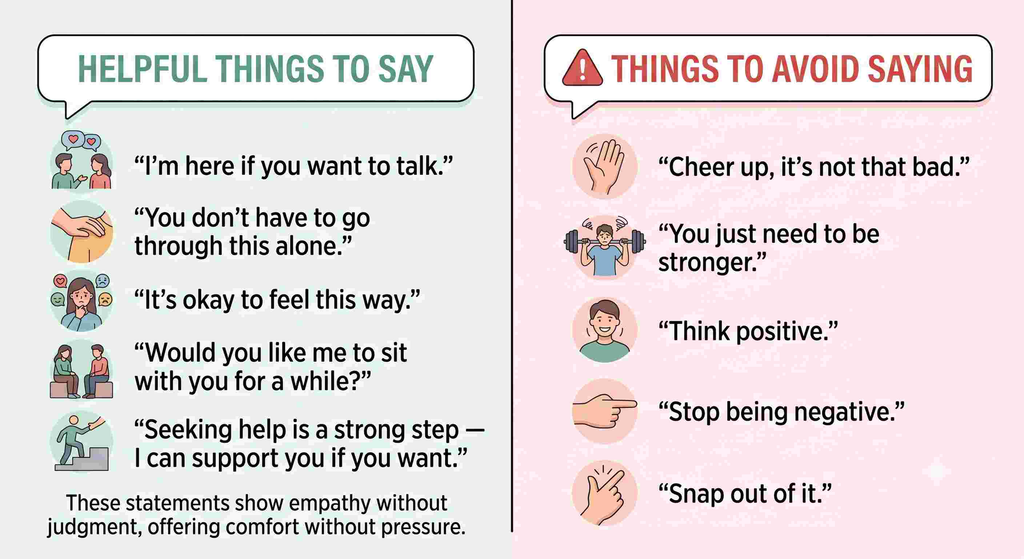
Helpful Things to Say
- “I’m here if you want to talk.”
- “You don’t have to go through this alone.”
- “It’s okay to feel this way.”
- “Would you like me to sit with you for a while?”
- “Seeking help is a strong step — I can support you if you want.”
These statements show empathy without judgment, offering comfort without pressure.
Things to Avoid Saying
- “Cheer up, it’s not that bad.”
- “You just need to be stronger.”
- “Think positive.”
- “Stop being negative.”
- “Snap out of it.”
Such remarks minimize their struggle and can deepen feelings of isolation.
Practical Conversation Scenarios
- When they withdraw: Respect their space but send a gentle message like “Thinking of you today.”
- When they express hopelessness: Avoid debate; instead say, “I hear how heavy this feels. You don’t have to face it alone.”
- When they resist help: Suggest professional support gently, without forcing. “Talking to a counselor might help — I can go with you if you’d like.”
Risks & Responsibilities
- Suicidal thoughts: If someone expresses suicidal intent, encourage immediate professional help or call emergency services.
- Know your limits: You cannot replace therapy. Your role is to support, not to heal.
- Self-care for supporters: Supporting someone with depression can be draining. Seek your own support network to avoid burnout.
Conclusion
Talking kindly to someone with depression is about empathy, patience, and presence. You don’t need perfect words — you need to show that you care, without judgment or pressure. By listening actively, validating feelings, and avoiding dismissive remarks, you can help someone feel less alone in their struggle.
Kindness in conversation is not about fixing depression; it’s about reminding the person that they are valued, understood, and supported.
“Sometimes the most healing words are not advice, but simply: I’m here with you.”
👤 Author Bio
Suyesh Gusain is a writer and analyst who explores wisdom, communication, and consumer awareness. With an M.A. in Mass Communication, he blends structured research with storytelling to create SEO‑optimized articles that inform, protect, and inspire readers. His work spans scam‑site analysis, mental health awareness, and wisdom‑based narratives designed to empower audiences with clarity and insight.
💬 FAQ: Talking Kindly to Someone with Depression
1. How can I start a conversation with someone who has depression?
Begin gently. Say something like, “I’ve noticed you’ve been quiet lately — I’m here if you want to talk.” Avoid forcing the discussion. The goal is to open a safe space, not demand answers.
2. What are the best words to comfort someone with depression?
Use validating phrases such as “You’re not alone,” “It’s okay to feel this way,” or “I’m here for you.” These words show empathy and acceptance, helping the person feel understood.
3. Should I give advice or try to fix their problems?
No. Depression isn’t solved by quick advice. Instead of “You should exercise more,” try “Would you like me to help you find support?” Listening and presence are more powerful than solutions.
4. How do I respond if they say they feel hopeless?
Stay calm and compassionate. Say, “That sounds really painful — I’m here with you.” Encourage professional help if needed, but avoid arguing or minimizing their feelings.
5. What should I avoid saying to someone with depression?
Avoid phrases like “Cheer up,” “Others have it worse,” or “Be positive.” These comments can make them feel dismissed. Focus on empathy, not correction.
6. How can I support someone who refuses help?
Respect their autonomy but keep communication open. Say, “I understand you’re not ready now — I’ll be here when you are.” Gentle consistency builds trust over time.
7. Is it okay to talk about therapy or medication?
Yes, but do it sensitively. You can say, “Many people find therapy helpful — would you like me to help you look into it?” Avoid pushing; offer options instead.
8. What if I feel emotionally drained while supporting someone?
Supporting someone with depression can be heavy. Take breaks, talk to friends, or seek counseling yourself. You can’t pour from an empty cup.
9. How can I show kindness without words?
Small gestures matter — sitting together, sharing a meal, sending a message like “Thinking of you.” Presence often speaks louder than advice.
10. When should I seek emergency help?
If someone expresses suicidal thoughts or intent, contact emergency services immediately. Stay with them until help arrives. Compassion includes taking action when safety is at risk.