
What is a Gift Card Scam? Full Guide to Spotting and Preventing Fraud
Gift card scams are among the most common forms of consumer fraud today. Criminals exploit the popularity of retail cards like Target gift cards, Amazon gift cards, Google Play gift cards, Apple gift cards, and Visa gift cards to trick victims into handing over money in a form that is fast, anonymous, and irreversible.
According to the FTC gift card scam warning, losses from online gift card scams exceed hundreds of millions annually. Understanding how these scams work, their red flags, and prevention strategies is essential to protect yourself and your family.
Some Coupon Gift Card Scam site: Perkelio, Ourtesters, Secretgiftcard, Devicerewards, AIPatriotSystem, Savecos, Bulkclaim, and Perklovely.
What is a Gift Card Scam?
A gift card scam occurs when fraudsters demand payment in gift cards instead of cash or bank transfers. Victims are pressured to buy cards from popular retailers and then share the card number and PIN. Once shared, scammers drain the balance instantly or resell the codes online.
- Speed: Balances are redeemed in minutes.
- Anonymity: No account or name is tied to the card.
- Irreversibility: Unlike credit cards, there’s no chargeback.
Types of Gift Card Scams
- Government impostor scams — Fake IRS or police calls demanding fines via Target or Amazon gift cards.
- Tech support gift card scams — Fraudsters posing as Microsoft or Apple ask for payment in Google Play or Apple gift cards.
- Family emergency scams — Voice‑cloned relatives claim to be stranded and request Visa gift cards.
- Retail gift card draining — Criminals tamper with unsold cards in stores, recording numbers before activation.
- Prize gift card scams — Victims are told they won a prize but must pay fees with Costco or Amazon gift cards.
Gift Card Scam Statistics & Trends
According to the FTC, U.S. consumers reported over $217 million in losses across 41,000 cases in 2024, with incidents rising another 23% in early 2026. Gift cards are now the second‑most reported fraud payment method among older adults, accounting for 16% of losses.
Additional insights:
- One in four fraud victims report losing money via gift cards.
- $2.8 billion annual losses to U.S. retailers from gift card fraud.
- Google Play gift card scams and Target gift card scams are among the most frequently reported.
These numbers highlight why gift card fraud is such a critical issue in consumer protection.
Case Studies: How Gift Card Scams Work in Practice
- Boss impersonation scam (BEC): Employees receive fake emails from “executives” asking them to buy Amazon gift cards for client gifts. Once codes are sent, balances vanish.
- Government impostor scam: Victims pressured by fake IRS or police calls to pay fines with Target gift cards.
- Retail shelf tampering: Criminals overlay stickers or record card numbers before sale. Victims activate cards only to find balances already drained.
- Prize gift card scams: Victims told they won a prize but must pay fees with Visa gift cards or Costco gift cards.
These examples show how scammers exploit urgency, impersonation, and brand trust to drain balances instantly.
Why Scammers Love Gift Cards
| Factor | Why It Helps Scammers |
|---|---|
| Speed | Balances drained instantly. |
| Anonymity | No traceable account. |
| Irreversibility | No refunds or disputes. |
| Global resale | Codes resold online quickly. |
FAQs of Gift Card Scam
Q1. Why are gift card scams so effective?
Gift card scams combine urgency with brand trust. Victims are told they must act immediately — for example, to avoid arrest or secure a prize. Scammers often keep victims on the phone while they buy cards, preventing them from consulting family or friends.
Once the codes are shared, balances are drained instantly. This mix of urgency, secrecy, and impersonation makes gift card scams devastatingly effective.
Q2. What brands are most targeted in gift card scams?
The most common brands include Target gift card scams, Amazon gift card scams, Google Play gift card scams, Apple gift card scams, and Visa gift card scams. These cards are widely available at supermarkets and pharmacies, making them easy for victims to purchase under pressure. Scammers prefer them because they can be resold globally on black‑market websites.
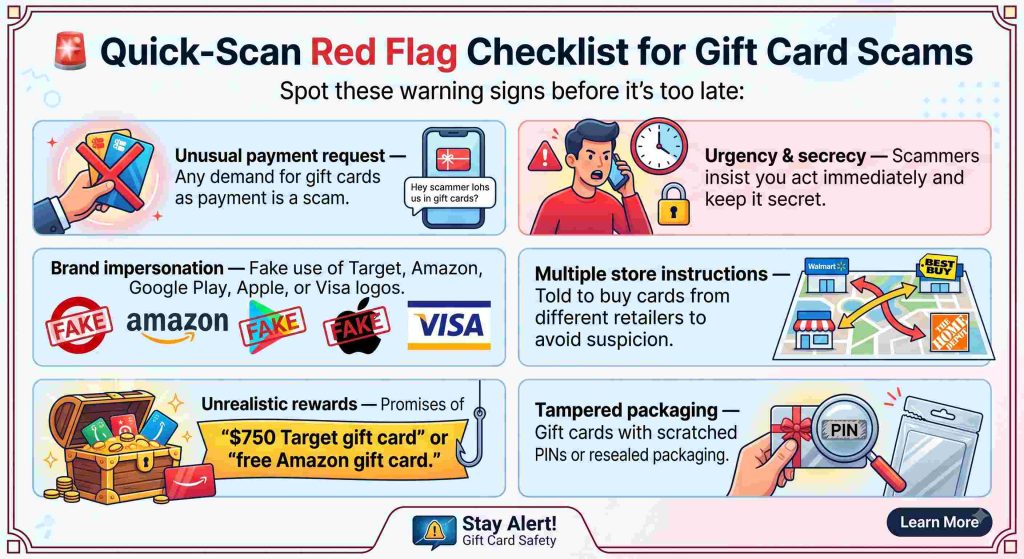
Q3. How can I spot a gift card scam?
Any demand for payment via gift card is a definitive red flag. Legitimate businesses, government agencies, or tech support will never ask for gift cards.
Warning signs include:
a. Requests to keep the payment secret.
b. Instructions to buy cards at multiple stores.
c. Promises of unrealistic rewards like “$750 Target gift card.”
d. Pressure to act immediately.
Q4. What should I do if I gave a scammer a gift card?
Act quickly:
a. Contact the gift card company’s fraud line to attempt a balance freeze.
b.Report the scam to the FTC and local authorities.
c. Monitor your accounts for suspicious activity. Speed is critical — once redeemed, balances are unrecoverable.
Q5. How can I prevent gift card scams?
a. Treat every gift card payment request as a scam.
b. Buy cards only for personal use or gifts, never for bills or fines.
c. Check packaging for tampering before purchase.
d. Share scam awareness with family, especially seniors, who are frequent targets.
e. Use gift card scam prevention guides to stay updated.
Conclusion
Gift card scams are rising rapidly, with hundreds of millions in annual losses. They exploit urgency, impersonation, and the untraceable nature of gift cards. Remember: no legitimate business or government agency will ever demand payment in gift cards.
By learning the gift card scam red flags, reviewing real case studies, and understanding FTC statistics, you can protect yourself and others from becoming victims.
If this review helped you stay safe online, consider buying me a coffee to support more scam‑busting research.
