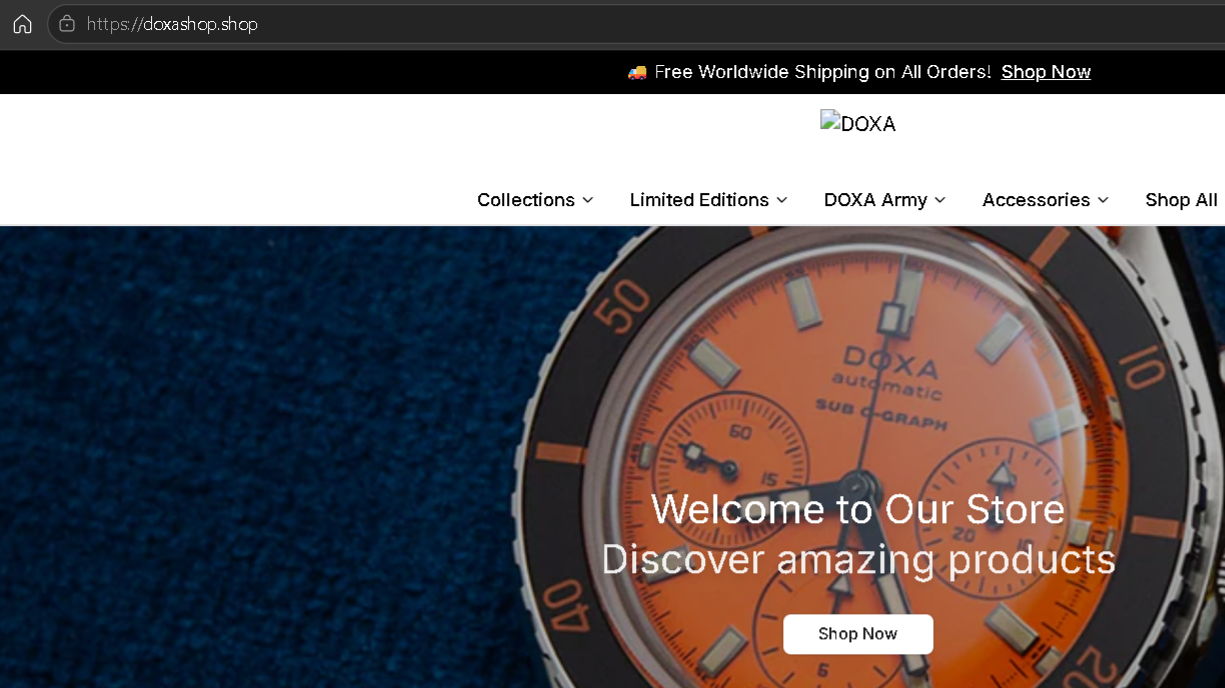
Doxashop.shop Review: A Warning for Online Shoppers
How do people reach the Doxashop.shop website? Most users arrive by clicking on advertisements across various social media platforms; in fact, over 90% of the traffic to the Doxashop.shop store comes directly through digital marketing. It is important to understand that Doxashop.shop is not a legitimate business looking to build a long-term presence.
Genuine business owners select names that are easy to pronounce and remember, simply because they want customers to return to them directly. In contrast, scammers intentionally choose convoluted names like Doxashop that are difficult to type, speak, and remember. There are numerous flaws found on this website, which we will discuss below. Until then, maintain a safe distance from it and do not share your information with them.
Here is everything you need to know to protect your wallet and your personal information.
The Anatomy of Brand Impersonation: DOXA vs. Doxashop
The most dangerous aspect of Doxashop is its domain name, which relies on a deceptive tactic known as “brand impersonation.” Scammers frequently register domains that mimic established, highly respected brands to artificially inflate their credibility and siphon off organic search traffic.
In this instance, the name “Doxa” is already associated with highly reputable global entities:
- DOXA Watches: A premium, historic Swiss watchmaker famous for its high-end dive watches.
- DOXA Shop (doxashop.cz): A legitimate, verified electronics and mobile accessories retailer based in the Czech Republic.
Doxashop appears to be deliberately piggybacking on the reputation of these legitimate companies. By adopting a similar name, the operators hope consumers will confuse their newly minted, unverified website with these established brands.
Major Red Flags: Why Doxashop Fails the Trust Test
Beyond the suspicious domain name, an in-depth review of the site’s backend profile and digital footprint triggers multiple critical warnings.
1. A Non-Existent Digital Footprint Legitimate e-commerce brands—even new ones—leave a trace. They have active social media profiles, organic mentions on forums, and most importantly, verified customer reviews on independent platforms. Doxashop is a digital “ghost town.” It lacks any presence on major review sites like Trustpilot. This absolute silence is a classic indicator of a “pop-up” site designed to harvest credit card details before accumulating enough negative reviews to warrant a shutdown.
2. The Problem with the “.shop” Extension While many legitimate businesses operate using the “.shop” top-level domain (TLD), this specific extension has become heavily favored by illicit dropshippers and scam rings. Because these domains are incredibly cheap to purchase in bulk, fraudsters register hundreds of them simultaneously. They use stolen product images to build a facade, run aggressive social media campaigns, and abandon the domain once consumers start demanding refunds.
3. A Complete Lack of Accountability Trustworthy online retailers prioritize transparency. They clearly display a verifiable physical corporate address, a working customer service phone number, and a detailed return policy. Sites mirroring the operational profile of Doxashop almost universally hide this information. They force consumers to communicate through generic web forms or untraceable email addresses, making it virtually impossible to initiate a chargeback or hold anyone accountable when the items inevitably fail to arrive.
How to Shop Safely in a High-Risk Digital Landscape
As a consumer, navigating the modern internet requires vigilance. To ensure you do not fall victim to sites like Doxashop, always implement these non-negotiable security protocols:
- Verify the Source: Never assume a social media ad is legitimate. Always cross-reference the website’s URL with the brand’s official corporate page.
- Search for Independent Proof: If a website has no Trustpilot score, no Better Business Bureau presence, and disabled social media comments, walk away.
- Protect Your Financial Data: Never use a debit card or direct bank transfer on an unverified site. Always utilize a credit card or a secure third-party payment gateway, which provides a layer of fraud protection and the ability to reverse fraudulent charges.
The Final Verdict
Based on current web intelligence, Doxashop exhibits all the hallmarks of a highly suspicious, transient e-commerce storefront. The deliberate brand confusion, total lack of consumer reviews, and invisible corporate footprint make it an extremely risky platform.
It is strongly advised to keep your payment information secure and avoid interacting with this domain entirely.
About the Author Suyesh Gusain is a financial journalist, professional derivative trader, and market strategist dedicated to bringing transparency and discipline to the retail sector. Serving as a Director at Wisdomganga India Private Limited, he bridges the gap between complex data and consumer awareness. Operating out of Ghaziabad, Suyesh combines a rigorous B.Sc. in Physics with an M.A. in Mass Communication to break down deceptive market structures. As an NISM-certified Equity Derivatives professional (Series VIII) and Research Analyst (Series XV), his expertise spans advanced technical analysis, market psychology, and fraud prevention.
Have You Encountered This Site? Did a social media ad direct you to Doxashop, or have you unfortunately tried placing an order? Your experience could prevent someone else from falling into the same trap. Drop a comment below to share your story.
If this review helped protect your financial security, please share this article with your network to keep your friends and family safe from online retail scams!
It is critical to understand that this site is not a standalone merchant; it is merely one component of a sprawling, automated fraudulent infrastructure. For a deep-dive investigation into how this specific network harvests user data, a comprehensive guide on identifying hidden digital footprints, and a tactical recovery plan to secure your funds through your bank, please consult our Global E-Commerce Scam Network Index.”