Confidence Comes from the Clarity of Mind
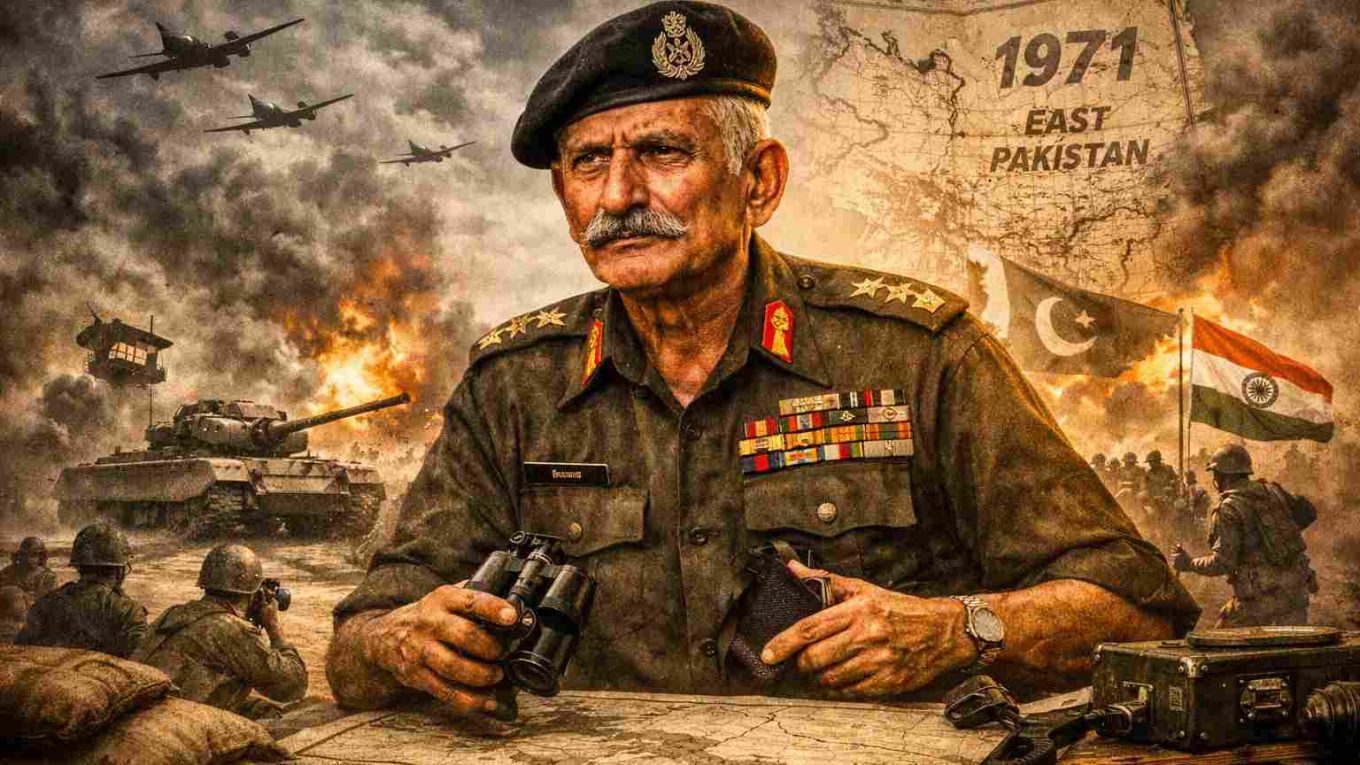
When clarity enters the mind, confusion loses its grip. True confidence isn’t born from arrogance—it’s forged in the fire of understanding. Field Marshal Sam Manekshaw’s story reminds us that leadership is not about haste or emotion, but about seeing reality as it is and acting with precision. Clarity is the calm before victory.
In 1971, a civil war broke out in East Pakistan (now Bangladesh). The corrupt administrators and heartless army, which West Pakistan controlled, were curtailing the voices of their own citizens through violence. The military murdered many people on the streets while they protested against the government.
Millions of refugees started coming into India through the porous borders, which became a headache for the government. Prime Minister Indira Gandhi called an emergency cabinet meeting to deal with the incoming refugees and the disturbed neighborhood. She wanted to intervene and immediately protect Indian interests.
In the meeting, she asked her Chief of the Army Staff, General Sam Manekshaw (famously known as Sam Bahadur), to get ready and prepare to march into East Pakistan right away.
The Moment of Absolute Clarity
Many get bowed down to the political pressure or in greed to get ministry or Rajya Sabha seat after the retierement do as the political leadership desire without the question. But the Sam Bahadur was not an ordinary general. Instead of saying ‘Yes’, refuse the will of the Prime Minister.
When she asked why so? he systematically replied with proper logical rational with crystal clarity:
- Monsoon Season: The heavy rains in East Pakistan were about to start. Rivers would flood, turning the terrain into vast swamps where tanks and logistics would sink.
- Himalayan Passes: The mountain passes in the North would be open during the summer months, allowing China to potentially intervene or tie down Indian divisions along the northern border.
- Preparation & Supplies: The Indian Army’s armored units were undergoing maintenance, grain stores needed to be moved using the railway network, and troops needed proper positioning.
He famously told her:
“If you want me to go in right now, I guarantee you a 100% defeat. But if you give me time until November, I guarantee you 100% victory.”
Courage vs. Servitude
Indira Gandhi was a national leader; she knew the personalities of people. She was in her position not because of her name, but because of her leadership qualities, and that is why she knew what Sam was saying was 100% correct and that he was the right person for the job.
After Sam’s explanation, the room went tense. The General sensed the room’s environment and offered his resignation instead of taking his boys into an operation where they would have to face nature more than the enemy..
“Prime Minister, have you read the Bible? It says, ‘Render unto Caesar the things that are Caesar’s, and unto God the things that are God’s.’ The defense of the country is my responsibility. If you don’t like my advice, accept my resignation.”
Because his conviction was rooted in cold, objective facts rather than emotion, he didn’t falter. Mrs. Gandhi recognized his clarity of thought, backed down, and gave him the time he requested.
After that, we all know what happened. A nation was created in just 13 days, and the military met all its war objectives on time. Nobody in the world has achieved such a feat. 90,000 army personnel surrendered, setting a record in the history of human battles. Ultimately, the government honored General Manekshaw with the rank of Field Marshal.
Where does Confidence Come From?
Field Marshal Manekshaw was a dedicated soldier who knew his job inside out. We won the war with the courage of our brave soldiers and great leadership. The leadership of both countries made plans, but India won because our general was rational about the situation, not emotional.
He waited for the moment when nature would also help him advance our cause in a frictionless manner. The clarity Sam Bahadur showed in the cabinet meeting came from his years of service and dedication toward his job.
He knew how to fight battles, which front we should focus on more, and most importantly, when, where, and how to attack. The metric to measure our success in battle does not depend on just winning it; it majorly depends on whether we met our objectives or not.
True confidence begins where confusion ends
Here, we can give the recent example of the US-Iran situation. From day one, the US President has claimed he won the conflict, but he has achieved zero objectives. The leadership has not changed, the enriched uranium is still with Iran, and because of the blunder they caused, Iran will not regulate the open Strait, and the world will pay the toll. Even if the US destroyed many places in Iran and killed their leadership, they achieved zero objectives. This shows the US President lacks clarity regarding the situation.
Take Away
India is blessed with the greatest army in the world. Indians always see the army as a friend, simply because of the right leadership at the top. People like Field Marshal Manekshaw are once-in-a-century figures. He talked about leadership on many occasions. He did not just talk about it, but demonstrated it through his actions and service to the nation.
The confidence he showed in the cabinet meeting was not a fluke, but came from the clarity he possessed. But we should focus more on one question: where does such clarity come from?
Clarity is the quiet power behind every victory
From Where Clarity Comes?
First, we have to make it clear that confidence comes from clarity, and clarity isn’t a personality trait. People are not born with it. It is an engineered state of mind that anyone can develop. There are four distinct places from which clarity comes:
1. Deep Competence (Eliminating the Unknowns)
Know your art, your work, and yourself. People with confidence (not overconfidence) are well-read, learned, and keen observers. They do not take action based on emotion, but rather on the situation and reality. Manekshaw didn’t guess the monsoons or troop movements; he knew the battlefield and logistics inside out.
The Principle: Confusion usually comes from a lack of information or practice. Even if a person has information, if they do not put it to practical use, that information is useless. When someone studies and masters a subject, they reduce the number of variables that can surprise them, and based on that analysis, they achieve their results. Sometimes exceptions also play a role, but great leaders learn from their mistakes or failures and come back with more force.
Sometimes exception also played their role, but great leaders learn from their mistakes or failing issue and come back with more force.
The Result: Competence replaces the guesswork with certainty and hence lead to clarity.
2. Radical Acceptance of Reality (Cutting Through Emotion)
Emotional intelligence (EQ) is a concept the 21st century has started to focus on after IQ. People learn EQ over time and through life experience. Situations in reality and in textbooks are very different because, in theory, nothing is at stake. But when we transition into practical applications, things seem different. Suddenly, something is at stake, and emotions come into play.
When the mind clears, courage appears
Generally, people lose clarity because they focus on what they wish were true rather than what is actually true. In 1971, the Prime Minister wanted an immediate victory. Manekshaw looked past this political desire and focused on the reality of the mud, the rain, and the mountain passes.
The Principle: Clarity requires stripping away wishful thinking, fear, and pride to look at raw facts.
The Result: You stop fighting reality and start making decisions based on it.
3. Clear First Principles (Knowing What Matters Most)
Here we encounter a beautiful phenomenon known as ‘Kartavya’—which translates to one’s duty. Clarity of principles emerges when we truly understand our duty and our work. When faced with a high-stakes choice, clarity comes from knowing your non-negotiable core objective.
Taking example from Manekshaw, his duty was not to please his boss—but to ensure the defense of the country, attain the objective and save the lives of his soldiers.
- The Principle: When you know your absolute priority, 90% of choices make themselves.
- The Result: It removes moral ambiguity and second-guessing.
4. Emotional Detachment from the Outcome
Emotions drive human choices, and that is why 90% of people are not as successful as the remaining 10%. The point is not a lack of emotion, but learning to channel that emotion. Life situations do not depend solely on people’s emotions; therefore, in a sense, we are all gamblers placing bets based on a flawed system. People who understand probability and how their system works do not feel threatened. This does not mean that emotionless people are the successful ones.
What we have to understand here is that when a soldier jumps from a helicopter with a parachute, it does not mean he lacks the fear that something might go wrong and he could die. But in that very instant, he overcomes his emotions.
General Manekshaw, he was willing to be fired on the spot. Because he wasn’t desperate to hold onto his title, he couldn’t be coerced into making a bad decision.
- The Principle: Fear of losing something (a job, approval, status) cloud judgment. The moment you accept the worst-case scenario, your mind becomes completely calm.
- The Result: Courage follows clarity naturally.
In short: Competence gives you the facts, radical honesty gives you the truth, core values give you the direction, and detachment gives you the courage. Put those together, and clarity is what’s left.
See clearly, act boldly, lead wisely