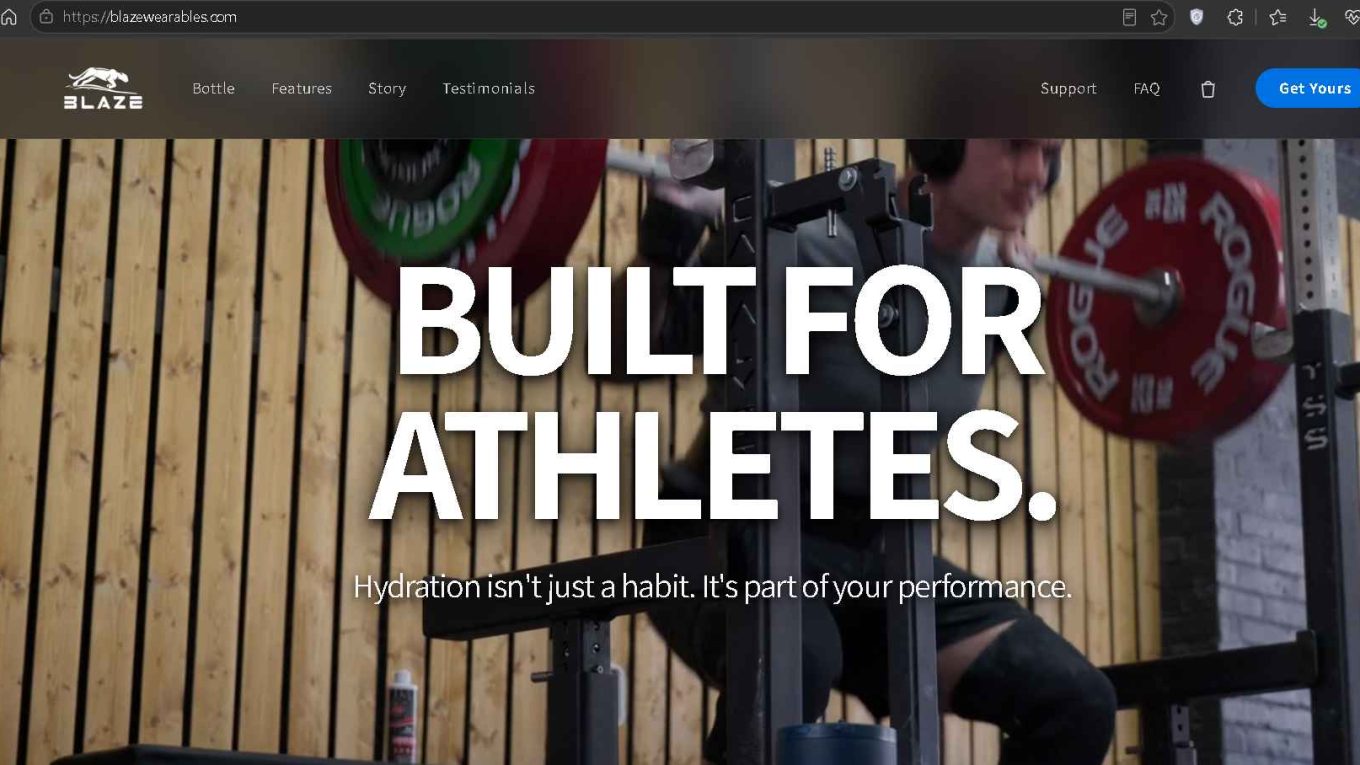
The Anatomy of a High-Tech Mirage: Why Blazewearables Raises Serious Red Flags
Every consumer loves a breakthrough gadget. Whether it is an activity tracker that seamlessly blends into your wardrobe or a clever kitchen appliance that cuts prep time in half, the direct-to-consumer (D2C) marketplace thrives on innovation. However, this natural curiosity has also created fertile ground for a deceptive e-commerce business model: the Fly-by-Night Gadget Storefront.
Modern web platforms make launching a storefront effortless. A savvy digital marketer can purchase a slick theme, generate high-definition 3D product renders, spin up an AI-crafted narrative, and launch targeted social media advertisements in an afternoon. These operators do not build factories or engineer proprietary circuits. Instead, they engineer desire.
Understanding how these ephemeral storefronts operate is essential for navigating today’s internet. To see this playbook in action, we conducted an investigative teardown of Blazewearables—a storefront that promises cutting-edge consumer hardware while exhibiting classic red flags of an unvetted gadget launch.
The Mechanics of a Fly-by-Night Gadget Storefront
Before dissecting Blazewearables directly, it helps to identify the standard blueprint behind novelty gadget operations:
- The Hero Concept: The campaign centers on a single, irresistible gadget that solves an everyday frustration using high-end materials and futuristic buzzwords.
- The “Bait-and-Switch” Pricing Model: The product is marketed with high-end specifications—materials that typically command $250 to $400—yet offered at an irresistible “Early Bird” or “Founder Member” discount (usually under $100).
- Manufactured Urgency and Proof: The landing page features artificial countdown clocks, “Only 4 Left in Stock” badges, and internal star ratings that mimic verified platforms like Trustpilot without connecting to external review databases.
- The Shell Identity: Domain registrations are concealed through proxy services, and listed corporate addresses often trace back to random suburban residences or mail-forwarding virtual suites.
- The Endgame: The storefront runs aggressive paid ad campaigns. If products ship at all, buyers often receive cheap white-label novelties from wholesale clearinghouses that barely resemble the promotional campaign. Once customer chargebacks and fraud reports mount, the site quietly goes dark, and the operators deploy the same Shopify template on a fresh domain.
Case Study: The Curious Case of Blazewearables
At first glance, Blazewearables presents itself as an elite sports-tech brand competing with high-end hydration giants. The storefront is dedicated to a flagship product dubbed the “Blaze Smart Bottle,” marketed as the world’s first smart bottle with a standalone display embedded directly into the cap.
The Bold Marketing Claims
Blazewearables positions the bottle as a marvel of miniaturized engineering:
- 2.13-inch AMOLED Lid Display: A curved, high-resolution color screen protected by Corning Gorilla Glass and encased in premium Tritan polymer.
- Autonomous Tracking Sensors: Built-in volume and sip sensors that log water intake, track temperature, and calculate hydration metrics completely off-grid—promising full utility without needing a companion iOS or Android app.
- Active Sterilization: An integrated medical-grade UV-C LED chip designed to sanitize both the water and interior walls automatically.
- Heavyweight Build: A massive 40 oz double-wall vacuum-sealed stainless steel chassis, IP67 water resistance, and a 30-hour USB-C rechargeable battery.
- Unbelievable Price Tag: The storefront lists this device at a “Founder Member” price of just $89.99 (discounted from $100.00), backed by free shipping, a 1-year warranty, and a “no-questions-asked” return policy.
When you examine the engineering reality of these claims, the narrative begins to unravel.
The Underlying Modus Operandi: Engineering vs. Economics
Developing custom smart hardware is notoriously expensive. Merging a standalone AMOLED display, rechargeable lithium-ion battery management, liquid level sensors, and high-output UV-C diodes into an IP67-rated, dishwasher-safe or watertight lid requires millions of dollars in custom tooling, firmware design, and regulatory testing (such as FCC, CE, and RoHS certifications).
Established brands like LARQ or HidrateSpark spent years perfecting far simpler single-function lids, pricing their premium app-connected bottles anywhere from $70 to $120 without attempting to fit a full-color AMOLED touchscreen onto the cap.
For a new storefront to enter the market with a completely independent, screen-equipped, UV-C sterilizing 40 oz insulated vessel for under $90—without any prior crowdfunding campaign, patent filings, or venture backing—defies manufacturing economics. This discrepancy is a primary indicator of either pre-order cash-float operations (collecting capital for a product that does not exist in production) or low-tier white-label dropshipping, where consumers are sent basic $8 digital temperature lids available on wholesale marketplaces.
Detailed Forensic Red Flags on Blazewearables.com
A technical analysis of the domain and website footprint reveals severe inconsistencies:
1. Residential Home Listed as Corporate Headquarters
Every legitimate hardware startup requires engineering facilities, commercial office suites, or vetted third-party logistics (3PL) fulfillment hubs. Blazewearables lists its physical returns and operational address as:
121 W Stevenson Dr, Glendale Heights, IL 60139, United States
Public municipal and real-estate records confirm that this location is a single-family residential house in suburban Illinois. Operating an international hardware firm from an unzoned residential suburban home is a major red flag indicating a lack of genuine commercial infrastructure.
2. Disconnected Contact Architecture
The site’s provided customer phone line (302-215-2072) features a Delaware (302) area code, conflicting directly with the Illinois business address. This pattern typically points to unstaffed VoIP lines or disposable virtual forwarding numbers set up to satisfy merchant processor checkboxes without providing live telephone support.
3. Extremely Immature Domain Footprint
According to WHOIS records, the domain blazewearables.com was registered on July 24, 2026. Despite having existed for only a brief period, the site boldly claims:
Gridinsoft
- “200+ bought in past month”
- “4.7 Rating across 29 reviews”
These counters and customer reviews are hardcoded UI elements within the Shopify theme rather than syndications from verified purchase platforms like Yotpo, Judge.me, or Okendo.
4. Absence of Independent Technical Reviews
In today’s fitness tech ecosystem, any genuine advancement in athletic wearables or smart hydration is immediately seeded to fitness creators, YouTube teardown channels, and tech journalists. There are zero organic unboxings, hands-on tests, or independent evaluations of the Blaze bottle across Reddit, YouTube, or tech publications. The only social proof exists inside the controlled environment of the website itself.
Final Verdict
Verdict: High-Risk Storefront / Proceed with Extreme Caution
While Blazewearables showcases professional digital presentation and enticing product claims, its structural reality matches the profile of an unverified novelty storefront. Between an undisclosed corporate structure, a suburban residential home masquerading as a fulfillment center, a brand-new domain footprint, and implausibly low pricing for complex standalone hardware, consumers run a significant risk of non-delivery, extreme shipping delays, or receiving a substandard generic substitute.
Recommendation: Do not purchase from Blazewearables at this stage. If you are determined to test novel hardware, wait until independent third-party tech reviewers have disassembled and tested production units. If you have already completed a transaction on the site, closely monitor your tracking information and be prepared to initiate a credit card chargeback through your financial institution if the delivered item fails to match its advertised specifications.
Frequently Asked Questions (FAQ)
Is Blazewearables a Scam?
While Blazewearables has not yet been formally shut down by consumer protection agencies, it exhibits critical warning signs associated with high-risk, unverified e-commerce stores. With an unverified physical presence, simulated review counters, an extremely young domain, and ambitious hardware specs at an implausible price point, transacting on the site carries substantial financial risk.
Is Blazewearables Legit?
Blazewearables cannot be classified as a legitimate, established brand. The company lacks verified corporate registration details, operates behind an anonymized domain proxy, routes its contact through a virtual VoIP number, and lists a single-family residential house as its corporate headquarters.
How do I identify a fake smart gadget website?
Fake or high-risk gadget websites typically display four distinct patterns:
- The domain is less than 90 days old.
- The product promises revolutionary, multi-sensor hardware at a steep discount compared to major market competitors.
- The contact address is a residential house, PO Box, or virtual mail forwarder rather than a commercial facility.
- Product reviews only exist directly on their own landing page, with zero unboxing or review coverage on independent channels like YouTube, TikTok, or Reddit.
What happens if I order from a fly-by-night Shopify store?
When ordering from an unvetted dropshipping or gadget storefront, transactions commonly result in one of three outcomes:
- The Bait-and-Switch: You receive an inexpensive, mass-produced novelty item (such as an entry-level digital thermometer lid) worth a small fraction of the price paid.
- Extended Drop-shipping Delays: The store operates without physical inventory, routing orders to overseas suppliers with shipping times extending from 4 to 8 weeks.
- Complete Non-Fulfillment: The order status remains marked as “processing” or provides a fake shipping tracking number until the storefront goes offline.
What should I do if I already bought from an unverified gadget store?
If you recently placed an order on an unverified site, take the following steps:
- Document Everything: Take screenshots of the product description, advertised specifications, order confirmation, and refund policy pages.
- Set a Communication Deadline: Email customer support requesting clear tracking details within 48 to 72 hours.
- File a Dispute or Chargeback: If the merchant provides misleading tracking numbers, refuses to communicate, or delivers a product that fails to match advertised features, contact your bank or credit card issuer immediately to open a dispute under “Goods Not as Described” or “Merchandise Not Received.”
For more shady sites exposed, check our Shopping Scam Directory — your quick guide to staying safe online.
Every safe click counts. If this post helped, a coffee gesture fuels more scam‑busting investigations.

Call to Action
Please share this article to spread awareness. Follow us on Facebook, Twitter, and Instagram for more scam alerts. If you doubt the legitimacy of any website or investment plan, DM us on social media — we’ll help you verify.