Bayline.shop Scam Review – Fake Generator Store Exposed
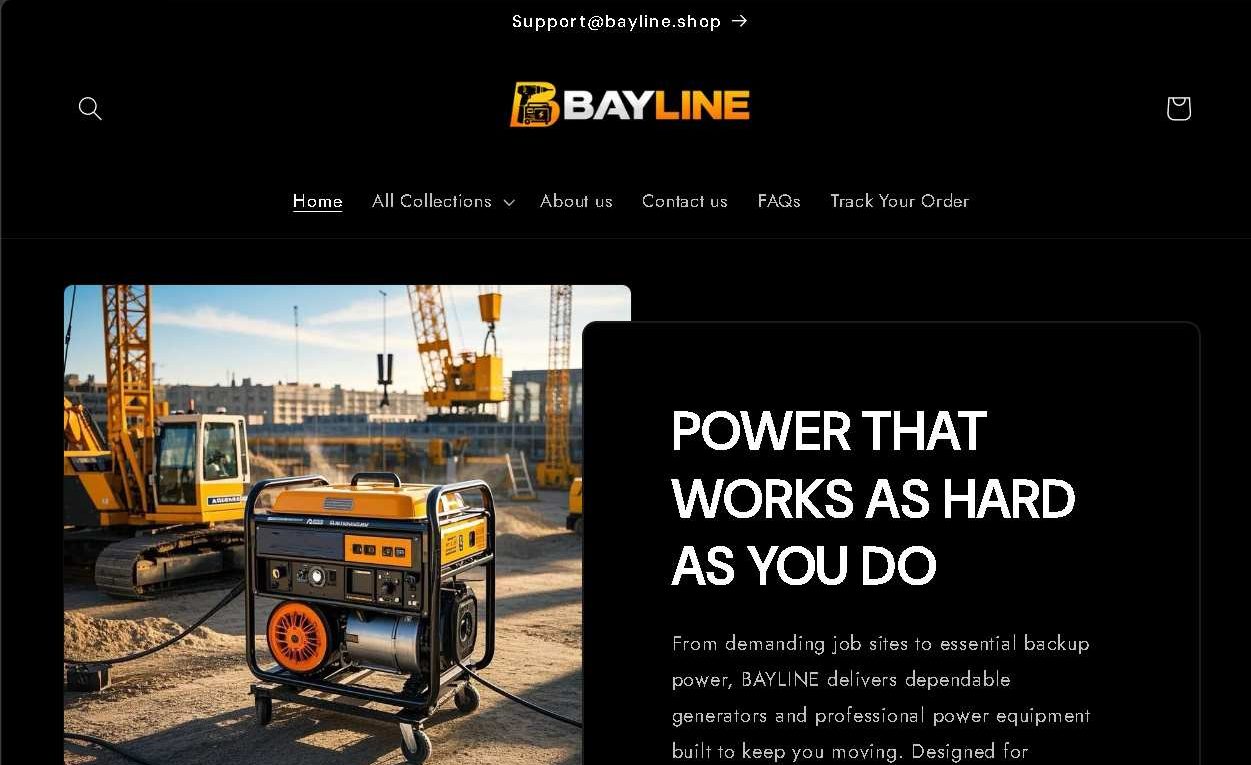
Bayline.shop presents itself as a professional power‑equipment retailer offering generators and industrial tools for demanding job sites. The homepage looks sleek, featuring construction‑site imagery and slogans like “Power That Works As Hard As You Do.” At first glance, it appears legitimate — but deeper investigation reveals that Bayline.shop is not a verified retailer. It’s a synthetic storefront scam designed to impersonate real generator brands and capture payments from unsuspecting buyers.
What Bayline.shop Is Doing
Bayline.shop operates as a brand‑impersonation clone, using polished visuals and industry‑style language to appear credible. It mimics the look of genuine power‑equipment distributors but lacks any traceable business registration or manufacturer affiliation.
The site drives traffic through social‑media ads and search promotions, targeting users searching for “portable generators,” “construction power tools,” or “backup energy systems.” Once visitors reach checkout, payments are routed through unverified offshore processors, exposing buyers to card theft, identity compromise, and unauthorized recurring charges.
This pattern matches the synthetic storefront model — a short‑lived fake site built to harvest payments before disappearing.
What Bayline.shop Sells
Bayline.shop lists generators, power tools, and accessories, claiming industrial‑grade performance. Product photos are stock images reused across multiple scam domains. Descriptions are generic, copied from legitimate manufacturer websites, and lack technical specifications or warranty details.
The “Support@bayline.shop” email is the only contact option — no phone number, address, or verified business ID. The “Track Your Order” and “FAQs” pages are placeholders with vague text.
The site’s design mimics Shopify templates used by authentic retailers, but the backend lacks secure payment integration. This is a hallmark of synthetic storefront fraud, where scammers clone the front‑end visuals but skip compliance and verification.
How the Scam Works
- Ad Click to Checkout: A user clicks a sponsored ad promising “discounted generators” and lands on Bayline.shop.
- Payment Diversion: The checkout form collects card data directly, bypassing secure tokenization.
- Fake Confirmation: Buyers receive automated emails but no shipping updates.
- Financial Fallout: Victims report unauthorized charges, cloned card usage, or delivery of cheap counterfeit goods. Refund requests go unanswered.
This pattern mirrors the synthetic storefront lifecycle — impersonate, harvest, vanish.
Red Flags
| Signal / Feature | Bayline.shop Status | Legitimate Retail Standard |
|---|---|---|
| WHOIS Registry | Privacy‑protected, anonymous owner | Transparent business registration |
| Domain Age | Newly registered (< 90 days) | Established domain (> 1 year) |
| Brand Identity | Generic “Bayline” logo, no trademark | Verified manufacturer or distributor |
| Payment Gateway | Unverified processor | PCI‑DSS‑compliant gateway |
| Contact Details | Generic email only | Verified business support channels |
| Legal Pages | Copied boilerplate from other scam sites | Custom, jurisdiction‑specific policies |
| Customer Reviews | Fabricated “Excellent 4.9” badges | Verified third‑party reviews |
Additional Warning Signs
- Domain extension “.shop” used to mimic industrial retailers.
- SSL certificate is free and automated, not business‑validated.
- DNS records point to a shared hosting cluster used by other fraudulent domains.
- No verified manufacturer partnerships or certifications.
Risk Profile
- Domain Registration: Recent, privacy‑protected, low‑cost registrar.
- Server Location: Hosted in Singapore — a common hub for cross‑border scam networks.
- Payment Security: No PCI compliance; card data exposed to theft.
- Consumer Recourse:
- US: Chargeback under Regulation E or Fair Credit Billing Act.
- UK: Section 75 protection for purchases over £100.
- Canada & Australia: Fraud reversal protocols available — report immediately.
Bayline.shop represents a high‑risk merchant environment lacking encryption hygiene, business verification, and compliance with any Tier‑1 financial protection framework.
Conclusion
Bayline.shop is not a legitimate generator retailer. It’s a synthetic storefront scam exploiting industrial imagery and fake branding to deceive buyers. Every indicator — from WHOIS anonymity to payment diversion — confirms it operates outside recognized merchant standards.
If you’ve purchased from this site, contact your bank immediately to initiate a chargeback under Regulation E or Section 75. Freeze compromised cards, monitor statements, and report the incident to your national cyber‑fraud authority.
Avoid engaging with Bayline.shop’s “support” channels — refund promises are scripted distractions, not genuine assistance.
“When a store sells power but hides its identity, it’s not energy — it’s exploitation.”
👉 For more shady sites exposed, check our Shopping Scam Directory — your quick guide to staying safe online.
Every safe click counts. If this post helped, a coffee gesture fuels more scam‑busting investigations.

Call to Action
Please share this article to spread awareness. Follow us on Facebook, Twitter, and Instagram for more scam alerts. If you doubt the legitimacy of any website or investment plan, DM us on social media — we’ll help you verify.
FAQ Section
Is Bayline.shop a legitimate generator store or a scam site?
No, Bayline.shop is not legitimate. WHOIS checks show the domain was registered recently with privacy protection, hiding the owner’s identity. The site copies industrial branding and product imagery without authorization. Legitimate retailers provide transparent ownership and verified merchant accounts. Bayline.shop fails all these standards, making it a synthetic storefront scam.
How does Bayline.shop impersonate real power‑equipment brands?
Bayline.shop uses visual mimicry tactics — professional construction imagery, industrial fonts, and fake product descriptions. By presenting itself as a “dependable generator supplier,” it exploits buyer trust in established equipment brands. This impersonation is a common industrial‑clone scam strategy, designed to mislead professionals seeking affordable tools.
What payment risks exist when buying from Bayline.shop?
The site displays Visa, Mastercard, and PayPal logos but routes transactions through an unverified offshore processor. This exposes shoppers to card credential theft, unauthorized recurring charges, and identity compromise. Unlike PCI‑DSS‑compliant gateways, Bayline.shop lacks secure tokenization and merchant verification. Victims often face fraudulent billing long after the initial purchase.
Can US, UK, Canada, and Australia consumers recover money lost to Bayline.shop scams?
Yes, but recovery depends on speed.
US: File a chargeback under Regulation E (debit) or the Fair Credit Billing Act (credit) within 60 days.
UK: Use Section 75 of the Consumer Credit Act for purchases over £100.
Canada & Australia: Banks offer fraud reversal protocols, but success requires prompt reporting. Delays reduce recovery chances, as scam sites often vanish before disputes mature. Immediate action is critical.
What technical red flags prove Bayline.shop is unsafe for online shopping?
Key red flags include:
WHOIS anonymity concealing ownership.
Domain age under 90 days, typical of short‑lived scam sites.
Stock generator photos reused across multiple fraudulent domains.
Generic Gmail or domain email instead of verified business support.
Boilerplate legal pages copied from other scam sites. Together, these signals confirm Bayline.shop is a synthetic storefront fraud engineered for short‑term exploitation.