The Unsolicited Delivery Dilemma: Anatomy of a Brushing Scam and Your Digital Security Blueprint
Quick Summary: A brushing scam occurs when predatory e-commerce sellers send unsolicited, low-cost packages to real addresses using leaked consumer data. By creating dummy accounts and tracking numbers, merchants post fraudulent, 5-star "Verified Purchase" reviews to rig search algorithms. While recipients face no legal or financial liability to pay for or return the items, these shipments signal compromised personal data, requiring immediate account security reviews and official platform reporting.
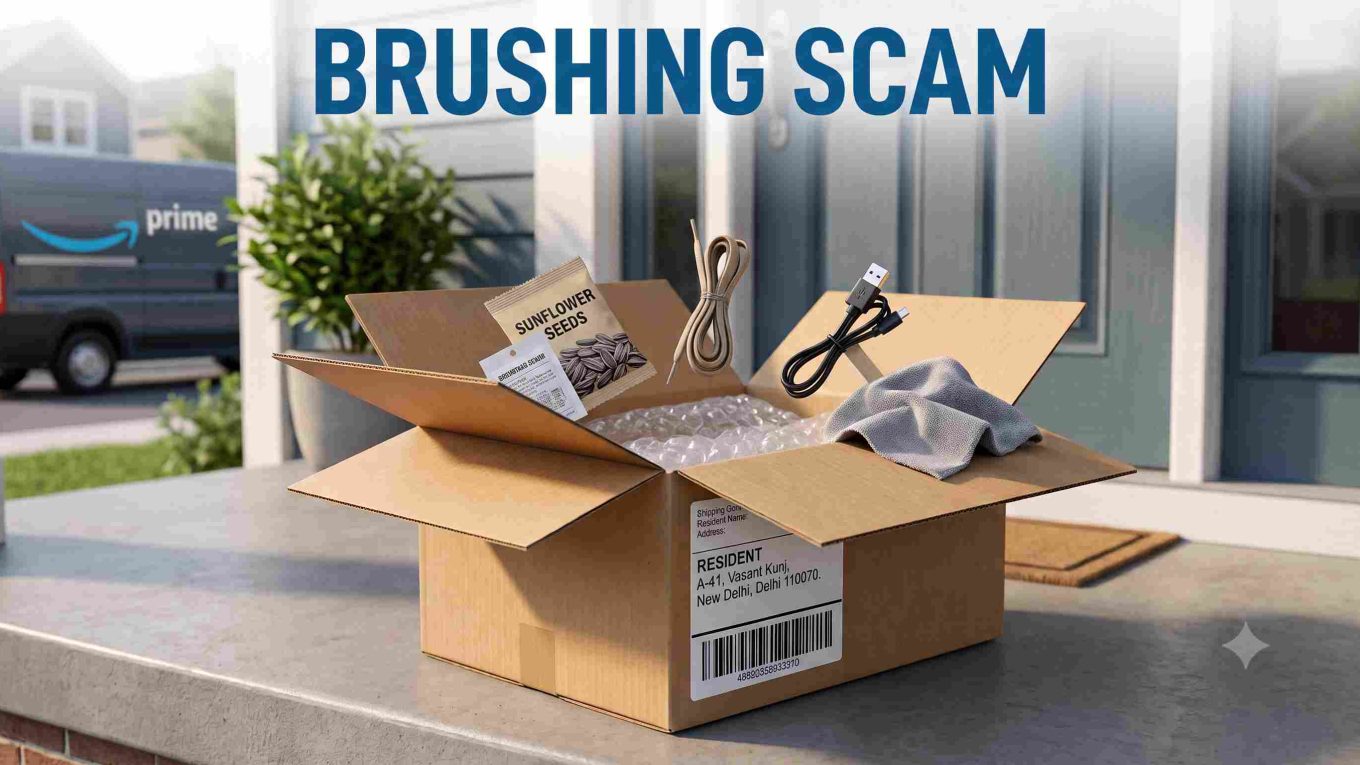
A package lands on your doorstep. Your legal name and residential address are printed clearly on the shipping label, but you have no memory of ordering it. Inside, you find an inexpensive, unexpected item: a pair of nylon shoelaces, a pack of sunflower seeds, a basic USB-C charging cord, or a microfiber cloth.
No invoice is included. No family member claims responsibility.
While receiving free goods might initially seem like an accidental logistics windfall, it is rarely an administrative error. Instead, it is the hallmark of an e-commerce manipulation scheme known as brushing.
Beyond the immediate curiosity of receiving unordered merchandise, brushing signals a deeper reality about personal data exposure, marketplace ranking algorithms, and consumer rights. Understanding how this scheme operates is essential to safeguarding your digital identity and knowing your rights under federal and national trade regulations.
What Is a Brushing Scam?
A brushing scam is an exploitative tactic employed by dishonest e-commerce merchants to fabricate social proof, bypass platform safety filters, and manipulate search engine and marketplace algorithms.
Modern marketplace algorithms prioritize products that possess two primary signals: high sales velocity and verified buyer feedback. A listing with thousands of five-star reviews inevitably dominates search results over a competing item with none.
To bypass the painstaking process of organic growth, rogue sellers artificially inflate their own numbers through a deceptive, automated cycle:
- Identity Procurement: The merchant secures a legitimate physical address, recipient name, and sometimes phone details through third-party data broker lists, scraped public directories, or unindexed data dumps resulting from past corporate data breaches.
- Order Fabrication: The seller creates a dummy buyer account or uses an automated bot script. They purchase their own product, paying for it using self-funded payment mechanisms such as single-use virtual cards or gift certificates.
- Physical Fulfillment: To satisfy algorithmic requirements, the merchant cannot simply write a fake review; marketplace anti-fraud systems verify whether an item was physically dispatched and scanned by a recognized carrier (such as the USPS, Royal Mail, FedEx, or Australia Post). The merchant fulfills this requirement by shipping a low-cost, lightweight item that costs pennies to manufacture and pennies to post.
- The “Verified Purchase” Review: Once the logistics carrier marks the parcel as successfully delivered to the real residential address, the ghost account logs into the marketplace and posts a glowing, five-star review. Because tracking data corroborates delivery, the review receives an official “Verified Purchase” badge.
Through this cycle, a merchant turns nominal shipping and inventory costs into hundreds of high-trust reviews, systematically outranking legitimate competitors.
The Hidden Mechanics: Why Your Information Was Chosen
A common misconception among recipients of unsolicited parcels is that a physical breach of their home or financial assets has taken place. The reality is generally rooted in data commodification.
Your street address is rarely a private secret. It exists across voter rolls, property deed databases, public registries, and marketing consumer files. When cybercriminals breach mid-tier e-commerce retailers, utility providers, or online lifestyle portals, the compromised databases often contain what security professionals classify as non-financial Personally Identifiable Information (PII):
- Full names
- Physical shipping addresses
- Email addresses
- Old telephone numbers
These datasets are regularly compiled into massive lists and sold on secondary forums. Unscrupulous e-commerce operators purchase these lists in bulk to fuel their brushing automation.
Receiving a brushed package indicates that your name and address are circulating in an active seller network list. It does not automatically imply that your primary bank account or online shopping profile has been compromised, though it serves as an unmistakable warning to inspect your operational digital hygiene.
Consumer Rights and the Law: Must You Pay or Return It?
One of the most frequent points of friction for recipients is the anxiety that accepting or opening the package creates a financial liability. Unscrupulous actors in past decades used “negative option” billing to demand payment for items sent unprompted.
Modern consumer protection frameworks explicitly protect recipients against this practice:
- In the United States: The Federal Trade Commission (FTC) and the U.S. Postal Inspection Service (USPIS) maintain clear statutory protections. Under Title 39, United States Code, Section 3009, unordered merchandise mailed to a consumer is legally classified as an unconditional gift. The recipient has no legal duty to return the item, hold it for pickup, or pay for it under any circumstance.
- In the United Kingdom: Under the Consumer Contracts (Information, Cancellation and Additional Charges) Regulations 2013, unsolicited goods delivered without prior agreement or contractual basis are treated as unconditional gifts. It is an offense for a sender to demand payment, threaten legal action, or demand return costs.
- In Canada and Australia: Provincial consumer protection acts across Canada and the Australian Consumer Law (ACL) enforce similar tenets regarding unsolicited consumer supplies, guaranteeing consumers immunity from liability or debt collection for items they never ordered.
In short: You do not owe money, you are not obligated to communicate with the seller, and you are entirely within your legal rights to retain, donate, or dispose of the item.
Triage Protocol: What to Do When a Mystery Package Arrives
When an unsolicited package arrives at your residence, following a systematic protocol ensures that your digital perimeter remains intact and rogue merchants are penalized.
[ Unsolicited Package Arrives ]
               │
               ▼
┌──────────────────────────────┐
│ 1. Inspect Physical Label    │
│    • Note tracking number    │
│    • Note marketplace logos  │
│    • Is it an organic item?  │
└──────────────┬───────────────┘
               │
       Biological/Seed Pack?
       ├── YES ──► Double-bag, DO NOT plant, alert Dept of Agriculture / Biosecurity
       │
       └── NO ───► Proceed to Account Audit
                     │
                     ▼
┌──────────────────────────────┐
│ 2. Audit Retail Portals      │
│    • Check active orders     │
│    • Inspect "Archived" tabs │
│    • Verify payment methods  │
└──────────────┬───────────────┘
               │
               ▼
┌──────────────────────────────┐
│ 3. Report to Platform        │
│    • File "Report Unsolicited│
│      Package" ticket         │
│    • Hand over carrier data  │
└──────────────┬───────────────┘
               │
               ▼
┌──────────────────────────────┐
│ 4. Upgrade Digital Hygiene   │
│    • Rotate master passwords │
│    • Mandate app-based 2FA   │
│    • Run PII breach scan     │
└──────────────────────────────┘
1. Check for Compromised Existing Accounts
Before assuming third-party brushing, ensure the package was not generated through an account takeover.
- Open your primary retail accounts (such as Amazon, Walmart, or eBay).
- Navigate beyond the primary “Your Orders” page into the Archived Orders view. Fraudulent actors who obtain credential pairs often archive illicit transactions immediately after ordering to minimize visibility to the primary user.
- Confirm that no unrecognized payment transactions appear on your linked credit or debit accounts.
2. File an Official Unsolicited Package Report
Major e-commerce ecosystems provide dedicated portals to report brushed packages:
- Document the carrier name, tracking code, return address, and order reference ID found on the label.
- Submit a report via the platform’s dedicated consumer safety department (e.g., Amazon’s Report Unsolicited Packages intake channel).
- Submitting this data gives anti-fraud divisions the physical tracking anchors they need to trace the ghost merchant account, close the shell storefront, and remove thousands of illegitimate verified reviews from search rankings.
3. Special Handling for Biological Matter and Agricultural Seeds
If the package contains unlabeled seeds, plant cuttings, bulbs, or soil, treat it with extreme caution.
- Do not plant or cultivate them: Planting foreign, unregulated botanical specimens poses severe biosecurity risks, potentially introducing invasive plant species, agricultural fungi, or pests that can ravage native ecosystems and domestic farming.
- Do not discard them in the compost or standard outdoor trash: Unprotected disposal allows viable seeds to germinate in local soil.
- Protocol: Seal the contents securely inside a heavy-duty plastic freezer bag. Contact your regional agricultural oversight body—such as the USDA Animal and Plant Health Inspection Service (APHIS) in North America, DEFRA in the UK, or the Department of Agriculture, Fisheries and Forestry in Australia—to arrange for safe surrender or prescribed incineration.
4. Execute a Digital Privacy Reset
Because brushing implies that your contact parameters reside on merchant target rosters, take active steps to harden your digital perimeter:
- Audit Breached Records: Use established identity check mechanisms to determine which historic data breaches leaked your profile.
- Deprecate Password Reuse: Transition all transactional accounts to long, randomly generated passphrases managed by a dedicated password manager.
- Enforce Non-SMS Two-Factor Authentication: Migrate critical shopping and payment accounts away from SMS-based verification (which is vulnerable to SIM-swap intercepts) in favor of hardware security keys or authenticator apps (TOTP).
- Opt-Out of Data Brokers: Exercise your data removal rights through regional privacy frameworks (such as state-level privacy acts or GDPR/UK Data Protection provisions) or deploy automated privacy removal services to scrub your home address from public-facing aggregator websites.
The Broader Impact: Why Marketplaces Must Solve Brushing
While an unwanted plastic trinket may seem trivial to the individual, aggregate brushing corrodes the foundation of e-commerce integrity. When consumer trust in the validity of a “Verified Review” collapses, consumers struggle to differentiate reliable, well-engineered goods from shoddy, potentially hazardous counterfeits.
By treating the arrival of an unsolicited package not as free junk, but as an actionable digital breadcrumb, you can protect your household, disrupt fraudulent distribution networks, and reinforce broader digital consumer defense.
Author Bio
Suyesh Gusain is an analyst, writer, and consumer protection researcher focused on e-commerce fraud, digital privacy, and cybersecurity. He investigates deceptive digital practices, predatory schemes, and algorithm manipulation, translating complex forensic data into actionable consumer safety advisories. Holding a Master’s degree in Mass Communication with an analytical background in physical sciences, he specializes in simplifying technical vulnerabilities and digital marketplace dynamics for everyday internet users.
Every safe click counts. If this post helped, a coffee gesture fuels more scam‑busting investigations.

Call to Action
Please share this article to spread awareness. Follow us on Facebook, Twitter, and Instagram for more scam alerts. If you doubt the legitimacy of any website or investment plan, DM us on social media — we’ll help you verify.
“Scammers evolve daily. Subscribe to our scam‑alert list and stay one step ahead.”
Frequently Asked Questions: Brushing Scams & Unsolicited Deliveries
Why did I receive an Amazon package with my name on it that I never ordered?
Receiving an unordered package delivered to your name is the hallmark of a brushing scam. A third-party merchant obtained your name and physical address—often through scraped public directories, marketing lists, or third-party data breaches—and created a ghost buyer account.
By shipping an inexpensive item to your address and generating a real tracking number, the rogue merchant can write a fake, glowing 5-star “Verified Purchase” review to manipulate search rankings.
Do I have to pay for or return unordered merchandise delivered to my address?
No. Under consumer protection frameworks—such as the U.S. Federal Trade Commission (FTC) guidelines (39 U.S. Code § 3009) and the UK Consumer Contracts Regulations—unsolicited merchandise is legally classified as an unconditional gift.
You are under no legal obligation to pay for the merchandise, return the parcel, or contact the seller. You can legally keep, donate, or dispose of the item.
Does a brushing scam mean my credit card or bank account has been hacked?
Not necessarily. In the vast majority of brushing incidents, scammers do not have access to your banking information or credit cards. Instead, they fund the orders themselves using pre-loaded prepaid cards, digital gift cards, or promotional store credit.
However, it confirms that your personally identifiable information (PII)—specifically your name and physical delivery address—is circulating in illicit seller databases, making it wise to review your accounts for suspicious activity.
How do I report an unsolicited Amazon brushing package?
To report an unprompted shipment to Amazon:
a. Locate the tracking number, carrier name, and order ID printed on the shipping label.
b. Visit the official Amazon customer service portal and search for the Report Unsolicited Packages form.
c. Submit the carrier details and specify that you received an item you did not purchase. d. Amazon’s fraud investigation team uses these tracking anchors to trace the dummy buyer account, suspend the offending seller storefront, and delete fraudulent reviews.
Why did I receive random packets of seeds from China or overseas?
Unlabeled seed packets sent from international logistics hubs are a common variation of the brushing scam because seeds are lightweight, durable, and cost pennies to ship with international tracking.
Do not plant or cultivate them: They may be invasive plant species or introduce foreign agricultural pests and pathogens.
Do not throw them in the compost or standard outdoor trash: Loose disposal allows viable seeds to germinate locally.
Protocol: Seal the seeds in a secure plastic zip-top bag and contact your regional agricultural authority (such as the USDA-APHIS in the US, DEFRA in the UK, or the Department of Agriculture in Australia) for proper handling and disposal instructions.
What steps should I take to protect my personal data after a brushing incident?
While you do not need to cancel your bank cards unless unrecognized charges appear, you should harden your digital accounts:
a. Check your retail accounts (including hidden or archived orders) to confirm no orders were made using your profile.
b. Update your account passwords to strong, unique passphrases stored in a password manager.
c. Enable authenticator app-based Two-Factor Authentication (2FA) rather than SMS-based verification.
d. Submit data removal requests to common public data broker and people-search sites to reduce the public availability of your home address.