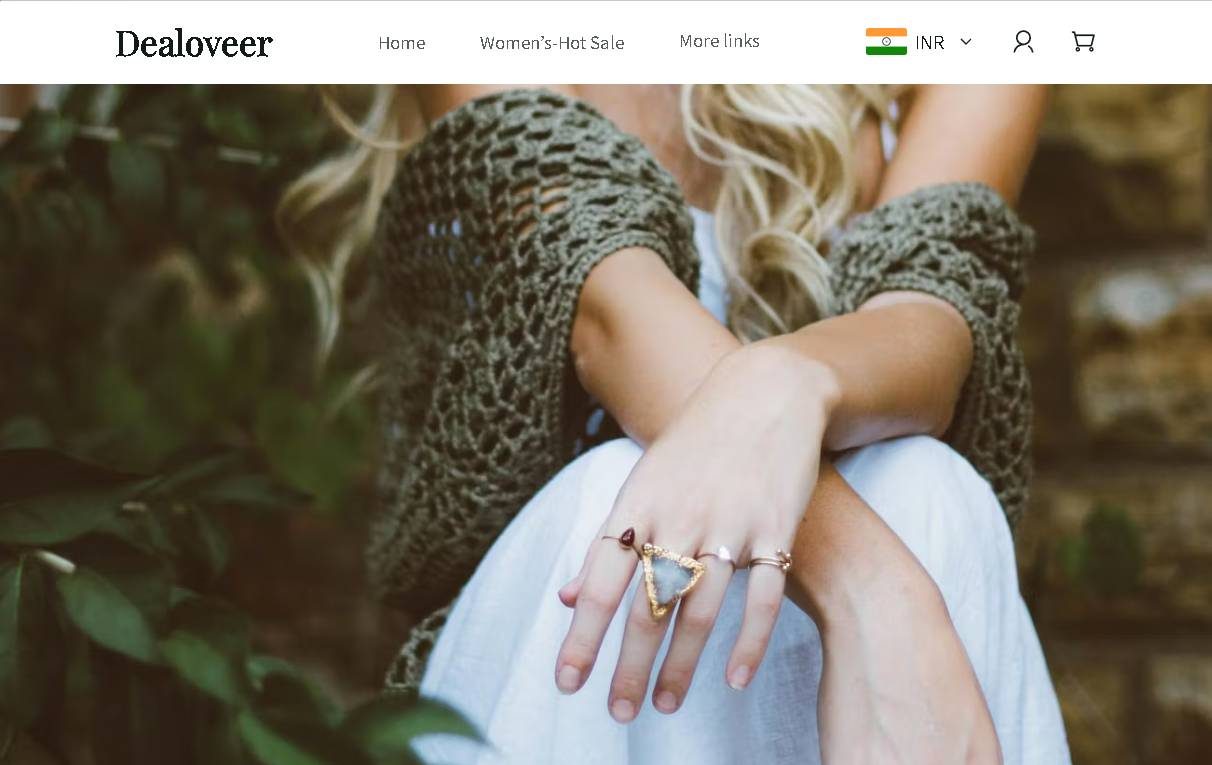
Case Study on Dealoveer: The Mechanics of the Ad-Farm Dropshipping Scam
If you spend any time scrolling through Facebook, Instagram, TikTok, or Pinterest, you have inevitably seen them: crisp, beautifully lit photographs of chic boho cardigans, elegant linen sets, tailored jackets, and rustic autumnal sweaters offered at jaw-dropping clearance prices. A boutique looks like it is holding an emergency liquidation, with $80 linen shirts marked down to a flat $14.73.
Clicking through often brings shoppers to websites like Dealoveer (operating under Dealoveer.com). To the casual browser, Dealoveer presents itself as a charming, trendy direct-to-consumer boutique. However, beneath the surface lies one of modern e-commerce’s most prevalent, infuriating business models: the ad-farm dropshipping bait-and-switch scheme.
Understanding how these storefronts function—and analyzing Dealoveer as a real-world case study—reveals why this setup thrives in the gray areas of digital commerce and consumer protection law.
What Is an Ad-Farm Dropshipping Scam?
Traditional dropshipping is a standard fulfillment model: a store sells an item, forwards the order to a third-party manufacturer or supplier, and keeps the margin. Nothing about dropshipping is inherently illegal or fraudulent.
An ad-farm dropshipping scam, however, twists this model into systematic deception. The operators do not merely resell items; they deploy:
- Stolen Creative Assets: High-end product photography scraped from independent designers, bespoke artisan shops, or established luxury brands.
- Algorithmic Ad Farming: Mass-targeted social media advertising campaigns designed to harvest fast, impulsive, low-ticket sales.
- Severe Quality Mismatch (Bait-and-Switch): Shipping a drastically inferior, paper-thin synthetic knockoff that bears almost no functional resemblance to the item photographed.
- Calculated Return Friction: Designing a refund process so deliberately hostile, expensive, and protracted that 90% of buyers abandon their claims, allowing the operators to pocket the markup.
These stores are engineered from day one to be disposable. Once negative reviews, bank chargebacks, and domain flags pile up, the site is discarded, and the operators launch an identical clone under a new name within hours.
Case Study: Dealoveer — A Disposable Fast-Fashion Storefront
To understand how this ecosystem thrives, we must look directly at Dealoveer. On the surface, Dealoveer mimics a legitimate boutique, targeting women looking for affordable, stylish wardrobe staples. But examining its digital footprint reveals all the trademarks of an ephemeral, churn-and-burn storefront.
The Dealoveer Bait-and-Switch Pipeline
Hover or tap each phase to reveal how the funnel operates.
Targeted Social Ad
Scraped boutique photography with fake 70% flash markdown tags across social feeds.
Under the hood: Targets impulse shoppers on Meta feeds, using stolen designer imagery with unbranded labels.
Dealoveer Storefront
Urgency countdowns and bulk quantity hooks (“Buy 3, Get 15% Off”).
Under the hood: Uniform $14–$20 tags induce impulse adds; bundle mechanics push order values over $40.
Instant Customer Checkout
Funds immediately settle via payment gateways, leaving zero corporate liability on record.
Under the hood: Standard payment interfaces reassure buyers while routing revenue into masked overseas merchant accounts.
Ultra-Cheap Factory Routing
An automated third-party supplier dispatches an unbranded, low-density polyester imitation.
Under the hood: Dealoveer holds no physical stock; an API trigger routes production to the cheapest wholesale factory.
Delivery & Disillusionment
After 3–6 weeks of tracking stalls, the parcel arrives with severe fit errors and scratchy synthetic fabric.
Under the hood: Long shipping windows help burn through the initial 30-day payment dispute honeymoon window.
The Return Gauntlet
Support offers a meager 10–20% partial refund or demands the buyer pay overseas freight.
Under the hood: Return shipping to Asia costs $35–$50 (exceeding item price), forcing buyers into an economic checkmate.
Customer Abandonment / Domain Churn
Operator pockets 80%+ net profit. The domain is abandoned once chargebacks surge.
1. The Working of the Website
When you land on Dealoveer, the user experience is calibrated to maximize impulse buying and prevent scrutiny:
- Aggressive Urgency Prompts: Floating banners advertise sitewide warehouse sales, limited-time flash sales, and cart-level discounts (e.g., “Buy 2 Get 10% Off, Buy 3 Get 15% Off”). The goal is to nudge the customer past a $30 to $50 basket size, optimizing the ad spend required to acquire that visitor.
- Uniform, Arbitrary Price Points: A hallmark of Dealoveer’s catalog is that dozens of radically different garments—from heavy winter coats to delicate blouses—are listed at strangely uniform prices, frequently hovering around the $14 to $19 mark. Real retail margins do not work this way, but bulk knockoff catalog scrapers do.
- Streamlined Payment Gateways: Dealoveer routes payments through options like PayPal and standard card processors. By relying on PayPal Express checkout, the site borrows an aura of institutional security that it has not earned itself.
2. What Dealoveer Is Claiming
Dealoveer presents a carefully crafted narrative across its storefront:
- Boutique Quality: The site claims to deliver high-quality, comfortable, and durable garments tailored for the modern consumer.
- Seamless Customer Service: It advertises a standard “14-Day Return & Exchange Policy” and assures customers that their satisfaction is the store’s primary focus.
- Direct Craftsmanship: The imagery implies curated collections, soft cotton weaves, breathable linens, genuine knits, and well-tailored outerwear.
- Transparent Shipping: The site claims smooth, tracked international transit backed by major commercial carriers like DHL, FedEx, and national postal services.
3. Explaining Its Modus Operandi
How does the Dealoveer machine actually generate profit?
- Scraping Visual Assets: Dealoveer does not hire models or stage photo shoots. The operators use automated tools to harvest catalog imagery from Pinterest boards, legitimate Etsy artisans, Korean fashion brands, or Western retail labels.
- Routing to Low-Tier Manufacturing Hubs: When a shopper places an order on Dealoveer, an automated API forwards the transaction to a wholesale supplier in an industrial export hub (predominantly in southern China).
- The Material Substitution: The manufacturer does not produce the garment shown in the stolen photograph. Instead, they use a generic pattern designed to vaguely mimic the shape and color of the original image, cut from the cheapest possible raw materials—typically unbreathable, static-heavy polyester or nylon blends. Detailed embroidery is replaced with flat digital printing; textured knits are replaced with stamped synthetic fabrics.
- The Friction-Based Refund Moat: When the customer opens the plastic mailer weeks later and realizes the garment is unwearable, they reach out to
support@dealoveer.com. This is where the trap snaps shut:- Stage 1: The Token Discount Offer. The support agent apologizes politely, notes that returning goods overseas is “very harmful to the environment,” and offers a 10% to 20% partial refund if the customer simply keeps the item.
- Stage 2: The Shipping Barrier. If the customer refuses, the support desk reveals that returns must be shipped to an overseas warehouse address at the customer’s sole expense via tracked courier. International parcel postage with tracking to Asia typically costs between $25 and $50—often exceeding the entire value of the clothing.
- Stage 3: Running the Clock. By stretching back-and-forth email replies over several weeks, the operators attempt to push the buyer past the statutory chargeback or payment processor dispute window.
Red Flags Found on Dealoveer
If you evaluate Dealoveer against the security standards of legitimate online retail, several critical red flags immediately emerge:
- Complete Corporate Anonymity: Dealoveer provides no legal corporate name, no registered business address, no jurisdiction of incorporation, and no telephone number. The only contact method is a single generic support email. If an e-commerce company conceals where its physical headquarters reside, it is intentionally evading accountability.
- Boilerplate Legal Documents: The Terms of Service and Privacy Policy pages are copy-paste duplicates of generic templates used by hundreds of short-lived Shopify-style storefronts. They contain vague clauses referencing unspecified third-party warehouses scattered across the globe.
- Image Discrepancies and Inconsistent Styles: The models, photographic styles, lighting conditions, and backdrops vary wildly from one product listing to another. One item is shot in an expensive studio with a European model; the next appears to be a casual selfie taken in a living room; another is a flat-lay photograph lifted from an Etsy listing. This visual inconsistency is the classic fingerprint of image scraping.
- Suspicious Pricing Economics: Heavy trench coats, multi-piece knit sets, and structured blazers cannot be ethically manufactured, shipped internationally, and sold for $14 to $16 while maintaining a profitable enterprise—unless the product being delivered is practically worthless scrap fabric.
- Recent Domain Creation with Masked WHOIS: The domain
Dealoveeris relatively young and utilizes privacy shielding services to obscure the identity and geographic origin of the real site owner.
Final Verdict
Is Dealoveer a legitimate fashion boutique? No.
While Dealoveer may not be a traditional “phishing” website designed to siphon bank credentials without sending anything at all, it operates as a textbook ad-farm, bait-and-switch dropshipping scheme.
Customers who purchase through Dealoveer are rarely, if ever, receiving the tailored, high-grade clothing displayed in the site’s promotional photos. Instead, they are paying premium boutique prices for bottom-tier factory overruns and synthetic knockoffs, backed by an intentionally obstructive return process designed to prevent refunds.
Recommendation: Avoid purchasing from Dealoveer. If you have already placed an order and received goods that are unwearable or fundamentally different from the advertised photos, bypass their email support desk immediately and open an “Item Significantly Not as Described” dispute directly through PayPal or your credit card company.
FAQ Section
1. Is Dealoveer scam or legit?
Dealoveer is not a legitimate fashion retailer; it operates as a deceptive bait-and-switch storefront. While Dealoveer often sends an actual physical package (which allows them to show valid postal delivery confirmation to credit card processors), the merchandise delivered rarely resembles the photographs used on the site.
Dealoveer scrapes promotional images from independent fashion brands and ships low-grade polyester copies. Furthermore, their promised return policy is virtually impossible to use without spending more money on overseas postage than the order itself is worth. For these reasons, consumer protection watchdogs classify it as an unreliable dropshipping scam.
2. Is Dealoveer legit for buying clearance clothing?
No, Dealoveer is not a safe or reliable platform for buying clearance clothes. The deep clearance prices on Dealoveer—such as garments listed for $14.73 alongside tiered discounts like “Buy 3 Get 15% Off”—are psychological anchors designed to trigger impulse buys on social media.
Legitimate retailers sell clearance goods to liquidate past-season stock; Dealoveer lists clearance prices as a baseline marketing gimmick for mass-manufactured, ultra-cheap items sourced on demand. Shoppers who buy from here expecting authentic clearance-grade boutique wear consistently report receiving poorly stitched, misshapen garments made from cheap synthetic fabrics.
3. How to get a refund from Dealoveer if my order is wrong?
To get a full refund from Dealoveer, you must escalate the issue directly through your payment provider rather than relying on its customer service. If you email support@dealoveer.com, the staff will typically offer a token partial refund (often between 10% and 20%) and insist that returning the garment requires you to pay steep international shipping fees back to an Asian warehouse.
To bypass this stall tactic:
- Take clear, well-lit photos showing the garment you received side-by-side with the product screenshot from the Dealoveer website. Highlight the differences in fabric, stitching, color, and cut.
- Log into your PayPal Resolution Center or contact your credit card issuer’s fraud department.
- Open a dispute under the reason “Significantly Not as Described” (SNAD).
- Provide the side-by-side photo comparison and state clearly that the merchant is refusing a free local return for misadvertised goods. Payment processors routinely side with the buyer in clear bait-and-switch disputes.
4. Who owns Dealoveer and where is it located?
Dealoveer does not disclose its corporate ownership, legal parent entity, or physical office location. The “About Us” and “Contact Us” pages on Dealoveer provide zero corporate registration data, physical street addresses, or phone numbers. Domain registry lookups show that the ownership of Dealoveer is hidden behind commercial privacy proxy services.
However, shipping tracking histories, fulfillment practices, and return routing instructions indicate that it is managed by an e-commerce syndicate operating out of China, using regional logistics aggregators to fulfill low-cost parcels internationally.
5. Why are Dealoveer clothes so cheap compared to original boutique brands?
Dealoveer clothes are cheap because the website does not sell the original garments pictured in its advertisements. The images displayed on Dealoveer are scraped from authentic boutique designers, Etsy creators, and established Western clothing labels who spend significant resources on genuine cotton, wool, silk, high-end tailoring, and professional photography.
Dealoveer takes these stolen photos and has third-party sweatshops produce ultra-cheap replicas using the lowest-cost materials available—predominantly unlined, thin polyester and plastic-derived synthetic blends. Because their manufacturing cost per piece is often under $2 to $3, Dealoveer can price items at $15, run massive social ad campaigns, and still maintain high profit margins at the buyer’s expense.
For more shady sites exposed, check our Shopping Scam Directory — your quick guide to staying safe online.
Every safe click counts. If this post helped, a coffee gesture fuels more scam‑busting investigations.

Call to Action
Please share this article to spread awareness. Follow us on Facebook, Twitter, and Instagram for more scam alerts. If you doubt the legitimacy of any website or investment plan, DM us on social media — we’ll help you verify.