Perktrees Scam Review — The Forest of Fake Gift Card Promises
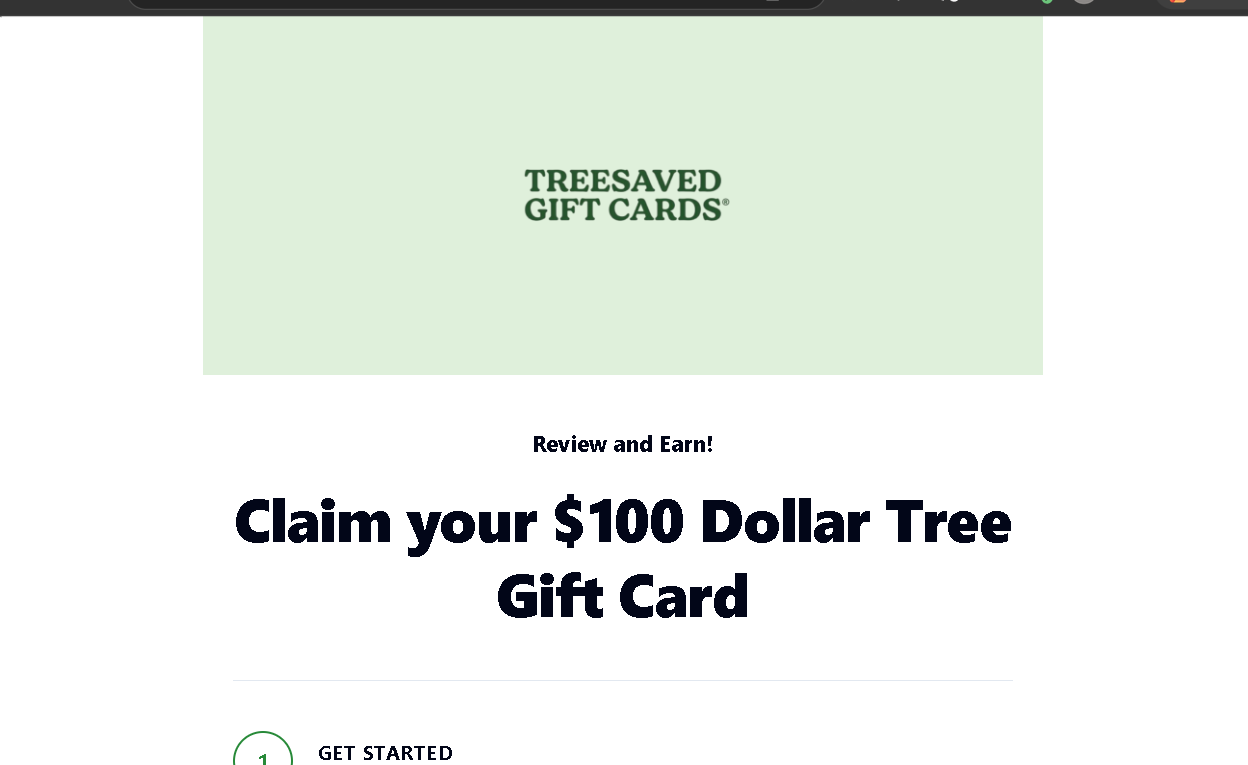
Perktrees greets visitors with a soothing green banner and the logo “Treesaved Gift Cards.” It promises a $100 Dollar Tree Gift Card for completing a simple “review journey.” The design looks polished, the offer sounds generous, and the steps seem easy. But beneath this calm forest façade lies a data‑harvesting scam — a clone of the same network behind Perkdollars.com and PerkSavings.com.
This review unpacks how Perktrees operates, why it’s dangerous, and how users can protect themselves.
Red Flags Sprouting Everywhere
| Red Flag | Description |
|---|---|
| New Domain Registration | Perktrees was registered recently, with WHOIS data hidden behind Cloudflare privacy. Disposable domains are a hallmark of scam networks. |
| Fake Brand Identity | “Treesaved Gift Cards” doesn’t exist in any corporate registry or trademark database. It’s a fabricated brand used across multiple scam clones. |
| Unrealistic Rewards | Offering $100 for a short survey defies logic — legitimate reward programs pay cents, not hundreds. |
| Redirect Funnels | Every “Claim” button leads to unrelated trial offers or survey traps. |
| No Transparency | No company address, no verified contact, no privacy policy — just empty promises. |
How the Scam Works
- Bait: The site tempts users with “Claim your $100 Dollar Tree Gift Card.”
- Hook: Visitors are asked to enter personal details — name, email, phone number — under the guise of “review participation.”
- Redirect: After submission, users are sent to third‑party offers or fake survey sites.
- Profit: Scammers earn affiliate commissions for each completed offer.
- Exploit: Collected data is sold to spam networks or used for phishing.
This pattern mirrors the Free Gift Card Rewards Scam — a psychological lure exploiting greed and urgency.
Technical Breakdown
- Domain Age: Less than six months old — typical of disposable scam sites.
- Hosting: Protected by Cloudflare, masking the true server location.
- SSL Certificate: Present but meaningless — scammers use free SSL to appear secure.
- Content Structure: Minimal text, heavy CTAs (“Get Started,” “Claim Now”) — optimized for conversion, not credibility.
- Tracking Scripts: Hidden pixels and cookies likely used for affiliate tracking and data collection.
The Psychology Behind Perktrees
Scammers understand human behavior better than most marketers. They exploit three psychological triggers:
- Greed: “Free $100 gift card” sounds irresistible.
- Urgency: “Limited time offer” creates fear of missing out.
- Trust: Using Dollar Tree’s name builds false legitimacy.
By combining these triggers, Perktrees manipulates users into acting before thinking — a hallmark of social engineering scams.
Case Study: The Clone Forest
Perktrees isn’t an isolated tree — it’s part of a forest of cloned reward sites.
- Perkdollars.com: Promised identical $100 Dollar Tree gift cards.
- PerkSavings.com: Used the same “review and earn” funnel.
- GiftTreeDeals.com: Redirected users to malware‑laden survey apps.
All share identical layouts, wording, and redirect funnels. This indicates a centralized affiliate scam network operating under different disposable domains to evade detection.
Risks to Users
| Risk | Impact |
|---|---|
| Identity Theft | Personal data may be sold or used for phishing. |
| Financial Loss | Victims may unknowingly subscribe to paid trials or services. |
| Malware Infection | Redirects can lead to malicious downloads. |
| Spam Flood | Victims often receive hundreds of promotional emails post‑submission. |
| Psychological Manipulation | Victims are made to believe they’re close to earning the reward, keeping them trapped in the funnel. |
Safety Recommendations
- Avoid entering details — prevents data theft.
- Check domain age — anything under six months is suspicious.
- Block redirects — use browser protection.
- Run antivirus scans — Malwarebytes or Gridinsoft recommended.
- Report scams — FTC (US), Section 75 (UK), Interac fraud (Canada), ACCC (Australia).
Legal Recourse
Victims can take action under consumer protection laws:
- United States: File complaints with the FTC under Regulation E for unauthorized charges.
- United Kingdom: Use Section 75 of the Consumer Credit Act to dispute fraudulent transactions.
- Canada: Report to Interac fraud division and Canadian Anti‑Fraud Centre.
- Australia: Lodge complaints with ACCC Scamwatch and ACMA.
Additionally, victims can email Cloudflare (registrar‑abuse@cloudflare.com) to flag the domain for takedown.
📚 Educational Add‑Ons
- Glossary Pop‑Outs:
- Affiliate Bait — scam tactic where scammers earn commissions from victims completing offers.
- Domain Churn — rapid disposal and replacement of scam domains.
- Red Flag Checklist:
- Too‑new domain
- Unrealistic rewards
- Hidden WHOIS data
- Redirects to unrelated offers
- Scenario Quiz:You’re offered a $100 gift card for filling out a 2‑minute survey. What should you do?
- A) Enter details quickly
- B) Verify domain age and legitimacy
- C) Share with friends
- Correct Answer: B
Recovery Steps for Victims
If you’ve entered your details on Perktrees:
- Change passwords for all linked accounts.
- Enable two‑factor authentication.
- Run malware scans using trusted tools.
- Monitor bank statements for unauthorized transactions.
- Report phishing emails to your provider.
Expert Verdict
Perktrees is not a legitimate rewards platform. It’s a synthetic affiliate scam exploiting psychological triggers and disposable domain churn. The $100 Dollar Tree Gift Card is bait — the real prize is your personal data.
Its design, domain pattern, and redirect behavior match dozens of known fake reward networks. The absence of transparency, combined with aggressive data collection, confirms its fraudulent nature.
“Scammers plant fake trees of generosity — but every leaf hides a trap.”
About the Author
Suyesh Gusain is an independent consumer safety researcher and financial writer. He analyzes online e-commerce risks, deceptive marketing funnels, and digital consumer schemes to help readers make informed, secure decisions online.
For insights into how “The Free Gift Card Rewards Scam” works, see The Free Gift Card Rewards Scam.
Every safe click counts. If this post helped, a coffee gesture fuels more scam‑busting investigations.

Call to Action
Please share this article to spread awareness. Follow us on Facebook, Twitter, and Instagram for more scam alerts. If you doubt the legitimacy of any website or investment plan, DM us on social media — we’ll help you verify.
“Scammers evolve daily. Subscribe to our scam‑alert list and stay one step ahead.”
FAQ Section
Is Perktrees a legitimate $100 Dollar Tree gift card site?
No, Perktrees is not legitimate. It is part of a network of disposable reward scam domains that impersonate well‑known brands like Dollar Tree to lure unsuspecting users. Legitimate reward programs are hosted on official brand websites, with transparent terms, customer support, and verifiable business registration.
Perktrees.com hides its ownership behind Cloudflare privacy, operates on a domain less than six months old, and offers rewards that are economically impossible. No real company gives away $100 gift cards for filling out a two‑minute survey.
Instead, the site funnels users into affiliate offers, subscription traps, and data harvesting schemes. The absence of transparency, combined with unrealistic promises, confirms it is fraudulent.
How does the Perktrees fake reward scam trick users?
The scam relies on psychological baiting and funnel manipulation. First, it tempts users with a high‑value reward headline — “Claim your $100 Dollar Tree Gift Card.”
Next, it requests personal details like email, phone number, or even payment info under the guise of “verification.” Once entered, victims are redirected into unrelated offers: paid trials, survey apps, or subscription services.
The scammers earn affiliate commissions for each completed step, while the victim receives nothing. This is known as affiliate‑bait fraud, where the “reward” is never real. The trick works because users believe they are interacting with a legitimate brand, when in reality they are being funneled through a disposable scam domain designed to vanish once exposed.
What risks come from entering details on Perktrees?
The risks are serious and multi‑layered:
Identity theft: Personal data can be sold to spam networks or used for phishing campaigns.
Financial loss: Redirects often lead to subscription traps, unauthorized charges, or fake trial offers that quietly bill victims.
Malware infection: Some redirects disguise spyware or adware as “survey apps” or “reward claim tools.”
Spam flood: Victims typically receive hundreds of promotional emails, phishing attempts, and scam calls after submission.
Psychological manipulation: Victims may be tricked into believing they must complete more steps to “unlock” the reward, keeping them trapped in the funnel. These risks make Perktrees.com not just a nuisance but a consumer safety hazard, especially for Tier‑1 markets where gift card scams are rampant.
How can I report Perktrees fake gift card scam?
Reporting depends on your jurisdiction:
United States: File complaints with the FTC under Regulation E for unauthorized charges. Victims can also report phishing attempts to the Anti‑Phishing Working Group (APWG).
United Kingdom: Use Section 75 of the Consumer Credit Act to dispute fraudulent credit card transactions. Victims can also report scams to Action Fraud UK.
Canada: Report unauthorized e‑Transfers to Interac fraud division and file complaints with the Canadian Anti‑Fraud Centre.
Australia: Lodge complaints with the ACCC Scamwatch portal and report fraudulent domains to ACMA. Additionally, victims should file abuse complaints with Cloudflare (registrar‑abuse@cloudflare.com) to flag the domain for takedown. Reporting helps regulators track scam networks and protect other consumers from falling into the same trap.
What are safe alternatives to Perktrees for real rewards?
Safe alternatives include verified loyalty programs and cashback platforms that provide small but genuine rewards:
Swagbucks: Offers points for surveys, shopping, and watching videos, redeemable for gift cards.
Rakuten: Provides cashback on purchases from partnered retailers, with transparent payout schedules.
Official brand loyalty programs: Dollar Tree, Walmart, and Amazon run legitimate promotions directly on their official websites or apps.
Credit card reward programs: Banks like Chase, Citi, and American Express offer regulated points systems tied to spending. These platforms are transparent, regulated, and provide realistic rewards — unlike Perktrees fabricated $100 gift card lure.
The key difference is scale and legitimacy: real programs offer small, incremental rewards, while scams promise large, instant payouts that never materialize.