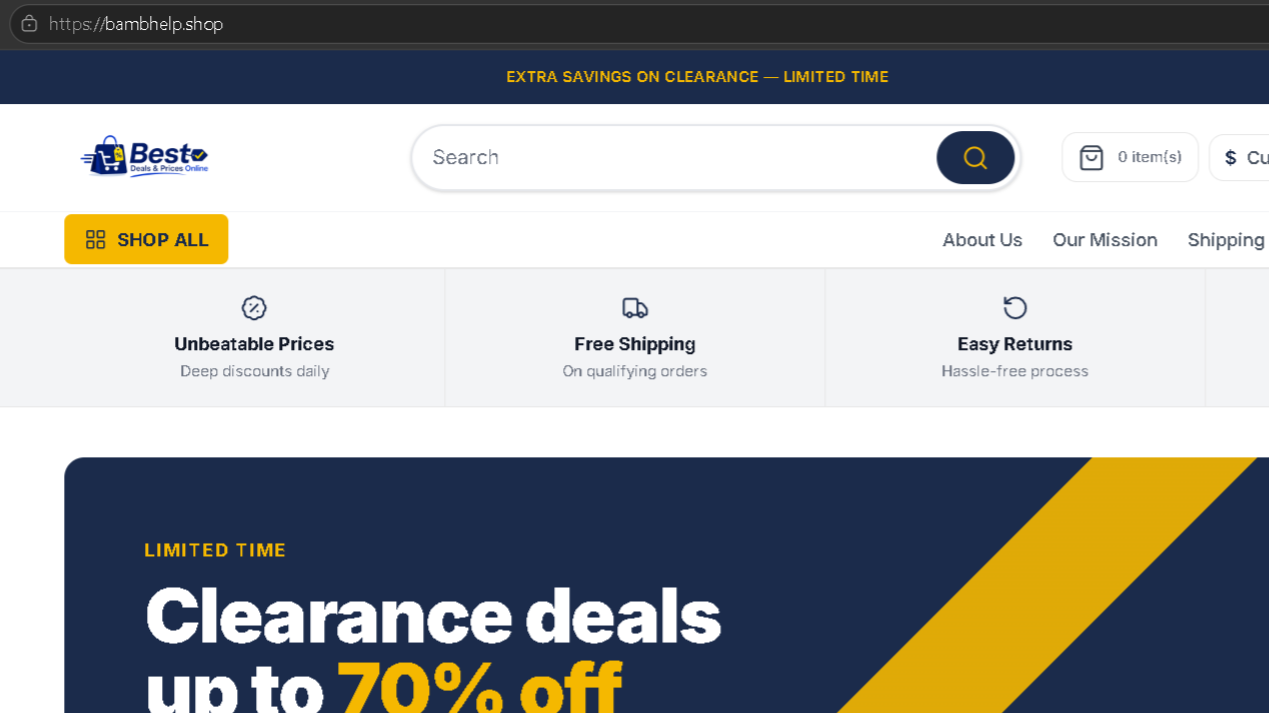
Bambhelp.shop Scam? 5 Red Flags You Must Know
Recent inquiries regarding the domain Bambhelp.shop have highlighted a common but dangerous trend: the emergence of “shadow” e-commerce sites that lack a verifiable footprint. When conducting due diligence on such platforms, it is essential to move beyond the surface-level appearance of a website and examine the underlying indicators of trustworthiness.
For many people Bambhelp.shop might seem to be a legit site. But after reviewing thousands of online shopping sites, I can sure about that Bambhelp.shop is a scam. There are many red flags we have mentioned below, and some can be told right now. The site have different domain (Bambhelp.shop) and site name (Best Deals). The theme, content and even the catalog present on the site are copied. We are sharing the screenshot of two different websites which tell how fraud is Bambhelp.shop.


The Red Flags of Bambhelp.shop
Professional analysis of digital commerce risks reveals that legitimate businesses almost always provide consistent signals of their existence. When these signals are absent, the risk profile of the site increases significantly:
- Absence of Corporate Identity: Legitimate enterprises maintain a transparent “About Us” page that details their physical headquarters, registration details, and key personnel. A site that offers only an anonymous contact form or a generic email address is a significant red flag.
- The “New Domain” Risk: Many fraudulent operations utilize transient, low-cost domain extensions (such as
.shopor.discount) to quickly spin up sites that disappear as soon as they are flagged. If a domain lacks an established history or presence in reputable business directories, treat it as “unverified.” - “Too Good to be True” Pricing: Fraudulent sites often lure victims with pricing that deviates significantly from market reality. If an item is listed at a fraction of its standard retail cost, it is rarely a “deal”—it is a precursor to a non-delivery scam or a data-harvesting operation.
- Lack of Secure Infrastructure: Reputable sites utilize well-known, secure payment gateways (like PayPal or established credit card processors) that provide buyer protection. Sites that push for unconventional payment methods or lack standard security seals often do so to bypass the very systems designed to protect you.
Why You Should Practice Digital Equanimity
Just as you apply rigorous technical analysis to the financial markets to separate signal from noise, you should apply the same discipline to your online interactions. The “mental game” of digital security is simple: when in doubt, assume risk.
If a website does not provide clear evidence of its legitimacy, the most strategic move is to abstain from engagement. Interacting with such sites—even to “look around”—can expose your device to tracking scripts or phishing attempts that are far more sophisticated than a simple, poorly designed webpage.
The Bottom Line
Bambhelp.shop is currently classified as a high-risk, unverified domain. There is no objective evidence that it operates as a legitimate business, and its lack of transparency aligns with known patterns of fraudulent online activity.
Our recommendation is clear: Do not provide any personal, financial, or contact information to this site. If you are looking for products that might be associated with this name, stick to authorized retailers and official brand channels.
As a professional, your time and security are your most valuable assets. Have you encountered this site through an unsolicited advertisement or a suspicious link in a message, or were you investigating it for other reasons?
It is critical to understand that this site is not a standalone merchant; it is merely one component of a sprawling, automated fraudulent infrastructure. For a deep-dive investigation into how this specific network harvests user data, a comprehensive guide on identifying hidden digital footprints, and a tactical recovery plan to secure your funds through your bank, please consult our Global E-Commerce Scam Network Index.”